Sermon for Advent 1, 30th November 2025

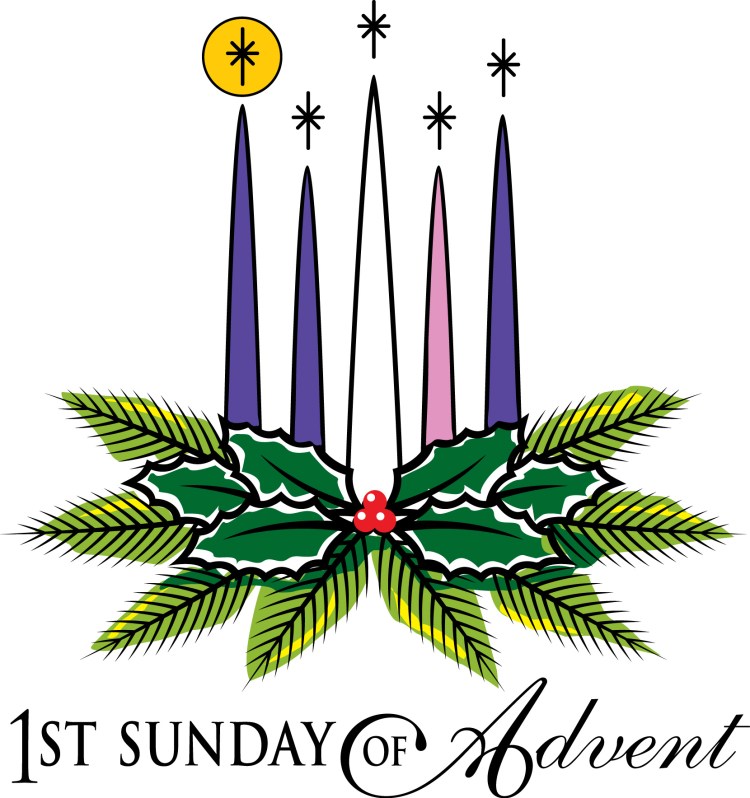
When I was growing up, one of the things I used to really look forward to at this time of year, was opening the windows on an Advent calendar. It seems a bit quaint in a way now, looking back, because unlike these days when you can get Advent calendars that have all sorts of goodies behind the windows, all we could expect to find was a picture of something to do with Christmas. It might have been a Christmas tree or a present, or a shepherd or a lamb, but the last window, the one marked ‘24’ would invariably have either a picture of star or of a baby in a manger behind it. And, in those days when pretty much everybody knew the real meaning of Christmas, you wouldn’t have really expected to see anything else behind that window. In fact I, and am sure most other people too, would have been surprised if we hadn’t seen something like that there, and if we had, we’d have wondered what on earth this had to do with Christmas?   

I mention this because, in a sense, I think we can look at the story of the people of Israel as being a little like people opening windows on an Advent calendar, in the hope that they’d find things that they both wanted and expected to find there.  

Perhaps the first thing they might have wanted to find was hope itself. Israel was God’s chosen people. God had promised to be their God, and he’d called them to live as his people, and they’d been promised a land to call their own. But things hadn’t worked out in the way they wanted or expected. They hadn’t lived as God wanted them to, and as a result, they hadn’t always enjoyed God’s favour. And through both exile and foreign occupation, they’d even lost the land they’d been promised. And so they were looking for hope, hope that God would come to their rescue.  

They would also have wanted to find love, God’s love, the assurance that, in spite of everything, God did still love them. As part of that love, they were looking for mercy, the assurance that, in spite of everything, in spite of all the times they’d failed to live up to their part of their covenant with God, in spite of all the times they’d turned their back on God and chased after the god’s of other peoples, God would be merciful towards them, that he wouldn’t abandon them for ever, nor punish them forever.  And so they would also have been looking to find forgiveness from God. They wanted God to give them another chance to get things and put things right between them.  

We could say they wanted an assurance from God that they were still his people, and he was still their God. And ultimately, what they were looking for, and what they were expecting, was that God himself would fulfil all their hopes and expectations by sending a Messiah to bring all this about. The Messiah would come, restore the fortunes of Israel, assure the people of God’s love, of his mercy and forgiveness, and assure them that, in spite of everything, they were still God’s chosen people and then they would live happily ever after in the promised land.  

The problem is that what they were expecting to find behind the last window on their Advent calendar was another King David, a warrior king who’d defeat their earthly enemies in battle and establish a new earthly kingdom and dynasty. Instead of which they found a man who said nothing of war but spoke of love and peace, even towards their enemies, a man nailed to a Roman cross, with a crown of thorns on his head. And that was something they didn’t expect to find. It’s not what they were hoping to find. And so is it any wonder that many of them wondered what this had to do with the Messiah they’d been hoping for and expecting for so long, nor that many of them simply couldn’t accept that this was the Messiah?  

As Christians, we have accepted that Jesus is the Messiah, the Christ, but even so, we still have a similar problem to that the people of Israel faced. Under the old covenant, God promised Israel that he would be their God and they would be his people, and Israel was promised a land of their own to dwell in. Under the new covenant in Christ’s blood, God is now our God, and we are now his people, and we have been promised eternal life. But this is still a covenant, it’s a deal, and we still have to live up to our side of the deal. Just as Israel was called to live under the commandments of the law to keep their side of the deal they’d made with God, we’re called to keep our side of the deal we have with God by living according to the commandments of Christ. Israel was looking for all the things I’ve mentioned, hope, mercy, forgiveness and so on because they knew that they’d often failed to keep their side of the bargain. 

And I think, in all honesty, we have to admit that we’ve not been much, if any, better at sticking to our side of our bargain with God. So we’re still looking for hope, that things will be better. For love, the assurance that, in spite of all God does still love us. For mercy, that God will be merciful towards us for all the times we’ve failed to live according to Christ’s teaching and example. For forgiveness,  the assurance that, when we fail,  God will give us another chance. We want to be sure that, in spite of all the times we’ve failed to live up to our calling as Christians, God is still our God, and we are still his people. And we want to know all this because we’re still expecting the Messiah. Not to come into the world as the people of Israel did, because we believe that’s already happened, but we’re expecting him to return in glory.  

We could say that, in a sense, we have a new kind of Advent calendar, not one with a window that opens on December the 24th and reveals a star or a baby in a manger, the things associated with the Messiah was at his first coming, but with a window that could open at any time to reveal Christ as he will be when he returns.  

But what do we hope and expect to see when the time comes for that window to be opened? Christ in glory certainly, but what do we hope and expect to see when Christ is revealed as our judge? We might see Christ holding a sword, not the sword of war as the people of Israel hoped and expected, but the sword of justice.  But which way will his sword be pointing? Will it be pointing upward, assuring us of our acquittal and pointing us towards heaven, or will it be pointing towards us in condemnation?  

We must all know in our hearts, to some extent at least, how hard we’ve tried to live up to our side of the covenant we have with God, and we all know to what extent we’ve succeeded and failed in doing that. So while I’m sure we’re all hoping to see Christ’s sword of justice pointing our way to heaven, we must also know what to expect when we see it. And if we want to be sure that our expectation is going to match our hope, the time to do something about  that is now, because we never know when we’ll have to open that last window on the Advent calendar of Christ’s return.  

Amen. 


Propers for Advent 1, 30th November 2025

Entrance Antiphon 
To you, I lift up my soul, O my God. 
In you, I have trusted; let me not be put to shame. 
Nor let my enemies exult over me; 
and let none who hope in you be put to shame. 

The Collect 
Grant your faithful, we pray, almighty God, 
the resolve to run forth to meet your Christ with righteous deeds at his coming, 
so that, gathered at his right hand, 
they may be worthy to possess the heavenly kingdom. 
Through our Lord Jesus Christ, your Son, 
who lives and reigns with you in the unity of the Holy Spirit, 
God, for ever and ever. 
Amen. 

The Readings 
Isaiah 2:1-5  
Psalm 122:1-2, 4-9 
Romans 13:11-14 
Matthew 24:37-44 

Prayer after Communion  
May these mysteries, O Lord, 
in which we have participated, 
profit us, we pray, 
for even now, as we walk amid passing things, 
you teach us by them to love the things of heaven, 
and hold fast to what endures. 
Through Christ our Lord. 
Amen.  
Sermon for Christ the King, Sunday 23rd November 2025

One of the most traumatic times in British history, certainly in early modern British history, were the Civil Wars that were fought in the British Isles in the mid- 17th Century. And although those wars raged on into the 1650s, I don’t think there can be any doubt that, certainly in England, the most famous, or perhaps infamous, event of those wars was the execution of King Charles I in January 1649.  

I think perhaps in many people’s understanding, those Civil Wars were wars of religion, but that’s not really the whole story. Religious differences between the opposing parties did play a part in the Civil Wars but they were fought for political and economic reasons too. And if we had to choose one primary cause for those Wars, it would almost certainly be politics, essentially, the question of who had ultimate authority in the country, the king or parliament. And central to this argument was Charles’ firm, one might almost say fanatical, belief in the Divine Right of Kings. That, as an anointed king, Charles’ authority came directly from God and therefore he was answerable to no earthly authority and was free to act and to rule as he saw fit. And in the end it was Charles’ intransigence on this issue, his unwillingness to compromise and come to terms, even after he’d lost the war in military terms, that led to his downfall and to him losing both his crown and his head.  

I think that, for most people today, Charles’ belief in the Divine Right of Kings, let alone his fanaticism about it, would seem quite absurd and even frightening because it is a form of religious fanaticism. To all intents and purposes, it’s like saying, “I am God’s anointed one so I can do anything I like.” And we know only too well how dangerous that can be. But from a Christian point of view we should view it, and anything like it, with deep suspicion too. And if that makes me sound like a 17th Century Parliamentary Puritan, so be it; I say it anyway because we know that there is only one divinely appointed King and it’s the one whose kingship we celebrate today, Christ the King.  

As Christians we know that Christ’s kingship is divinely ordained because he told us so himself and, as Christians, we believe his words to be true. And among the very last words he spoke to his disciples before his Ascension were, 

“All authority in heaven and on earth has been given to me.” 

And who can give such authority but God the Father? And as Christians we must know that, and recognise Christ’s divinely appointed kingship.  

So why is it then that we so often treat Christ as though he was Charles I and we were his parliamentary adversaries? Because we do. We do it regularly and we do it in so many ways. We do it every time we disobey his commandments and think it doesn’t matter. We do it every time we twist his words to make them fit with our own ideas about how things are or should be.  

I could give you many examples, but I’ll just mention a couple. I well remember speaking to some Church members about the problem of what to do about people who act in ways that are not only contrary to Christ’s teaching but do a great deal of harm to the Church and the faith into the bargain. And one of them said they should be kicked out of the Church. They should be thrown out, and they should never be allowed to come back again. So I asked where penance and forgiveness fitted into that way of thinking. And the answer I got was, accompanied by the thump of a fist on a table,  

“Some things are unforgivable” 

True. But Christ said the only unforgivable sin is a sin against the Spirit. We were talking about sins of the flesh (let the reader or hearer understand). And in those circumstances, didn’t Christ refuse to condemn but only instruct to “Go, and sin no more”? And when people, Church people, Christians who acclaim Christ as their divinely appointed King, get on their moral high horses like this, what are they doing other than denying his kingly authority over all things by usurping his kingly authority as judge? ‘It doesn’t matter what Christ said, we’ll decide who can be forgiven and who can’t’. 

Another very common way in which people in the Church deny Christ’s kingly authority is by twisting his words so that Christ says what they think he should have said and want him to have said. And one of the most common ways they do this is in relation to the words Christ used at the Last Supper.  

The first, that is the earliest, record we have of the Last Supper, and the institution of the Eucharist, isn’t in the Gospels but in St Paul’s First Letter to the Corinthians. And St Paul says this: 

For I received from the Lord what I also delivered to you, that the Lord Jesus on the night when he was betrayed took bread, and when he had given thanks, he broke it, and said, “This is my body which is for you. Do this in remembrance of me.”In the same way also he took the cup, after supper, saying, “This cup is the new covenant in my blood. Do this, as often as you drink it, in remembrance of me.”  

St Paul says that this is the teaching he received. We think 1 Corinthians was written sometime between 53 and 55 AD, so the argument that a belief in the Real Presence, that the bread and wine in the sacrament of Holy Communion is the body and blood of Christ, is a medieval invention of the Catholic Church is blown out if the water immediately. It isn’t. It’s been the belief and teaching of the Church from the very beginning. But of course, some people still argue about the meaning of Christ’s words. Even though scripture clearly states that Christ said the bread and the wine is his body and blood, some people, many people in fact, say that’s not what he really meant. They say that what he really meant was that the bread and wine signify or symbolise his body and blood. But that argument doesn’t really hold water either.  

The New Testament was originally written in Greek and in Greek the words for ‘is’, ‘sign’ and ‘symbol’ are all different (estin, semeion and parabole actually). And the Greek word estin means exactly the same as the English word ‘is’, it’s a verb that expresses a state of being. So when people argue about this, surely what it amounts to is a challenge to Christ’s kingly authority over his Church expressed in this way: 

‘Christ said this is my body, this is my blood, but we say, no he didn’t. Or if he did, that’s not what he meant.’ 

On whose authority do people change Christ’s words, or the meaning of his words? On whose authority do people change Christ’s teaching? Christ has divinely appointed kingly authority over all things, so on whose authority do people usurp Christ’s kingly authority over anything?   

Those are just two of many examples of the ways in which people in the Church, Christians who acclaim Christ as their King, then both deny and usurp his kingly authority. And what are we doing when we do this? We call the Church the Body of Christ, and we say that Christ is the head of the body. So when we deny and usurp his authority, his headship of the Church, to all intents and purposes, aren’t we’re cutting the head off Christ’s body? In 1649, the agents of Parliament cut the head off a king, and took his authority for themselves, in large part because he claimed to be a divinely appointed king. How often have we and do we cut the head off the body of our King, a King whom we know has been divinely appointed, so that we can take his authority for ourselves?  

Next Sunday is Advent Sunday. It’s the start of a new Church year and the time of year when we look forward to the two comings of Christ. We look forward to Christmas and our celebration of Christ’s first coming into the world at his Incarnation and we look forward too, to his return, his second coming, when he will come again in all his glory. But we must never forget that when Christ does return in glory he will come as our judge. So Advent is a time too when we’re called to make ready and to be ready for Christ’s return.  It’s a time when we have to think about how Christ will judge us.  

After the Restoration of the Monarchy in this country in 1660, those who were considered regicides, those who’d played an active role in the execution of Charles I, had to face the wrath of his son, Charles II. Some were executed, some were imprisoned for life, some manged to escape the new king’s vengeance by fleeing overseas. A few were even exhumed and were posthumously executed, beheaded themselves in spite of the fact that they were already dead! When Christ returns, there will be nowhere to flee to escape his judgement and justice so we will have no option other than to stand before him, face the music, and get what’s coming to us. We all hope and pray that Christ won’t judge us too harshly and that we’ll receive the eternal reward promised to all those faithful subjects who’ve done their best to be loyal to our divinely appointed King. But what will be the justice meted out to us if we’ve been amongst those who’ve cut off the head of our King so that we can take his authority for ourselves?   

Amen.  


Propers for Christ the King, Sunday 23rd November 2025

Entrance Antiphon 

How worthy is the Lamb who was slain, 
to receive power and divinity, 
and wisdom and strength and honour. 
To him belong glory and power for ever and ever. 

The Collect 

Almighty ever-living God, 
whose will is to restore all things in your beloved Son,  

the King of the universe, 
grant, we pray, 
that the whole creation, set free from slavery, 
may render your majesty service, 
and ceaselessly proclaim your praise. 
Through our Lord Jesus Christ, your Son, 
who lives and reigns with you in the unity of the Holy Spirit, 
God, for ever and ever. 

Amen. 

The Readings 

2 Samuel 5:1-3  

Psalm 122:1-2, 4-5 

Colossians 1:12-20 

Luke 23:35-43 

Prayer after Communion  

Having received the food of immortality, 
we ask, O Lord, 
that, glorying in obedience to the commands of Christ, the King of the universe, 
we may live with him eternally in his heavenly Kingdom. 
Who lives and reigns for ever and ever.  

Amen. 

Propers for the 33rd Sunday in Ordinary Time, 16th November 2025

Photo by cottonbro studio on Pexels.com

Entrance Antiphon 
The Lord said: I think thoughts of peace and not of affliction. 
You will call upon me, and I will answer you, 
and I will lead back your captives from every place. 

The Collect 
Grant us, we pray, O Lord our God, 
the constant gladness of being devoted to you, 
for it is full and lasting happiness, 
to serve with constancy, 
the author of all that is good. 
Through our Lord Jesus Christ, your Son, 
who lives and reigns with you in the unity of the Holy Spirit, 
God, for ever and ever. 
Amen. 

The Readings 
Malachi 4:1-2  
Psalm 98:5-9 
2 Thessalonians 3:7-12 
Luke 21:5-19 

Prayer after Communion  
We have partaken of the gifts of this sacred mystery, 
humbly imploring, O Lord, 
that what your Son commanded us to do in memory of him, 
may bring us growth in charity. 
Through Christ our Lord. 
Amen.