Sermon for the 30th Sunday of Ordinary Time (Last after Trinity) 29th October 2023

One of the privileges I have as a priest is to conduct funerals. It might seem a bit strange to think of that as a privilege but actually, that’s just what it is because, as I’m sure we all know, the funeral of a family’s departed loved one is a very important event in the life of that family. That’s shown when I visit bereaved families to discuss a funeral with them, because one of the things I hear time and again from the family is that they want to “get this right” which is really another way of saying that they want to make sure that their departed loved one has a good send-off. And to be able to help a family do that is, I think, a great privilege.

No funeral is ever easy, and one of the reasons for that is that the priest wants to get things right too, both for themselves and the family, and the deceased too. I well remember a priest telling me, not long after I’d been ordained, how important it was to get funerals right. He said that you can make a mistake at a wedding, or a baptism, and people will usually see the funny side of it, they certainly won’t think any less of you for it. But if you mess up at a funeral, the family will never forget and never forgive you. But one of the particular difficulties with funerals, especially when they take place at crematoria chapels, is the limited amount of time you have for the funeral service. That is a difficulty because very often the bereaved family can’t have exactly what they want; there simply isn’t time to do everything that they would like to do to make sure that their departed loved one has that good send-off they want for them. And in those situations what I tend to do is to remind the family I’m dealing with that we do have a limited amount of time, that there will be another family following us into chapel and as important as this family funeral is to you, that family’s funeral is to them, and it’s not fair to keep them waiting and having to rush through their funeral because we’ve gone over time. And I must say, I’ve never met a family yet who didn’t understand that.

This kind of respect for others, showing them the same consideration that we show ourselves is, of course, part of what it means to love our neighbour as ourselves. I’m sure we all realise that and would always try to show that same respect and consideration for others that we show ourselves because it’s what we’re called to do as Christians. But the reality is that we can very often fail to show respect and consideration for others, probably without meaning to or perhaps even realising that we’re doing that. One way we very often do this is not by failing to show respect and consideration for others, but by showing more of those things for some than we do for others.

I’ve been reminded of this quite recently by the fuss, shall we say, that some people have made of the death of a very famous knight of the realm and ex footballer. This famous person does have a link with one of the parishes in this benefice in that he was married in one of them and his wife’s family have a grave in the churchyard there. To the best of my knowledge though, that is the extent of his connection with the church. As far as I’m aware he has never been a regular worshipper at the church, nor has he been a benefactor of the church. So there must have been many other people over the years with the same or similar connection with that church. But how many of those others have been made special mention of in a Sunday service when they’ve died? Indeed, how many people who’ve had a much greater connection with the church have not been made special mention of in a Sunday service when they’ve died? So why should this person be shown such respect and consideration when others haven’t? The only answer I can come up with is that it’s because this person is famous, and the others weren’t. But that is not what it means to love our neighbour as ourselves.

Before I go any further, I will say that there’s nothing particularly wrong with making a fuss about the death of this famous person. What is wrong is making more of a fuss of their death than we do of anyone else’s death. What is wrong is making special mention of the death of a famous person who has a small connection with the church when we make no mention of the death of Joe or Jane Bloggs who have the same connection, or perhaps even a much greater connection with the church. It’s wrong because, as Christians, we’re called, in so far as it’s possible, to do what God does, that’s part of what it means to love God with all our heart and soul and mind. And everyone is beloved by God, so we’re called to love everyone as the God loves them.

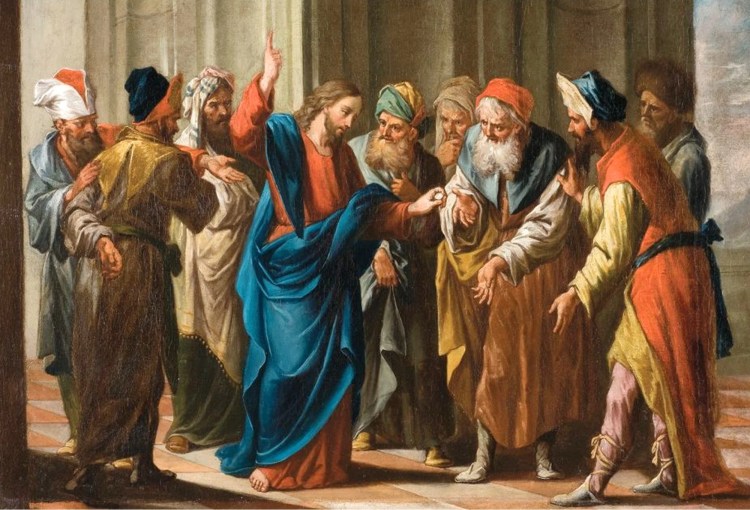
There are plenty of examples in the Gospels of Jesus teaching that we should love all people in the way that God loves them and that we should treat all people in the same way, regardless of their rank or status, and in last Sunday’s Gospel we heard that this was Jesus own example when those sent to question him about paying taxes to Caesar said,

‘Teacher, we know that you are sincere, and teach the way of God in accordance with truth, and show deference to no one; for you do not regard people with partiality. 

So we shouldn’t treat people differently according to their earthly status. If we do, then we’re not loving everyone equally, we’re loving some more than others. And that is not loving our neighbour as we love ourselves.

Let me put it this way. I’m sure we all know what it’s like to win and to lose. We might have applied for a better job and got it, or applied for a promotion at work and got it. We might have entered a completion of some kind and won. When we’ve done these things, we’re usually very pleased with ourselves, we might be proud of ourselves for achieving success. But do we actually love ourselves more because we’ve done well and been successful? Surely not because we’re still the same person we were before our success. And if we don’t get that job or that promotion we applied for, and if we lose the competition we’ve entered, we might be disappointed, but do we love ourselves less than we did before our failure? Surely not because again, we’re still the same person we were before our failure. In fact, when we do fail or are disappointed in some way aren’t we actually likely to show ourselves a little more love to make up for it? To treat ourselves in some way to cheer ourselves up and make us feel a bit better? And if that’s the way we love ourselves, aren’t we called to love everyone else in the same way? If our own success or failure doesn’t affect the way we love ourselves, then the success or failure of others shouldn’t affect the way we love them. Their earthly status, whether it’s high or low, shouldn’t affect the way we love them and treat them. Their fame, or lack of it, shouldn’t affect the way we love them and treat them. And so regardless of who and what a person is, we should treat them all with the same respect and consideration, whether they’re high and mighty or low and weak, rich and famous or poor and inconspicuous. 

In part, this is what it means to love God with all our heart and soul and mind because this is the way God loves and treats all of us. And this is what it means to love our neighbour as we love ourselves because this is the way we love ourselves.

Amen.


Propers for the 30th Sunday in Ordinary Time (Last after Trinity) 29th October 2023

Entrance Antiphon
Let hearts rejoice who search for the Lord.
Seek the Lord and his strength, seek always the face of the Lord.

The Collect
Blessed Lord,
who caused all holy Scriptures to be written for our learning:
help us so to hear them,
to read, mark, learn and inwardly digest them that,
through patience and the comfort of your holy word,
we may embrace and for ever hold fast the hope of everlasting life,
which you have given us in our Saviour Jesus Christ,
who is alive and reigns with you,
in the unity of the Holy Spirit,
one God, now and for ever.
Amen.

The Readings
Missal (St Mark’s)        
Exodus 22:20-26
Psalm 18:2-4, 47, 51
1 Thessalonians 1:5-10
Matthew 22:34-40

RCL (St Gabriel’s)          
Leviticus 19:1-2, 15-18
Psalm 1
1 Thessalonians 2:1-8
Matthew 22:34-46
Propers for the 29th Sunday in Ordinary Time (Trinity 20) 22nd October 2023

Entrance Antiphon
I call upon you, God, for you will answer me; bend your ear and hear my prayer
Guard me as the pupil of your eye; hide me in the shade of your wings.

The Collect
God, the giver of life,
whose Holy Spirit wells up within your Church:
by the Spirit’s gifts equip us to live the gospel of Christ,
and make us eager to do your will,
that we may share with the whole creation the joys of eternal life;
through Jesus Christ your Son our Lord,
who is alive and reigns with you,
in the unity of the Holy Spirit,
one God, now and for ever.
Amen.

The Readings
Missal (St Mark’s)        
Isaiah 45:1, 4-6
Psalm 96:1, 3-5, 7-10
1 Thessalonians 1:1-5
Matthew 22:15-22

RCL (St Gabriel’s)          
Isaiah 45:1-7
Psalm 96:
1 Thessalonians 1:1-10
Matthew 22:15-22

Sermon for the 28th Sunday in Ordinary Time (Trinity 19) 15th October 2023

I’m sure that we’ve all been to a wedding reception at one time or another, in fact we’ve probably been to quite a few wedding receptions over the years. So we know from experience who gets invited to these things, that those people are usually the friends and family of the bride and groom. And because we have this experience, we’ll also know about two other sorts of people associated with wedding receptions; those who are invited but don’t turn up, and those who do turn up without an invitation, the people we often call gate-crashers. And because we have this experience and knowledge, we should find it quite easy to apply some of the lessons of this morning’s Gospel parable to our own situation in the Church. Because we find all these same types of people in and associated with the Church.

As I’m sure you know, the Church is often referred to as the ‘Bride of Christ’, which obviously makes Christ the bridegroom. When we speak about the Church like this, we’re speaking about the Church as the Body of Christ, the Church with a capital C, in other words, the people who make up the Church as opposed to the church with a lower-case c, which is what we use when we’re talking about a church building or when we speak about coming to church. So, for example, on Sunday, the Church has gathered together in church to worship the Lord and receive the sacrament of Holy Communion. And once we understand what we mean when we speak about the Church and the church, it’s quite easy to see coming to church as attending a wedding feast and it’s quite easy too, to see how the parable of the Wedding Feast applies to the Church and its people.

As we think about the people who come to church, we can see all the different kinds of people I spoke about a little earlier. First of all, we have the friends of the bride and groom.

In the Farewell Discourse from St John’s Gospel, Jesus says to his disciples,

“You are my friends if you do what I command you. No longer do I call you servants, for the servant does not know what his master is doing; but I have called you friends, for all that I have heard from my Father I have made known to you.”

So the friends of the bridegroom are those who know what Jesus wants them to do and do it. And in a similar vein the friends of the bride, are those who know what being a member of the Church requires of them and do that.

We know that we also have the family of the bride and groom with us in church because, in St Matthew’s Gospel, we read this;

And stretching out his hand towards his disciples, Jesus said, “Here are my mother and my brothers! For whoever does the will of my Father in heaven is my brother and sister and mother.” 

So the family of the groom are those who do God’s will. Part of doing God’s will is building up the Church. We know that because Jesus called the Church into being to proclaim the Gospel throughout the world and to teach people the things he commanded his disciples to do, which was, in fact, to do God’s will. So the Church exists to do God’s will, to teach people what God’s will is, and to encourage them to do God’s will too. So the family of the groom and  the family of the bride are one and the same people.

Then, of course, we have another group of people associated with the Church, not that we’ll see them as we look around church, because these are those who’ve been invited to the feast but who haven’t turned up.

I think we have to be clear about who these people actually are though. These are not people who’ve never heard the Gospel. They’re not people who have little or no knowledge or understanding of Jesus. These people don’t even know about the feast so in that sense, they haven’t been invited. There is an invitation for them, but they haven’t received it yet so they can’t really be blamed for not turning up to the feast, for not coming to church.

When we speak about those who’ve been invited but haven’t turned up, we’re really talking about those people who have heard the Gospel and do know about Jesus but who’ve decided not to come to church anyway, and that  includes both those who’ve never come to church and those who have come to church in the past but don’t come now. These are the people in the parable weren’t interested in the wedding feast and went off to do other things instead or were even hostile to those who reminded them that they’d been invited and I’m sure we all know and have dealt with people like these.

One of the great problems we’ve had in the Church recently is the great number of people who haven’t come back to church after the coronavirus pandemic. I know from my conversations with these people that many of them started doing other things on Sunday mornings when they either couldn’t come to church or felt it wasn’t safe to come to church and these things are now more important to them than coming to church. I’ve also met and spoken to many people who’ve stopped coming to church either because of some problem they’ve had with another member of the Church or because they’ve become disillusioned by things that are happening in the Church more generally. And some of these people can become quite abusive and even aggressive if you try to persuade them that they should come back to church.

It’s always very sad when people stop coming to church, whatever the reason, and it’s only natural that we should want to persuade these people to come back to church, But I think we need to take note of something else we find in this morning’s Gospel. We notice that in the parable, the king doesn’t keep sending servants out time after time to remind the invited guests that the feast is taking place and that they have been invited. What he does instead is sends them out to invite other people, different people, to the feast. And I think that’s a lesson we need to take on board. We have lost people from our churches because of the coronavirus pandemic. That’s sad and it would be nice to have those people back again. But we shouldn’t fixate on getting those people back. We should try, of course, but we’d probably do far better to focus on finding ways to invite new people into our churches to replace those we’ve lost.

That brings us to the last group of people I spoke about earlier, those who turn up at a wedding reception without an invitation, the gate-crashers. But I want to talk about this group of people in a very specific way. In the parable, the uninvited guest is recognised because he’s not wearing a wedding garment, but one way we can spot a gate-crasher is that they don’t bring anything to the party. As we know, when we’re invited to a wedding reception, it’s customary to bring along a gift, or at least a greeting card for the bride and groom. But gate-crashers don’t do that because they don’t really care about the bride and groom. They don’t care who’s party it is, they just care about  the party and what’s in it for them, maybe a free drink and some free food. And in a sense, we can, and do find people like this in the Church and in our churches. These are people who come to church but bring nothing with them, that is, they come to church but don’t bring any gifts for the bride and groom, for Christ or his Church with them. They might have gifts, but they don’t offer them to Christ or his Church to be used in God’s service.

One of the great problems many, many churches have is finding people to carry out the very necessary tasks that have to be done in the Church. Everyone who comes to church must know that there are a multitude of things that need to be done to enable the day to day business of being a parish church to carry on. And yet, and to quote a phrase, I wish I had a pound for every time I’ve asked, or heard someone else ask, someone if they’d consider taking something on for the Church or do something in the church only to be met with an evasive response like, “I’ll think about it” or “I don’t really have time at the moment”, or “I’ve never done anything like that before”, or perhaps, “I’m not really very good at things like that”. All responses which, in my experience and in reality, almost invariably mean “No”.

But we all have gifts, we all have something to offer Christ the groom and his bride the Church. So when people come to the feast, to church, but don’t bring these gifts with them isn’t that tantamount to gate-crashing the feast? We all have gifts, and these gifts were given to us by God to be used in his service and in the service of Christ and the Church. But if don’t use these gifts we might as well not have them. So isn’t coming to church and refusing to use the gifts we have the same as not bringing them with us? Isn’t it the same as turning up at a wedding reception without a gift for the bride and groom, turning up as an uninvited guest? And we know what happens gate-crashers don’t we? They’re thrown out of an earthly wedding reception, and as Jesus tells us in the parable of the Wedding Feast, they’ll be thrown out of God’s heavenly wedding feast too.

It’s not likely that we’ll be thrown out of the Church, or a church, for being an uninvited guest, but we don’t want to risk be thrown out of that heavenly wedding feast. So let’s make sure that we are invited guests and act like invited guests at the earthly wedding feast we call coming to church. Let’s be friends and family of Jesus the groom and his bride the Church by understanding what’s expected of us as friends and family and doing what’s expected of us as friends and family. And let’s not gate crash the feast by turning up without a gift for the bride and groom, let’s bring our gifts with us and use them in service of the bride and groom so that, when we get to God’s heavenly wedding feast we’ll be wearing the right outfit and be recognised as invited guests.

Amen.   


Propers for the 28th Sunday in Ordinary Time (Trinity 19) 15th October 2023

Entrance Antiphon
If you, O Lord, laid bare our guilt, who could endure it?
But you are forgiving, God of Israel.

The Collect
O God,
forasmuch as without you we are not able to please you;
mercifully grant that your Holy Spirit may in all things direct and rule our hearts;
through Jesus Christ your Son our Lord,
who is alive and reigns with you,
in the unity of the Holy Spirit,
one God, now and for ever.
Amen.

The Readings

Missal (St Mark’s)        
Isaiah 25:6-10
Psalm 23
Philippians 4:12-14, 19-20
Matthew 22:1-14

RCL (St Gabriel’s)          
Isaiah 25:1-9
Psalm 23
Philippians 4:1-9
Matthew 22:1-14