Sermon for the Epiphany of the Lord 7th January 2024

In my Christmas sermon, I spoke about the way in which we can miss so much of what’s important in the Christmas story through our over familiarity with the story and with the way we celebrate Christmas. I said that we become so familiar with the Christmas story and with the way we celebrate Christmas that we don’t really give these things our full attention and so we not only miss important aspects of the story, but we can actually distort the story through our lack of attention to it. One of the ways I illustrated that was by speaking about the way we can get the words of well-known Christmas carols wrong simply because we think we know them so well, that we don’t read the words of the carols, we simply sing what we think they say and so we can get the words wrong and completely change the meaning of the carol by doing that.

One of the carols I used to illustrate that point was In the bleak mid-winter. Specifically, I spoke about the way so many people distort the meaning of the last line of the carol by not paying attention to what the last line actually says, and in doing so, they change the last line from the pledge to give Christ our hearts, into a question about what we could give him if we chose to do so. In the last verse of that carol, as it’s written, our pledge to give Christ our hearts is compared to the gifts of the shepherds and of the wise men and so today, on the Feast of the Epiphany, the day we celebrate the visit of the wise men to the Christ child, I want us to think about just what those wise men did, what they gave to Christ, how meeting Christ, even as a child, affected and changed them, and in doing so, to think about whether we do, in fact, play our part as they did and as we promise to in the words of In the bleak mid-winter.

So what did the wise men do? For one thing, we know that they travelled a long way to find the new-born King. We’re not certain where the wise men travelled from, but it’s usually thought they were from Babylon in modern day Iraq. If that’s right, then using the trade routes of the day, it was a journey of around 800 miles to Jerusalem. Travelling in a caravan, a group, for safety, as they almost certainly would have done, it would have taken them about 6 weeks to make the journey. So they’d made a long, difficult and dangerous journey to find the new-born king of the Jews.

We know that the purpose of their journey was to do homage to the new-born king. We could, and sometimes do, translate this word ‘homage’ as ‘worship’, but homage is to show honour and respect publicly, it’s to give public recognition to the one we’re honouring, or worshipping. And of course, one of the ways the wise men did this was to present gifts to the Christ child.

We see these gifts as highly symbolic. Gold, a gift fit for a king. Frankincense, a gift for a deity, a god. And myrrh, a resin that can also be used as incense but as a medicinal ointment and for embalming the dead too. As Christians, we understand these gifts as symbolising the dual nature of Christ, his humanity and divinity. We understand them as referring to Christ as not only king of the Jews, but of all people, as represented in the wise men, and as our Lord and God, as King of the universe. And we understand the myrrh as both symbolising Christ’s sharing in the suffering of the world through his common humanity with us, and as foreshadowing his own suffering and death on the Cross.

At the end of the story of the wise men we’re told that, having been warned in a dream not to return to Herod, they went home by a different way. And we see this as referring not only to a different route, but to a different way of life. What they’d found at the end of their journey wasn’t what they expected to find, and what they’d found had changed their understanding of things in a very profound way. They set off on their journey as wise men looking for the new-born king of the Jews, but they went home with a new kind of wisdom that they probably hadn’t had before. We could say that they set off full of human wisdom and returned home with at least a little of that Wisdom that comes from knowledge of God and an understanding of and reverence for his ways.

In the Christmas carol, In the bleak mid-winter, we promise to do our part, in the way they did theirs, and we promise to do that by giving our hearts to Jesus. So how do we measure up to the wise men? Do we play our part as they did?

The wise men made a long, difficult and dangerous journey to see Jesus; but are we prepared to do the same? Isn’t it true that people are very often happy to make the flimsiest of excuses for not coming to church to worship the Lord? The service is too late, it’s dark, the weather’s bad, it’s cold, it’s raining. I want to watch the football, or the rugby, or whatever else it may be. I’ve got into this story on Coronation Street, or whatever soap it may be, and want to see how it turns out. Or how about, it’s too far to travel?

One of the problems I’ve spoken about as holding this benefice back from real progress is the lack of support for joint services. The wise men travelled 800 miles without the aid of cars or buses to pay homage to Jesus, but it seems that today, even with modern transport, people aren’t willing to travel an extra 2 miles to join with their fellow Christians to worship the Lord. And isn’t it true that, despite all their words of devotion to the Lord, when ‘their church’ closes, a lot of people simply stop going to church because they won’t go anywhere else, regardless of the distance involved? In effect, they won’t go to church by a different way. And how many people have stopped coming to church in the wake of Covid because they can watch a church service from the comfort of their front room and don’t have to travel at all to worship the Lord?

But where is the homage to Jesus in that? Homage, as I’ve said, is the public display of honour and respect, so we can’t do homage to Jesus, as the wise men did, if we don’t attend public worship, in other words, if we don’t get up, get out, and come to church. But homage is also showing public recognition of the one we’re worshipping, and there’s much more than simply coming to church to doing that. To truly do homage to Jesus, we have to let people know that we are Christians. But how many people try to hide their faith? How many people never speak about their faith, or that they come to church, outside the church and among their fellow Christians? If someone asks you what you did last night, or during the week, or over the weekend, for example, how many of you say, “I went to church”, or “I said my prayers”, or “ I read the Bible”? Don’t people rather talk about what they watched on the TV, or where they went shopping, or what they ate last night, or any one of the myriad things that make up daily life but never, ever mention anything to do with the church or their faith? But without that public recognition of Jesus, we can’t do him homage.

And do we do our part, as the wise men did, when to comes to the gifts we bring to Jesus? Gold, frankincense and myrrh were, and still are, expensive gifts to offer and give. They are gifts fit for a king and offerings fit for God. But what do we give to Jesus? Do we, like the wise men, give the very best we can, or do we give to Jesus what’s left after we’ve taken the best for ourselves? And I’m not simply talking about what we put on the collection plate when we come to church. One of the things I’ve spoken about time and again is people’s unwillingness, and even outright refusal, to use their gifts and talents in and for the Church. People say they don’t have the ability, either they’re not very good at something or they’ve never done it before. But has that ever stopped anyone from doing something they really want to do? If we don’t know how, we learn, and if we’re not very good, we practice until we are don’t we? People say they don’t have time but again, if we really want to do something don’t we always make the time to do it? People say they’re too busy with this that or the other to help out at the church but no matter how busy we are can’t we always find time and make time to watch something on the TV if we want to, to go out with family and friends if we want to? There are so many ways that we could give our best to Jesus but are more content to give him what’s left after we’ve taken the best for ourselves.

And it’s the same when it comes to engaging with the suffering of the world. I’m not saying that any Christian is indifferent to the suffering of the world, nor that they don’t want to do something to help the suffering people of the world. But how many of us would deny ourselves some luxury, or even small pleasure, to help the poor and needy? Don’t we all, rather, tend help out only to the extent that doesn’t diminish our comfort? Don’t we all tend to help the suffering as long as that doesn’t involve us in any suffering, personally?

What the wise men found was not what they expected to find, and they went home by a different way, a different road and as different men with a changed understanding of things. If we really engage with the Gospel, if we pay attention to Jesus and really listen to and take seriously what he says, our expectations will be changed too, and we’ll travel by a different way. But how many people aren’t willing to be changed? How many people aren’t willing to change their expectation of the way they think things should be? We find this so often in the church, from large scale arguments about denomination, arguments within denominations about churchmanship and tradition, to arguments in parishes about the ‘way we do things here’. People, in general, don’t like change, but Church people seem to absolutely loathe it, in fact, they seem to be terrified of it. But if we look at the Church and ourselves honestly and in the light of the Gospel, can anyone say that the Church and we as individual Christians aren’t in dire need of change? And I think the problem here is very much one of expectation; people expect things to be a certain way and because they expect things to be that way then, even if that way is wrong, they don’t want to change those ways, their ways, and often refuse to change them. But if we aren’t willing to let our expectations be changed, our understanding will never change, we will never change, and we’ll never travel that different way that Christ calls us to follow.

In the Christmas Carol, In the bleak mid-winter, we promise to play our part in Jesus’ story, as the wise men did, and we promise to do that by giving him our heart, so let’s do that. Let’s do as the wise men did and do homage to Jesus, even if and when that means putting ourselves out to make public display of our faith. Let’s do as the wise men did and offer to Jesus the very best of ourselves,  gifts worthy of our king and our God, even if that means foregoing the odd luxury that we’ve become so accustomed to. And let’s do as the wise men did and let our expectations be changed so that we can come to a different kind of wisdom, that Wisdom which comes from a better understanding of God and his ways. And, like the wise men, let’s then journey on along a different and better way.

Amen.  


Propers for the Epiphany of the Lord, 7th January 2024

Entrance Antiphon
The Lord and ruler is coming; kingship is his, and government and power.

The Collect
O God,
who by the leading of a star manifested your only Son to the peoples of the earth:
mercifully grant that we,
who know you now by faith,
may at last behold your glory face to face;
through Jesus Christ your Son our Lord,
who is alive and reigns with you,
in the unity of the Holy Spirit,
one God, now and for ever.
Amen.

The Readings
Missal (St Mark’s)        
Isaiah 60:1-6
Psalm 72:1-2, 7-8, 10-13
Ephesians 3:2-3, 5-6
Matthew 2:1-12

RCL (St Gabriel’s)          
Isaiah 60:1-6
Psalm 72:1-15
Ephesians 3:1-12
Matthew 2:1-12
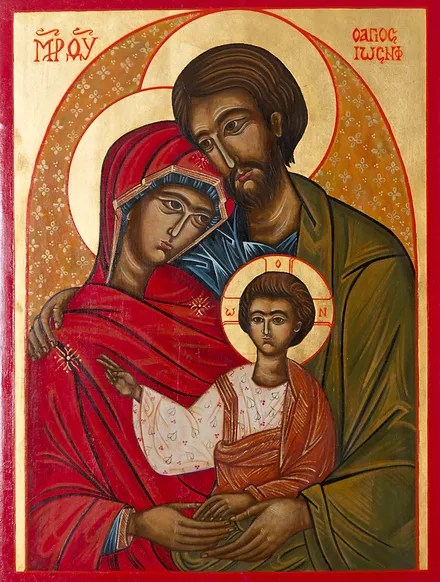
Sermon for The Holy Family (Christmas 1) 31st December 2023

A few days ago I was on Facebook looking for the result of a speedway meeting that took place on Boxing Day in Australia and in the process came across a few speedway videos. But as I was scrolling through them, I came across another video of a priest giving an interview and speaking about prayer, so I decided to watch that too.

I don’t know if it was a genuine interview with a real priest or a clip from a film, but what the priest said about prayer was very good indeed. He said,

“I asked the Lord for strength, and he gave me burdens to carry. I asked for wisdom, and he gave me problems to solve. I asked for courage, and he gave me difficulties to overcome. I asked for love, and he gave me needy people to care for. So yes, I would say my prayers were answered.”

And I thought that was a wonderful way to look at prayer and a wonderful insight into the way God very often does seem to answer prayer.

I think that when people pray for something, very often, what they really want is for God to do something about the particular problem they’re praying about, and by that I mean that they want God to solve the problem for them. That does happen. As Christians we believe that God can and will do miraculous things in answer to prayer, but that doesn’t happen very often does it? And when it doesn’t, people can be very tempted to think that their prayers haven’t been answered. But, as the priest in that video said, our prayers can be answered through God giving us the gifts and abilities to sort our problems out for ourselves. I touched on this in my sermon last Sunday morning when I spoke about our belief that God doesn’t give us problems that suit our talents, but rather he gives us the talents we need to deal with the problems we’re faced with. God does this in answer to prayer, and this is the way prayer is most often answered. I think the reason we don’t see this, is that we very often don’t think things through as we should. Or to put that another way, and in a way it’s often put in scripture, we don’t ponder things in our heart.

This is something we read a number of times about Mary isn’t it? Mary only appears as a central character in the first two chapters of St Luke’s Gospel, but  in half of the scenes in which she appears, St Luke tells us that Mary treasured or pondered things in her heart. She pondered what Gabriel’s message might mean. She treasured and pondered in her heart the words of the shepherds.

And later, when she and Joseph found the 12-year-old Jesus debating with the teachers in the temple, and notwithstanding Jesus’ strange and even abrupt response to their worries, she treasured all these things in her heart.

From these things, we get an image of Mary as someone who thought very deeply about things and perhaps it’s because she was this kind of person that she was able to stay close to Jesus throughout his ministry. She must have found him, and what he was doing, difficult to understand at times because St Mark tells us that his family tried to take him away from the crowds because people thought he was out of his mind. She must have been worried about him as his ministry brought him into conflict with the authorities, because she must have known what had happened to her kinswoman Elizabeth’s son, John, when he came into conflict with Herod. What did she think, I wonder, as Jesus made his final journey to Jerusalem? Had she heard him speak, as he often did, about the betrayal, scourging and death that awaited him there? Whatever Mary knew or had heard she must have known that what her son was doing was very dangerous. We often think of the sword that pierced Mary’s soul, that we heard Simeon prophesy in this morning’s Gospel, as watching Jesus die on the Cross. But there were many swords that must have pierced Mary’s soul before that final one.

Nevertheless, Mary wasn’t someone to make knee-jerk reactions to things. She was someone who treasured things in her heart and pondered them there, looking for meaning and understanding.

The angel had told Mary that she had found God’s favour. Elizabeth had told her that she was blessed among women. She herself had confessed her belief in these things and said that God had done great things for her. I wonder, how many of us would consider ourselves favoured by God, blessed, and that God had done great things for us if we had to endure even a few of the things that Mary went through? How many of us would give up because we thought that God wasn’t listening, or didn’t care, or perhaps wasn’t even there? Because many people do lose their faith in the face of difficulties don’t they? They pray but, when their prayers aren’t answered in the way they’d like, nor in the timescale they’d like, they decide that prayer and faith are a waste of time and simply give up.

I think one of the problems many people have with prayer is that they expect, or at least want, their prayers to be answered in a way that makes things better or easier for them in some way. In effect, they’re saying to God,

“Do this for me because it will make my life better, or easier”.

And if their lives aren’t made better or easier, they think that their prayer has gone unanswered. But just because our prayers aren’t answered in the way we’d like them to be, nor in the timescale we want them to be, that doesn’t mean they won’t be answered or even haven’t been answered already. So far from being times to lose hope and faith and give up, these are the times when we have to treasure and ponder things in our hearts. These are the times when we have to look for meaning and understanding through what’s happening to us and in our lives, even if what’s happening is hard and even unpleasant. It might well be that a sword, or several swords might have to pierce our souls before we can understand that we’ve found God’s favour, that God has blessed us and has done, or is doing, great things for us, or through us.

We know from scripture that this was Mary’s experience, and it’s her example. But it’s an experience and example that we can share if we can treasure and ponder things in our hearts as she did because it’s also the experience and example of the priest in that video I watched a few days ago. And if we’re ever tempted to lose hope in prayer, faith in God and give up because it seems as though God isn’t listening and our prayers aren’t being answered, we could do much worse than try to remember some words from St John Henry Newman’s

Meditations and Devotions.

In his meditation Hope in God – Creator, he writes,

God knows what is my greatest happiness, but I do not. There is no rule about what is happy and good; what suits one would not suit another. And the ways by which perfection is reached vary very much; the medicines necessary for our souls are very different from each other. Thus God leads us by strange ways; we know He wills our happiness, but we neither know what our happiness is, nor the way. We are blind; left to ourselves we should take the wrong way; we must leave it to Him.

Therefore I will trust Him. Whatever, wherever I am, I can never be thrown away. If I am in sickness, my sickness may serve Him; in perplexity, my perplexity may serve Him; if I am in sorrow, my sorrow may serve Him. My sickness, or perplexity, or sorrow may be necessary causes of some great end, which is quite beyond us. He does nothing in vain; He may prolong my life, He may shorten it; He knows what He is about. He may take away my friends, He may throw me among strangers, He may make me feel desolate, make my spirits sink, hide the future from me—still He knows what He is about.  

God knows what he is about far better than we do. So if God chooses to answer our prayers in ways that we don’t expect, we shouldn’t think they haven’t been answered. We should rather treasure what’s happening and ponder it in our hearts in the hope that, in the end we will understand and see how favoured and blessed we are and what great things God is trying to do for us and through us.

Amen.   


Propers for The Holy Family (Christmas 1) 31st December 2023

Entrance Antiphon
The shepherds hastened to Bethlehem, where they found Mary and Joseph,
and the baby lying in a manger.

The Collect
Almighty God,
who wonderfully created us in your own image,
and yet more wonderfully restored us through your Son Jesus Christ:
grant that, as he came to share in our humanity,
so we may share the life of his divinity;
who is alive and reigns with you,
in the unity of the Holy Spirit,
one God, now and for ever.
Amen.

The Readings
Missal (St Mark’s)        
Genesis 15:1-6, 21:1-3                                      
Psalm 105:1-6, 8-9
Hebrews 11:8, 11-12, 17-19
Luke 2:22-40

RCL (St Gabriel’s)          
Isaiah 61:10-62:3                                      
Psalm 148
Galatians 4:4-7
Luke 2:22-40

Sermon for the Nativity of the Lord, 24th and 25th December 2023

One of the great traditions of our Christmas celebrations is the singing of Christmas Carols. It’s a tradition that most people I know thoroughly enjoy and in fact, over the years I’ve met more than one person who feels that it isn’t really Christmas until they’ve heard and sung Christmas Carols. And because it such a great and well-loved tradition, many Christmas Carols are very well-known. So well-known in fact that many people seem to know them off by heart. Or do they?

One of the things I’ve noticed over the  years is just how wrong people can get Christmas Carols, they can get the tune wrong, and they can get the words and punctuation wrong and in doing so, they can completely change the meaning of the words and of the carol itself. And they can do this with some of the best-loved and most well-known carols.

Take O come, all ye faithful, for example. People get the tune of this carol wrong so often it’s actually a surprise when anyone sings it as the music is written. In the last line of the verses, in the last bar, there are only two notes, F and D. But for some reason people insist on singing an E in between them. So, in the first verse when we sing ‘born the king of angels’, the word ‘angels’ should be sung on a descending F and D, an-gels. But people almost always sing it on a descending F – E – D, a-an-gels. Why do people sing this phantom note that isn’t really there? I do remember very well a choir practice at Mirfield when the pianist was almost apoplectic with rage because of the choir’s insistence on singing this phantom note, he was thumping the piano with all his might and singing himself at the top of his voice in an attempt to get the choir to sing the carol correctly. Actually, I think he just made things worse because the angrier he got the louder the choir sang the phantom note just to wind him up even further.

But perhaps it is only an organist, pianist or professional singer who would take such annoyance at something like that. For the most part, I think the far greater problem with people’s singing of Christmas Carols is getting the words and punctuation wrong.

For example, in another well-known carol, God rest ye merry, gentlemen, people do insist on getting the comma in the wrong place in the first line and instead of singing ’God rest ye merry, gentlemen’, they sing ‘God rest ye, merry gentlemen’. But that changes the meaning of the words.

What this carol is actually saying is that gentlemen should rest and be merry because of the birth of Jesus Christ. But what people actually sing implies that gentlemen who are already merry, should rest because of Christ’s birth.

But when it come to changing the meaning of a well-known carol by getting it wrong, to me, the best, or perhaps that should be worst, example is people getting the words at the end of In the bleak mid-winter wrong.

Those who know this carol will know that the last verse goes,

What can I give Him, poor as I am?
If I were a shepherd, I would bring a lamb;
If I were a wise man, I would do my part;
Yet what can I give Him: give my heart.

Except that it doesn’t. The last line doesn’t say ‘Yet what can I give him; give my heart’, it actually says ‘Yet what I can I give him; give my heart’. But when they sing this carol, people almost invariably miss out the first ‘I’ in that line and that completely changes the meaning of what’s being said. Missing out the first ‘I’ makes that line a question of what we could give Jesus, but what it’s actually meant to be is a statement of what we will give him, a pledge that we will give Jesus our heart. Missing out that first ‘I’ makes that line a matter of what we could or might give to Jesus should we choose to, rather than a promise that we will give Jesus our all, our love, our deepest, most profound commitment, a promise that we will put Jesus above all else. What we’re  really saying in this Christmas Carol is almost identical to what we say in one of the best-loved and most well-known Passiontide hymns, When I survey the wondrous cross where, again in the last verse, we sing,

Were the whole realm of nature mine
That were an offering far too small
Love so amazing, so divine
Demands my soul, my life, my all.

I think that the way we can get the tunes, words and punctuation of carols so wrong though is a symptom of a blasé attitude towards them. And we can be, and often are, very blasé about these things because we’ve sung them so often before and think we know them so well that we don’t really pay proper attention to what we’re singing, nor what we’re supposed to be saying through what we sing.

And I think that in itself is a symptom of a blasé attitude towards Christmas itself. And by that I don’t mean that we don’t love Christmas, but we don’t pay proper attention to it; we don’t give proper attention to what it means and how important it is. 

We think we know the Christmas story so well don’t we? We’ve heard it so many times before that we don’t need to think about it too much. And yet, I once set a Christmas Quiz for a parish and the questions were about the Christmas story as it appears in the Bible.

Not the popular understanding of Christmas with all its accumulated traditions and frippery, but the pure biblical story. We held the quiz at a social night so people couldn’t take the quiz home and consult their Bibles to get the answers, it was a test of just how well Christians did know the Christmas story. As I recall there were 12 questions in the quiz and the winning score was —- 7.  The person who knew the biblical Christmas story best, only knew just over half of it. And it wasn’t the vicar. He got 5 out of 12 questions right. And really, as one person commented at the time, it was shameful.

Christmas Carols, the Christmas story itself, we think we know these things so well. We think we know these things so well that we become blasé about them, and we don’t pay proper attention to what were doing and saying, nor to Christmas itself. And for Christians, that is shameful. Christmas is one of the most wonderful things that has ever happened. If we were to make a list of the most wonderful events in history, Christmas would be second only to Easter. It’s an event and a story that should demand our full attention no matter how many times we’ve heard it before. It’s a story so important that it demands our full attention every time we hear it just in case we missed something in the past or have forgotten something since last time. In a time for giving, as we like to call Christmas, the greatest gift of all is God’s gift to us of his Son, the very Word of God come to earth and made flesh in the babe of Bethlehem. It’s something so wonderful and so important that we should never tire of hearing about it or celebrating it, nor become blasé about hearing it and celebrating it.

At the start of our Christmas Carol service, we heard these words;

‘Through Scripture and silence, prayer and song, let us hear again the wonderful story of our redemption; and, hearing, let us rejoice and respond with lively faith.’

So, as we celebrate once again the birth of our Lord and Saviour Jesus Christ, let’s give the story our full attention so that we really do hear it. And, hearing, let’s rejoice in the full measure befitting such a wonderful event and story. And let’s respond to the wonder of Christmas with lively faith. Not a faith that  simply asks us to consider how we might respond to the birth of our Lord Jesus Christ, but with a faith that urges us to pledge our heart to Jesus, as the Carol says.

Amen.


Propers for the Nativity of the Lord, 24th and 25th December 2023

Entrance Antiphon: Midnight Mass
Let us rejoice in the Lord, for our Saviour is born to the world.
True peace has descended from heaven.

The Collect: Midnight Mass
Eternal God,
who made this most holy night to shine with the brightness of your one true light:
bring us, who have known the revelation of that light on earth,
to see the radiance of your heavenly glory;
through Jesus Christ your Son our Lord,
who is alive and reigns with you,
in the unity of the Holy Spirit,
one God, now and for ever.
Amen.

The Readings: Midnight Mass
RCL (St Gabriel’s)          
Isaiah 9:2-7                                      
Psalm 96
Titus 2:11-14
Luke 2:1-14

Entrance Antiphon: Christmas Day
A child is born for us, a son given to us; dominion is laid on his shoulder,
and he shall be called Wonderful Counsellor.

The Collect: Christmas Day
Almighty God,
you have given us your only-begotten Son to take our nature upon him,
and as at this time to be born of a pure virgin:
grant that we, who have been born again and made your children by adoption and grace,
may daily be renewed by your Holy Spirit;
through Jesus Christ your Son our Lord,
who is alive and reigns with you,
in the unity of the Holy Spirit,
one God, now and for ever.
Amen.

The Readings: Christmas Day
Missal (St Mark’s)       
Isaiah 52:7-10                                      
Psalm 97:1-6
Hebrews 1:1-6
John 1:1-18