Sermon for The Holy Family, 29th December 2024

It’s no secret among people who know me that my favourite Christmas story is Charles Dickens A Christmas Carol. There are quite a few film adaptations of the story and it’s always part of my Christmas to watch a few of them, but my favourite has always been the 1951 version in which Alistair Sim plays the role of Ebeneezer Scrooge. Having said that, there is one thing about that version, and others too it must be said, that I do find a little annoying because it’s so strikingly incongruous, and that is the upper-class accents of the Cratchit family. I mean, the Cratchits are supposed to be a rather down-trodden, poor family from Camden Town. They hardly have two ha’pennies to rub together, and yet they speak with the kind of aristocratic accent that’s taught at Eton or some other very expensive boarding school.

It may be that the incongruity of the Cratchit’s accent was a deliberate dramatic device to show that the Cratchits are actually much better people that their lowly estate would suggest. But whatever the reason for it, what I think it does show are the prejudices of our society.

Many of us, I’m sure, will be able to remember when it was quite unusual to hear regional accents on the TV and almost everyone in British films, probably up to the 1960s, spoke like a 1930’s BBC announcer unless, that is, they were playing a rather dubious character. It was almost as though rough, uncouth people or criminals spoke in one way whilst nice, well-educated people spoke in a completely different way. But as the famous playwright, George Bernard Shaw once said,

“It is impossible for an Englishman to open his mouth without making some other Englishman hate or despise him.” 

And of course, we’re not supposed to hate and despise the Cratchits, and so perhaps this is why, on film, they speak in the way that ‘nice’ people speak.

Such is the power of accents, the way we speak, to define in the eyes of others the kind of people we are. It’s prejudice and bigotry, plain and simple, but it’s a fact of the society we live in. And it isn’t only the way someone speaks that affects the way others think about them is it?

People are prejudiced against others because of where they come from, where they live, their family background and their social and economic status, not to mention their faith, their race and the colour of their skin.

It would be nice to say that we don’t find such prejudice and bigotry in the Church, but sadly, we do. Individual Christians can be every bit as prejudiced against others as anyone else, and the Church as an institution can show prejudice too. That’s understandable in one sense because we all grow up surrounded by the prejudices of the society we live in and to some extent the Church can’t help but reflect that society. But that isn’t the way it should be. As disciples of Christ we, as individuals, should show no prejudice against others and so the Church which is made up of individual Christians, shouldn’t either. And if we ever are tempted to look down on other people for any reason, we should take a moment to think about our Lord Jesus Christ and his earthly family, first.

Who were the Holy Family? What were they? First of all, Mary and Joseph were from Nazareth in Galilee, and that wasn’t a particularly well-respected part of the Jewish world. Galilee was predominantly Jewish in their day, but it was a largely rural, agricultural society surrounded by Gentile nations and to the more urban and urbane, the more well-educated and wealthy Jews of the south, Galileans were seen as country bumpkins, ill-educated peasants. Nazareth itself though, seems to have been a predominantly  Gentile town and even other Galileans looked down on Nazareth. Hence Nathaneal’s question,

“Can anything good come out of Nazareth?” 

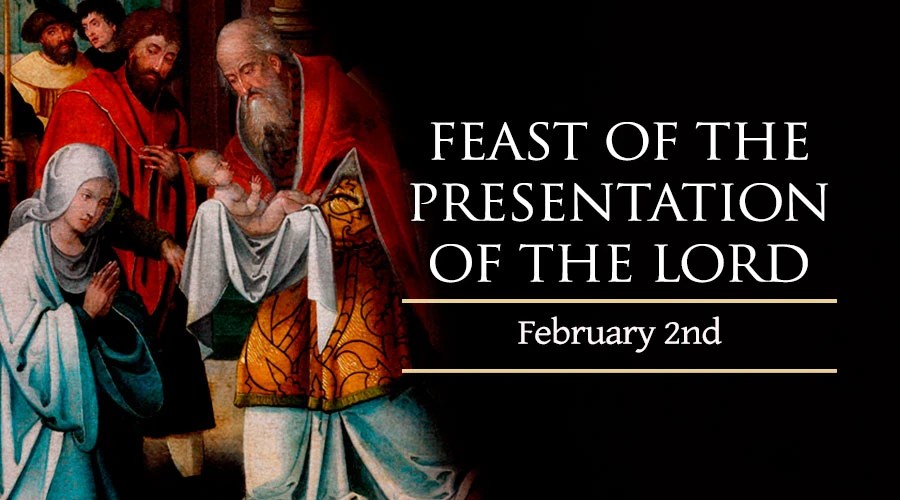
But Mary and Joseph were forced to come out of Nazareth and travel south to Bethlehem where people would have looked down on them, perhaps even hated them simply because of where they came from. And Mary was forced to give birth in a stable, an animal house because she and Joseph couldn’t find anywhere else to stay. Was that because there was no room at the inn, or because no one would give them room because of who and what they were? We know they didn’t have much money because when Jesus was presented at the temple, their offering to God ‘a pair of turtle doves, or two young pigeons’ was the offering the poor were expected to make. So they wouldn’t even have been able to pay a bit over the odds to get a room. And what would people have made of and said about the fact that Mary had to give birth in a stable, and that her son’s first bed was a manger, an animal trough? What kind of parents would do that?

Then the family were forced to leave Bethlehem and run for their lives out of Judea and into Egypt; they became asylum seekers. Whether they were ever granted what we’d now call refugee status with rights and legal protection, we simply don’t know. What we do know is how much prejudice there is today against asylum seekers and refugees. We know that there was a Jewish community in Egypt at the time the Holy Family travelled there, but how happy would they have been to accept a family running from Herod, the puppet king of the Romans, the very same people who also ruled Egypt at that time? And even if people didn’t know that was why the family had gone into Egypt, they were still Nazarenes and what kind of reception would the community have given to a family from Nazareth? It wasn’t as though they could hide that because on the night of Jesus’ arrest, wasn’t Peter given away as a disciple by his Galilean accent?

We also know that Jesus faced opposition during his ministry because of his background. When Nicodemus tried to defend Jesus during a dispute about whether Jesus was the Christ or not, the Pharisees insulted those who believed in Jesus for their ignorance of the law and insulted Nicodemus too;

“Are you from Galilee too? Search and see that no prophet arises from Galilee.”

In other words, “Are you an ill-educated peasant who doesn’t understand the law too?” In fact, prophets did arise from Galilee, Jonah and Nahum were both from Galilee, so the Pharisees were probably just assuming  people’s ignorance and playing on the widespread prejudice against Galilee and Galileans to try to discredit Jesus.

But it didn’t end with prejudice against Galilee and Galileans. People also brought up the controversial nature, shall we say, of Jesus’ conception to try to discredit his teaching. When Jesus said that true children of Abraham wouldn’t be seeking to kill someone who spoke God’s truth to them, they insisted that they were Abraham’s children and said,

“We were not born of sexual immorality.”

And you can almost hear the unspoken ‘unlike you’ that’s implicit in that statement.

The lives of the Holy Family, were filled with so many things that cause prejudice today and must have caused people to be prejudiced against them in their day. Prejudice because of where they were from. Prejudice because of the nature of Jesus’ conception and the poverty of his birth. Prejudice because of their social and financial status, and of how they spoke. And prejudice because they were asylum seekers.

As he grew up as part of this family in Galilee, Jesus must have been aware of all these prejudices against his family. And the prejudice Jesus suffered from during his ministry must have impacted on his earthly family too. And yet, as unworthy and unsuitable for such a great vocation this family might have seemed in the eyes of other people, this was the family God chose for his Son. This family of poor, rough speaking country bumpkins was the family God chose our Lord and Saviour to be born into. And this is something that we should never forget.

We believe that the Son of God became man in order to save the world. So that he could show by word and example what it means to live as God’s people. So that he could make on the Cross that one, full and sufficient sacrifice for sin that takes our sins away. But more than that, we believe that he had to be fully human so that he would fully know what it is to live as a human being, to suffer the trials of human life and to be tempted as we are and yet not sin. And we should never forget that in order to do that, the Son of God wasn’t born into a high and mighty family of great wealth and high status. He wasn’t born into a family who looked down in contempt on others, but into one that was looked down upon with contempt. He was born into a family that suffered from the prejudices of society. And so whenever we feel the temptation to look down on others because of where they’re from, how they speak, how much money they’ve got, where they live or any of the other things that society thinks are so important in defining a person’s worth. Before we look down on someone because of the situation they find themselves in, such as the asylum seeker or the refugee, let’s pause for a moment to remember that Jesus and the Holy Family found themselves in just these situations. And before we utter a word in prejudicial judgement on them, let’s ask ourselves, who is standing in Christ’s shoes, those who show their prejudices against others, or those who suffer because of those prejudices?

Amen.


Propers for Holy Family Sunday, 29th December 2024

Entrance Antiphon
The shepherds went in haste,  
and they found Mary and Joseph, and the infant lying in a manger.

The Collect
Holy Family
O God,
who were pleased to give us the shining example of the Holy Family,
graciously grant that we may imitate them in practicing the virtues of family life,
and in the bonds of charity,
and so, in the joy of your house,
delight one day in eternal rewards.
Through our Lord Jesus Christ, your Son,
who lives and reigns with you in the unity of the Holy Spirit,
God, for ever and ever.
Amen.

The Readings
1 Samuel 1:20-22, 24-28
Psalm: 84:2-3, 5-6, 9-10
1 John 1:1-2, 21-24
Luke 2:41-52

Post Communion
Bring those you refresh with this heavenly sacrament,
most merciful Father, to imitate constantly the example of the Holy Family,
so that, after the trials of this world,
we may share their company for ever.
Through Christ our Lord.
Amen.

Sermon for the Nativity of the Lord, 2024

I don’t’ know what your experience of opening presents on Christmas morning is, but for our family it tended to happen in one of two ways. Sometimes we’d come downstairs and find everyone’s presents arranged in groups, one for each member of the family. But at other times we’d find lots of presents all piled together and then we’d have to sort through them to find those with our name on them. And of course when that happened we’d be very eager and excited to sort through the presents and to find those with our name on them so we could get on with the important business of opening them. And even if you haven’t been through that experience of Christmas morning yourself, I’m sure you can imagine the excited chaos of the ‘That’s mine, this is yours. Whose is this? It doesn’t say’ scene.  

The presents I’m talking about here, of course, are worldly gifts but we’re here, in church at Christmas, to celebrate the giving of an altogether different kind of present. We’re here to celebrate God’s gift to us of his incarnate Word through the birth of our Lord and Saviour Jesus Christ. This is, as I said in my sermon on Advent Sunday, a truly awesome thing, the most wonderful and awesome present we have ever been given. And yet how many people have failed and still fail to see that? How many people treat this most awesome gift as though it was a present they’ve picked up on Christmas morning that doesn’t have their name on it, have laid it aside and haven’t even looked to see what it is?  

And I do think that many people, have and do treat this most awesome gift from God in just that way, as something for someone else, and not for them. But they couldn’t be more wrong. In one sense this gift from God is for the family, the whole human family. As the angels said to the shepherd’s on that first Christmas Day: 

“Fear not, for behold, I bring you good news of great joy that will be for all the people. For unto you is born this day in the city of David a Saviour, who is Christ the Lord.” 

So this is a gift for everyone. But it’s also a personal gift. It’s a gift that’s labelled, if you like, with your name, and with my name, and with the name of each and every individual person in the human family.  

We know that because we’re told in scripture that God knows each and every one of us intimately, that he knows us by name. As Jesus said,  

“Why, even the hairs of your head are all numbered…”   

We know too that the reason God gave us this awesome gift was that so we might be saved from our sins and have eternal life. But we also know that if we are going to be saved and inherit eternal life, we have to use this gift. Again, as Jesus said,  

“…everyone who acknowledges me before men, the Son of Man also will acknowledge before the angels of God, but the one who denies me before men will be denied before the angels of God.”  

And if we’re going to acknowledge the Son of Man before our fellow men, we have to get to know him. And we can’t do that by laying this awesome gift from God aside, as though it were a present labelled with someone else’s name. We have to see our name on the gift, then open it, and use it.  

There are so many people though who don’t do this. We know that but I think too that we who have recognised this awesome gift from God as a gift for us, can sometimes be guilty of not appreciating it as we should. And I think that comes from over-familiarity with the gift.  

I’m sure we’ve all been given books at Christmas at one time or another. We’ve probably been very happy and grateful for that gift, but once we’ve read a book we tend to lay it aside don’t we? We put it on the bookshelf and there it stays, gathering dust. We don’t often use that gift again do we? And why would we? It’s a book and we’ve read it; we know what it’s about, so we don’t need to read it again. I’m sure too that we’ve all been given games at Christmas. Again, we’ve probably been happy and grateful to receive that gift. But how many games have we played incorrectly because we haven’t really read the rules properly? We’ve probably skimmed through the rules when we first got the game so that we can start playing, and we’ve done that because we want to play the game rather than spend time reading about how to play it. But because we didn’t take the trouble to read the rules properly, we don’t actually play the game as it was intended to be played. And we never do because once we can play the game well enough to get through it, we think we know how to play it, so we don’t need to read the rest of the rules.  

And that’s ok until we play the game with someone else who’s done exactly the same thing as us, only they’ve read a different bit of the rules to us. And we all know what happens then: we end up spending more time arguing about the rules than actually playing the game. That’s why the Church is so divided. Think about it! 

But we can’t treat this awesome gift from God like this. We need to treat it as a book that we have to read over and over again if we’re ever going to understand the story. Or as a game we have to learn the rules to, no matter how long that takes, if we’re ever going to be able to finish the game. Perhaps a good analogy of the way we should treat this gift from God is like the gift in a game of pass the parcel. We all know how to play that game, we pass the parcel round until the music stops, then we take of a wrapping, and as soon as the music starts again, we pass the parcel on. But in some versions, there’s a small gift inside each wrapping and so every time the music stops, we uncover this small gift. And so it goes on until the last person unwraps the big gift inside the final wrapping. And that’s what this awesome gift from God can be like for us if only we take the time and trouble to start to unwrap it. Each time the music of our life stops, perhaps in a time of need or trouble, or just in some quiet time, if we look again at God’s Word, try to unwrap a little more of the awesome gift God gave us at Christmas, we’ll find a small gift, something to lead us through the present time until the music of life starts to play again. And if we can carry on with the game  until the music of this life comes to a final end, then we’ll receive the big gift inside the final wrapping; the gift of eternal life which is the very reason God gave us the gift of his Son.  

People sometimes ask, where is the peace on earth that was promised on that first Christmas Day. But to ask that is to misunderstand the angel’s message. The angels weren’t speaking about peace between people, but about peace between us and God. To enjoy that peace we have to please God, and Jesus left us in no doubt that what is most pleasing to God is to know and love and obey the Word he sent into the world at Christmas. So let’s try to do just that by seeing this awesome gift from God as one that’s labelled with our name, then opening it and using it every day of our lives so that, when the music of this life does come to an end, we’ll receive that that other great gift that God wants to give us, the gift of eternal life.  

Amen.  


Propers for the Nativity of the Lord, 24th – 25th December 2024

Entrance Antiphon

Midnight Mass
Let us all rejoice in the Lord, for our Saviour has been born in the world.
Today true peace has come down to us from heaven.

Christmas Day
A child is born for us, and a son is given to us; his sceptre of power rests upon his shoulder,
and his name will be called Messenger of great counsel.

The Collect

Midnight Mass
Eternal God,
who made this most holy night to shine with the brightness of your one true light:
bring us, who have known the revelation of that light on earth,
to see the radiance of your heavenly glory;
through Jesus Christ your Son our Lord,
who is alive and reigns with you,
in the unity of the Holy Spirit,
one God, now and for ever.
Amen.

Christmas Day
Almighty God,
you have given us your only-begotten Son,
to take our nature upon him and as at this time to be born of a pure virgin:
grant that we, who have been born again and made your children by adoption and grace,
may daily be renewed by your Holy Spirit;
through Jesus Christ your Son our Lord,
who is alive and reigns with you,
in the unity of the Holy Spirit,
one God, now and for ever.
Amen.

The Readings

Midnight Mass
Isaiah 9:2-7
Psalm: 96:1-3, 11-13
Titus 2:11-14
Luke 2:1-14

Christmas Day
Isaiah 52:7-10
Psalm: 98:1-6
Hebrews 1:1-6
John 1:1-18

Post Communion

Midnight Mass
God our Father,
in this night you have made known to us again the coming of our Lord Jesus Christ:
confirm our faith and fix our eyes on him until the day dawns
and Christ the Morning Star rises in our hearts.
To him be glory both now and for ever.
Amen.

Christmas Day
God our Father,
whose Word has come among us in the Holy Child of Bethlehem:
may the light of faith illumine our hearts,
and shine in our words and deeds;
through him who is Christ the Lord.
Amen.

Sermon for Advent 4, 22nd December 2024

Every year on the late May Bank Holiday, the National Pilgrimage to the Shrine of our Lady of Walsingham takes place. If you ever visit Walsingham for ‘The National’ as it’s often called, you’ll find that, as well as the thousands who are there to give thanks to God for the life, work and example of Mary, there are a few people who are there to protest against the whole thing. Their protest is usually on the grounds that those who are there to worship have got things all wrong. The protesters claim, actually they shout very loudly, that processing through the village carrying a statue of Mary makes the worshippers guilty of idolatry. And they claim, again very loudly, that it’s God and Christ we should be worshipping, not Mary. 

On the whole, and not surprisingly the protesters belong to Nonconformist  churches, that is, they’re not part of the Church of England but belong to Protestant Churches. I know that there are many individuals within the Church of England who say that they and the Church they belong to are Protestant. But while they’re quite at liberty to say that about themselves,  the Church of England itself has never claimed to be a Protestant Church but rather a Reformed Catholic Church. And the Church of England’s teaching about Mary is very closely aligned to that of the Roman Catholic Church, in fact, in 2005, the Anglican-Roman Catholic International Commission published an 80-page Agreed Statement that explains just how close the Churches are on their teaching about Mary.  

Nevertheless, there are a lot of people in the Church of England who would agree with what the Walsingham protesters say about the goings on at the National Pilgrimage, and probably in Walsingham generally. But to them I would say what I, and many others, have said at times to some of the quieter, more reasonable Walsingham protesters. To the charge of idolatry we are not-guilty. In religious terms, idolatry is the worship of an inanimate object. In the case of Walsingham, it’s worshipping a statue of Mary. But no one worships the statue of Mary; no one believes for a moment that the statue of Our Lady of Walsingham is a god. So the banner which the protesters often display which shows a little girl holding a doll and a bishop kneeling in front of the statue of Our Lady of Walsingham, the girl saying, “I play with my doll.” and the bishop saying,  “I pray to mine.” couldn’t be more wrong. No one prays to the statue of Mary. Like many other things we use in our churches, the statue is simply an aid to devotion, a reminder of an event, or events in the story of our salvation. Prayer, at Walsingham just as much as elsewhere, is only ever made to God the Father, through the Son in the power of the Spirit.  

And when it comes to worshipping Mary herself again, not-guilty. We do  not worship Mary, we venerate Mary, we give her the great respect that’s due to her for her role in the story of our salvation, most especially as the mother of our Lord, but also for her obedience to God’s will, her long-suffering support of her son in his earthly ministry and so on. And we look at Mary as an example of obedience and faith. We thank her for that, but we also thank God for her. We don’t worship Mary as though she was on a par with her son, co-equal with the Father and the Spirit. As the International Commission’s 2005 Agreed Statement puts it: 

We agree that doctrine and devotion which focuses on Mary must be carefully moderated to ensure the unique and central place of Jesus Christ in the life of the Church, and that Christ alone, together with the Father and the Holy Spirit, is to be worshipped in the Church.’  

And I have no doubt whatsoever that the first person who would agree with that statement would be Mary herself.  

In our Gospel reading this morning we read about Mary’s visit to Elizabeth, and that both Elizabeth, and her unborn baby, are overjoyed to see Mary and to hear her voice. But it’s worth taking note of why they were so overjoyed. Elizabeth says, 

“Blessed are you among women, and blessed is the fruit of your womb! And why is this granted to me that the mother of my Lord should come to me? For behold, when the sound of your greeting came to my ears, the baby in my womb leaped for joy. And blessed is she who believed that there would be a fulfilment of what was spoken to her from the Lord.” 

If we think about that greeting, the source of joy isn’t rooted primarily in anything that Mary possessed in and of herself. It’s rooted in what God has done with and for and through Mary; that she is “…the mother of (the) Lord…” What is praiseworthy in Mary herself is her faith in God, her belief that in spite of all the difficulties and even dangers that doing what God had asked her to do will entail,  

“…that there would be a fulfilment of what was spoken to her from the Lord.” 

And Mary’s reply to Elizabeth’s greeting is in the same vein; 

“My soul magnifies the Lord, and my spirit rejoices in God my Saviour, 

for he has looked on the humble estate of his servant. 

For behold, from now on all generations will call me blessed; 

for he who is mighty has done great things for me, and holy is his name…” 

It’s a song of praise to God and an acknowledgment that any blessedness that comes to Mary as a result of her obedience to God’s will, doesn’t come from what she has done for God, but from what God has done for her.  

If we take the trouble to look beyond the surface, this is something we find with Mary, and in the Church’s depictions of Mary. Mary always points away from herself and towards God and his Son, her son. If you look at an image of Mary and the Christ-child, whether that be a painting, a statue, or anything else, our attention is immediately drawn to Mary. And that’s understandable because she’s the larger figure and the central figure in the image. But if we pay closer attention to the image of Mary we invariably find one of two things. We sometimes find that Mary’s attention is on her son; we might be looking at her, but she is looking at him. And if Mary is looking at us as we look the image, we’ll notice that Mary’s hand is gesturing towards her son. It’s almost as if she’s looking at us and saying,  

“Don’t look at me; look at him.”  

We often talk about Mary as an example to Christians, and she is that in many ways. Mary accepted God’s call to be the mother of his Son. And so we hold her up as an example of obedience to God’s will, no matter how difficult following God’s will might be. As the mother of the Lord, things often happened that Mary didn’t really  understand but she stored these up and pondered them in her heart. And so we hold her up as an example of thinking deeply about how God might be at work in our lives when we don’t fully understand what’s going on. In spite of the difficulties, the dangers and the heartbreak involved, Mary stayed with her son right to the end, to the very foot of the Cross. And so we hold her up as an example of perseverance, of remaining faithful to Christ even the in the darkest times of our lives. And after Christ’s Ascension, Mary stayed with the disciples, waiting for the coming of the Spirit at Pentecost. And so we hold her up as an example of waiting patiently on the Lord, confident that his promises will be fulfilled.  

But we should also hold Mary up as an example of giving glory to God. We should hold her up as an example of selflessly pointing people towards her son, Jesus Christ our Lord.  

Whenever we do something praiseworthy because we’re Christians, perhaps something for the Church or some act of charity, it’s nice to receive some recognition and perhaps even some thanks and praise for what we’ve done, but we shouldn’t let that go to our heads and lead us into thinking that we should be placed on a pedestal. Instead we should follow Mary’s example and praise God who’s given us the gifts to do what we’ve done and given us the opportunity to use those gifts in his service. And if people do look at us and praise us for what we’ve done, we shouldn’t let that go to our heads either because there should be no place in the heart of a Christian for an attitude of smug superiority. No matter how praiseworthy a thing we’ve done is, we’ve done that thing in Christ’s name; we’ve done it for Christ in obedience to his teaching and commands. And as Christ said, 

“…when you have done all that you were commanded, say, ‘We are unworthy servants; we have only done what was our duty.’” 

And we should follow Mary’s example and direct people’s attention away from ourselves and towards Christ. 

We’re now coming towards the end of Advent and our time to celebrate Christmas and the coming of Christ is almost here. Over the last few weeks we’ve heard from the great figures of Advent, the prophets, John the Baptist and Mary. But no matter how important they are in the story of our salvation, let’s never forget that, in and of themselves, they were no different to us. They were blessed because of what God did with them, for them and through them, and they were fully aware of that. And we can be blessed too if we allow God to work through us. So let’s try to follow their example, and especially the example of Mary, by listening for God’s call to us, by being obedient to his call and by persevering in faith. And however God chooses to bless us, let’s give him the thanks and praise and like the prophets, like John and Mary, allow our lives to point people towards the one they still point us towards, Jesus Christ our Lord.  

Amen. 


Propers for Advent 4, 22nd December 2024

Entrance Antiphon
Drop down dew from above, you heavens,
and let the clouds rain down the Just One;
let the earth be opened and bring forth a Saviour.  

The Collect
God our redeemer,
who prepared the Blessed Virgin Mary to be the mother of your Son:
grant that, as she looked for his coming as our saviour,
so we may be ready to greet him when he comes again as our judge;
who is alive and reigns with you,
in the unity of the Holy Spirit,
one God, now and for ever.
Amen.

The Readings
Micah 5:2-5
Psalm: 80:2-3, 15-16, 18-19
Hebrews 10:5-10
Luke 1:39-45

Post Communion
Heavenly Father,
who chose the Blessed Virgin Mary
to be the mother of the promised saviour:
fill us your servants with your grace,
that in all things we may embrace your holy will
and with her rejoice in your salvation;
through Jesus Christ our Lord.
Amen.