Thought for the Day: 17th Sunday of Ordinary Time (Trinity 7) 26th July, 2020

Last Sunday, I spoke about the Donatist controversy which caused so much damage to the Church in North Africa between the 4th and 8th Centuries and I said that, whilst the Donatist controversy itself had ended well over 1,000 years ago, the attitudes and beliefs that led to it are, unfortunately, very much still with us, and still causing problems for the Church today. But why should that be? Because anyone who has any understanding of the Gospel must know that there is no place in the heart and mind of any Christian, at least one worthy of that name, nor in the Church, for the kind hypocritical attitudes and beliefs that I spoke about.

If we think about the attitudes and beliefs that I spoke about, they can perhaps be put into two categories. A feeling that we’re superior to others in some way or ways, which often leads to a lack of respect for others and even bullying, could be said to result from an exaggerated sense of self-importance: in our own eyes, we think that we’re better than others. A feeling that we’re superior to others in terms of our faith, that we’re a better Christian than others, which often leads to judgementalism and a lack of love and forgiveness, could be said to result from an exaggerated sense of self-righteousness: we think we’re better than others in God’s eyes. But what makes these attitudes and beliefs so very damaging in and to the Church, is that they’re usually linked to a belief about reward. Those who think they’re better than others in worldly ways usually think that they deserve to be in charge of the practical side of Church business and should have the right to decide who else can be allowed to have a say in those matters, whilst those who think that they’re better Christians than others often think that they deserve to be seen as better Christians than others and to have the right tell others how to behave. And the result is that we have people in the Church who throw their weight around and keep others down, or even out, because they think that they deserve to be in charge.

In the Gospels, Jesus warns us time after time about these attitudes and beliefs. When the disciples argued about who was the greatest amongst them, Jesus told them,

“Whoever receives this child in my name receives me, and whoever receives me receives him who sent me. For he who is least among all of you is the one who is great.”

 And again, when mother of James and John approached him with a request that her sons should be allowed to sit at his right and left hands in his kingdom, Jesus denied their request and told them,

“You know that the rulers of the Gentiles lord it over them, and their great ones exercise authority over them. It shall not be so among you. But whoever would be great among you must be your servant, and whoever would be first among you must be your slave, even as the Son of Man came not to be served but to serve, and to give his life as a ransom for many.”

As disciples of Jesus are called to follow his example, these teachings of his should be ample evidence that no one in the Church is more important than anyone else, no matter who we are or how great we think we are: in fact none of us is any more important than the youngest child in the Church. And so there should no place in the hearts and minds of Christians, nor in the Church, for those feelings of superiority over others that lead to the problems we often find caused by those who think that they deserve to be in charge.

And neither are we any more important in God’s eyes than anyone else. That’s amply testified to in Jesus parable of the Pharisee and the tax-collector:

“Two men went up into the temple to pray, one a Pharisee and the other a tax collector. The Pharisee, standing by himself, prayed thus: ‘God, I thank you that I am not like other men, extortioners, unjust, adulterers, or even like this tax collector. I fast twice a week; I give tithes of all that I get.’ But the tax collector, standing far off, would not even lift up his eyes to heaven, but beat his breast, saying, ‘God, be merciful to me, a sinner!’ I tell you, this man went down to his house justified, rather than the other. For everyone who exalts himself will be humbled, but the one who humbles himself will be exalted.”

Here again, we have ample evidence, in Jesus own words, that there is no place in the minds and hearts of his disciples, nor in the Church, for the kind of self-righteousness that leads to the judgementalism, and lack of forgiveness that causes so much trouble in the Church.  

We mustn’t ever forget that, as disciples of Jesus, we’re called to love our neighbour as ourselves. And if we were on the receiving end of any of this kind of behaviour, we wouldn’t like it, so we shouldn’t do it to others. To do that can only be regarded as a lack of love and, no matter how good or important we think we are, if we don’t love others, we’re not very good, in God’s eyes. And if we do these things because we think we think we’re better than others and deserve some kind of reward, then we’re simply wasting our time. St Paul explains this so well in 1 Corinthians 13:

If I speak in the tongues of men and of angels, but have not love, I am a noisy gong or a clanging cymbal. And if I have prophetic powers, and understand all mysteries and all knowledge, and if I have all faith, so as to remove mountains, but have not love, I am nothing. If I give away all I have, and if I deliver up my body to be burned, but have not love, I gain nothing.

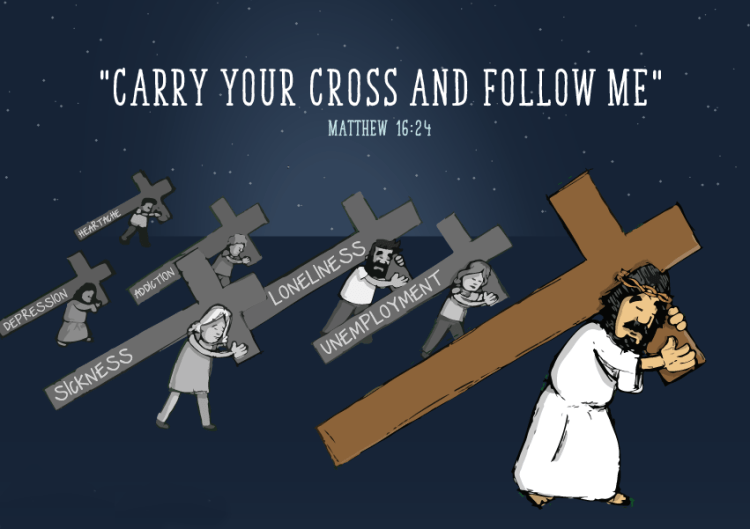
As Christians, the only reward we should have our hearts and minds set on, is the reward Jesus offered to all and promised to those who love him and keep his commandments, the reward of eternal life in heaven, and we should be doing all we can to gain that reward. The problem for us though is that, to some extent, we all crave tangible rewards, rewards we can have and enjoy now, and the reward Jesus offered and promised isn’t that kind of reward; it’s not a reward we can have and enjoy now, in this life, but one we can only receive and enjoy when this life has ended. But, as Jesus explains in this morning’s Gospel, we should be prepared to give up all for the sake of the great and precious reward he spoke about.

As Christians, we do have the Spiritual means to work for the reward Jesus offered and promised but, as human beings, we’re also creatures of flesh and blood who desire the tangible regards of this life, so we have a constant fight on our hands as these things battle for supremacy within us. But the reward Jesus offered and promised us is far more valuable than any reward we can ever hope for in this life, so that is the one we should be trying to obtain. It isn’t an easy reward to obtain, because to get it, means having to give up anything and everything that might prevent us from obtaining it, including the tangible rewards of this life that we crave so much. But, if we decide that the lure of earthly rewards is too great to resist, we run the risk of losing the great reward Jesus offers us. And if we allow ourselves to become so full of our own importance, in worldly or spiritual terms, or both, that we hurt others in our pursuit of the rewards of this life, we surely will lose the great reward on offer. A place in the kingdom of heaven might not be an easy reward to obtain, but the temporary rewards of this life pale into insignificance in comparison. So, let’s set our hearts and minds on obtaining that reward, and on getting rid of everything in our lives that might stop us from achieving it.

Amen.


You will find the Propers for the 17th Sunday of Ordinary Time (Trinity 7) here.

Thought for the Day: 16th Sunday of Ordinary Time (Trinity 6) 19th July, 2020

Cross in the Lady Chapel

I don’t think there can be any doubt that amongst the most damaging things to the Church and the Christian faith are the hypocrisy of some of the Church’s members, and the disputes that go on and divisions that exist between various people and parties within the Church. And these things are very often linked. The hypocrisy of Church members is, obviously, a failure of those people to practice what they preach. This brings not just them, but the whole Church and the Christian faith into disrepute and so it’s very often the cause of disagreements and fallouts, and ultimately, divisions within the Church. And whether that’s in a single Church congregation or a much wider dispute that leads to major divisions, and even splits the Church into different denominations, the result is the same; it shows the Church, and all Christians, in a bad light. It leads to the accusation that all Christians are hypocrites, and it makes it much harder for people outside the Church to take the Christian faith, the Church or individual Christians seriously because, if we who profess to be Christians don’t seem to take our faith seriously, why should they?  

The Church Fathers, whom I’ve spoken about from time to time, regarded this kind of dispute and division in the Church very seriously, far more seriously than we seem to do today. And I think they were quite right in doing so. For the Church Fathers, dispute and division between Christians, and especially schism, a clear split in the Church between people of differing opinions and beliefs, was the worst of all sins because it was a failure of Christians to do the very thing they’re called to do above all else; it was a failure of Christians to love one another. But, unfortunately, and as we know, this kind of thing has happened throughout the Church’s history and continues to happen today. And perhaps one of the worst examples of this, certainly in terms of the damage it did to the Church, was the so-called Donatist controversy that began in the early 4th Century in the Church in North Africa. The dominant faith in North Africa today is Islam, so it might seem strange to place such importance on a Church dispute in that part of the world. But at one time North Africa was a very staunchly Christian area of the world and the growth of Islam in the area was in no small way aided by the damage done to the Church by the Donatist controversy.

The Donatist controversy began after a period of Church persecution under the Roman emperor, Diocletian. During the persecution, many Christians renounced their faith and obeyed the imperial order to hand over Christian literature for destruction. After the persecution had ended, however, many of these people returned to the Church but the Donatists (named after one of their bishops, Donatus) wouldn’t accept them. Things came to a head when one of these traditores (literally, ‘those who handed over’ and where we get the word ‘traitor’ from) was consecrated as the Bishop of Carthage. The Donatists wouldn’t accept his consecration, and so they consecrated their own, rival bishop. And so, a schism resulted between the exclusivist, Donatist part of the Church, and the inclusivist Catholic part of the Church.

At the height of the Donatist controversy, one of the Donatist’s main opponents was St Augustine of Hippo and, in opposing them, he came up with, what was then, a new understanding of the Church.

What Augustine said was that, rather than the exclusive society of perfect, holy people the Donatists thought it should be and wanted it to be, the Church can only ever be a mixture of saints and sinners. Augustine said this is inevitable because sin is inevitable. And he used the parable we read this morning, the parable of the Wheat and the Weeds, to show that. Augustine said this parable was a metaphor for the Church, as it must exist in the world. And he said that, just as the wheat and the weeds grow side by side in the parable until they’re separated at harvest time, so saints and sinners will live side by side in the Church until they are separated by God at the end of time. And Augustine also had the extremely useful weapon of the Donatist’s own hypocrisy to aid him in his argument. Far from the perfect people they claimed to be, among the Donatists was a group of thugs, and they really seem to have been nothing more, who roamed the area beating up their Catholic opponents with clubs that they called ‘Israels’ because they were used for ‘smiting the foe’.

Eventually, and greatly helped by Augustine, the Catholic side of the Church gained the upper hand in this dispute, but it took the intervention of the Roman state to finally settle matters officially, and by then, the Donatist controversy had been a major problem for the Church in North Africa for over 100 years. Even so, the Donatist movement persisted for much longer and died out completely only when Islam replaced Christianity as the dominant faith in North African during the 7th and 8th Centuries.

There can’t be any doubt that the Donatist controversy was very damaging to the Church in North Africa between the 4th and 8th Centuries, and one of the most damaging disputes in the Church’s history. But, if we think about the underlying causes of the Donatist controversy, it’s a dispute that isn’t really confined to the early Church in North Africa; it’s still with us and it’s still damaging the Church today.  

The Donatists were exclusivists; they believed the Church should be made up of solely of the people whom they thought were worthy to be members of the Church. But do we not see that same thing in the Church today in the ‘We don’t want their sort here’ attitude we sometimes come across in Church members? Don’t we see it, in extreme cases, where we see some Church members actively trying to drive others away from the Church simply because they don’t like them or disagree with them about something? And isn’t this attitude also what lies behind the very common problem of people treating the Church as little more than a social club for themselves and their friends, and in which only they and their friends ought to have a voice in running? And isn’t that the attitude that leads to that bane of the  Church, the ‘clique’?

The Donatists also refused to accept the authority of a legitimately consecrated bishop because they thought he wasn’t worthy to be a member of the Church. But do we not see that same attitude in the Church today in places where problems are caused within Churches because one or more people disagree with, or simply don’t like, the bishop’s lawfully appointed representatives, the clergy?

Some of the Donatists, at least, were thugs and bullies who went around beating up their opponents. Thankfully, it’s very rare to come across instances of physical violence perpetrated by one or more Church members on any other, or others, but do we not see psychological and emotional bullying in the Church today? Do we not see that in cases where people use their position in the Church to throw their weight around and ‘Lord it over others’ as Jesus put it? Physical violence between Church members may be rare, but how many instances are there of people being reduced to tears, being made ill, or being driven away from the Church, by the behaviour of others in the Church. And isn’t it those who think of themselves as the most worthy, the members of the ‘club’ or the ‘clique’ and those who don’t see themselves as accountable to anyone, who are most often responsible for this kind of thing?

And, despite their own highly exalted view of themselves, perhaps above all, the Donatists were unforgiving, that after all, is why and how the controversy began. But don’t we see that same lack of forgiveness in the Church today? How many problems are caused in Churches because people are unwilling, or unable, to put old arguments and animosities behind them and so, can’t draw a line under the past and move on? And isn’t it very often those who think they’re just that little bit better than others, those of what’s often referred to as the ‘holier than thou brigade’ who are the most unwilling or unable to do these things? And, ultimately, what is a lack of forgiveness by and amongst Christians, other than that arch-hypocrisy, that worst of all sins, a failure of Christians to love one another as Jesus has loved us?

If you were to read about the Donatist controversy in a book of Church History, you’d probably read that it was confined to the Church in North Africa and ended well over 1,000 years ago. But the beliefs and attitudes that caused it, and caused so much damage to the Church, are still very much alive and with us today, and so we have to be on our guard against them at all times. We can’t allow ourselves to think that we are examples of perfect holiness, nor that we’re a member of some kind of holy elite because we’re neither. St Augustine said the Church was a mixture of saints and sinners and that’s exactly what it is. But that’s not because some of us are saints and some of us are sinners, but rather because each and everyone of us is a mixture of saint and sinner within ourselves. That doesn’t mean however, that we shouldn’t point out and try to correct obvious wrongdoing in others, the Gospel gives us ample evidence that we should do that, and Jesus gives us clear instructions on how to do it, but it does mean that we shouldn’t be too hasty, or willing, to judge others. It means we shouldn’t see ourselves as better than others. It means we should recognise our own faults and failings and wrongdoings as well as those of others. It means we should see ourselves as sinners too and, in seeing that, to be forgiving of others when they sin. And, no matter what, we must love one another. Jesus told us to love our neighbour as ourselves and, if we really do see ourselves honestly, as a mixture of saint and sinner, it means that when we look at others, we’ll see that we’re just looking at a reflection of ourselves. And, in that case, how can we think any less of our neighbour than we do of ourselves?

The only way we can be better than someone else, is to be better than them in God’s eyes. But we don’t see through God’s eyes so we have to guard against the self-righteous pride that will allow us to think that we’re better than others. If we don’t do that but instead set ourselves up as those in the parable of the Wheat and the Weeds who would go out and remove the weeds from amongst the wheat and burn them, as the Donatists and so many others have done during the Church’s history, we might find ourselves in for a very nasty surprise when the time for gathering God’s harvest comes.  Despite what we might think of ourselves, we might well find that, far from being amongst the righteous gathered into God’s kingdom, we’re amongst those who are bundled up and thrown into the fire.

Amen.


You will find the Propers for the 16th Sunday of Ordinary Time (Trinity 6) here.

Thought for the Day: 15th Sunday of Ordinary Time (Trinity 5) 12th July, 2020

Parable of the Sower by Graceful Illustrations

The parable of the sower and the seed must be one of the most well-known of all Jesus’ parables. It’s so well-known in fact that part of it, at least, has passed into everyday speech through that very well-known saying, ‘Some fell on stony ground’. Actually, in the context in which it’s normally meant in everyday language, that saying is incorrect because it’s normally taken to imply that what’s been heard has been ignored or disregarded, and that corresponds more with the word in the parable that is sown on the path, than with the word that’s sown on stony ground. Nevertheless, that any of the parable has become part of everyday speech is an indication of just how well-known this parable is. 

Having said that people misuse this parable in everyday speech though, I think that even those who know this parable well from their reading of the Scriptures can still miss out on part of it’s meaning for us. That’s because when we read this parable, our attention is drawn towards where the seed is sown, and what happens to it after it’s been sown. In other words, our attention is drawn towards the people who hear the word, the Gospel, and what they do after hearing it.

As we know, Jesus gives us four examples to consider. There is the seed that’s sown on the path which is eaten by birds. This relates to those who hear the Gospel but don’t really listen; these are the people who, for various reasons, don’t take any notice of the Gospel. Then there is the seed which is sown on stony, or rocky, ground; the seed that sprouts quickly but withers just as quickly because it has no depth of soil in which to take root; this relates to those who hear the Gospel and seem to really take its message to heart but whom, as soon as any kind of difficulty comes along that makes actually living the Gospel hard, lapse back into their former ways. Then there is the seed that falls amongst thorns and is choked by them; this relates to those who hear the Gospel but who care too much for worldly things for the Gospel to make any difference in their lives. And finally, there is the seed that falls on good soil and produces fruit; this relates to those who hear the Gospel and take it to heart, and who become committed disciples of Christ.

I’m sure that, when we read this parable, we’re often reminded of people we’ve met, and people we know, who fall into all these various categories. And we must know people like this because, whilst Jesus presents them in the parable as distinct groups or types of people, the truth is that we’re all a mixture of these four types; each and every one of us have, to varying degrees, the characteristics of the types of people Jesus describes in the parable. So, if we think about ourselves honestly and objectively, as Christians should, this parable will have related to us, at various times in our lives, and probably still does relate to us, at times in our lives today. And I think it’s when we do think about how this parable relates to us, that we can miss out on a very important aspect of this parable.

We know this parable as the parable of the Sower and the Seeds but, I think we tend to concentrate so much on the seeds and what happens to them after they’ve been sown, that we forget all about the one who sows the seeds, we don’t pay enough attention to the sower. But the sower is a very important character in the parable and, again, one we can, and should, relate to in our own lives and in our Christian discipleship.

Although we may well possess characteristics of all four types of people Jesus describes in the parable, as Christians, our predominant characteristic should be that of the fourth group, those who have heard the word, have taken it to heart, and who are producing fruit. And if that’s not our predominant characteristic now, it should, at least, be the one we’re aiming to make our predominant characteristic in the future. But we know that, before his Ascension, Jesus asked his disciples to take the Gospel to all people and so one of the most important things we can do as Christians, one of the very best ways of producing the kind of fruit Jesus is speaking about in this parable, is to spread the word, to proclaim the Gospel or, to use the same terminology that  Jesus used in this parable, to sow the seed. And that means that, as well as being amongst those Jesus speaks of as hearers of the word, we’re also proclaimers of the word; we’re called to be the sowers of the seed. So, we need to look at ourselves in relation to the sower in the parable too.

I don’t think there can be any doubt though, that some of the things that prevent us from being as good a hearer of the word as we should be, also prevent us from being as good a sower of the word as we could be. It’s quite obvious that we’re going to be hindered in sowing the seed of word if we don’t have at least some good soil within us. And so, we have to overcome the pathways and rocky ground and thorns within ourselves, because if we try to sow the seed of the word while we’re full of those things, we’ll simply be accused of hypocrisy. And perhaps one of the biggest obstacles we have to overcome as sowers of the word, is the world itself, the compromises we sometimes feel we have to make between what the Gospel teaches us to do, and what the world wants and expects us to do. And we have to overcome our fear of the world and our fear of ridicule and rejection by the world.

We know that, in the society we live in, we can come in for a great deal of criticism for being Christians, and whether that’s being made fun of for our faith or going to church, or being accused of hypocrisy, that’s not very nice to have to put up with. It can also be very difficult to have to endure the tedious lectures and tirades of the ‘You don’t have to go to church to be a Christian’ brigade, and of those who never tire of expounding the superiority of science over faith but who know little, if anything, about the Christian faith, and usually little more, if any more at all, about the science they put so much store in. But, in addition to the ridicule we get from such people, we also suffer rejection by them because they’re not likely to be good hearers of the word we sow. And this ‘double-whammy’ of ridicule and rejection can make it very difficult for us to carry on sowing the seed: it’s one thing to put up with opposition and ridicule if we think we might get somewhere in the end; it’s quite another to put up with those things in full knowledge that our efforts are very unlikely to bear fruit. But this is why we need to look closely at the character of the sower in this parable.  

When we read this parable, we find that the sower is quite indiscriminate in sowing the seed, he doesn’t pick and choose where to sow the seed, rather, he scatters seeds on the path, on rocky ground, and among thorns, as well as in good soil. We also notice that, once the sower has scattered the seeds, he disappears from the story, his work is done. And as it is with the sower in the parable, so it should be for us in our lives as disciples of Christ. We should simply sow the seed, spread the word, regardless of how we think the word will be received by those we speak it to. And, once we have sowed the seed, our work, in one sense, is done. How the people we’ve spoken to respond to hearing the word is their business, ours is to sow the seed and then move on to sow more seed in other places. Of course, if the seed we sow happens to fall in to good soil, we may very well be called to nurture it and help it to grow to fruition, but that’s not our initial purpose in sowing the seed of the word. And, just as sowing seeds is a physical rather than verbal action, so we can sow the seed through our actions too. We can sow the seed through our acts of Christian charity in the world, just as much as through our words to those we meet, and perhaps more so in many ways because our words will be all the more powerful, and they’re usually taken more seriously, if they’re supported by actions.

So, as we think about this parable, by all means let’s look at ourselves as the hearers of the word and do all we can to make sure that we’re full of good soil so that the Gospel will bear fruit in us. But let’s also look at ourselves as sowers of the word and follow the example of the sower in the parable by sowing the seed of the word wherever we are and to whomever we meet. And let’s try not be put off by the pathways, the rocky ground and thorns we often sow the seed in; that is not our fault and, just as the sower in the parable wasn’t held responsible for the poor growth of some of the seed he sowed, as long as we are full of good soil ourselves so that our efforts are not hindered by accusations of hypocrisy, neither will we be held responsible for any lack of growth from the seed we sow. That is the responsibility of the hearer. Our responsibility is simply to sow the seed.

Amen.


You will find the Propers for the 15th Sunday of Ordinary Time (Trinity 5) here.