From my late teens into my early 20s, one of the highlights of my family’s life were the annual boating holidays we used to take. Once or twice we cruised the Thames, but usually we spent those holidays on the Norfolk Broads. And one of the places we always visited while we were on the Broads is the seaside town of Great Yarmouth.
The seafront at Yarmouth is only about a 20-minute walk from the moorings on the River Bure and being so close to the coast, the river there is tidal, in fact, the river rises and falls about 6 feet (almost 2 metres) between high and low tide. So mooring up there wasn’t straightforward. If you got there at high tide, for example, you could step off the boat straight on to the dock. But if you then came back at low tide, you had to climb down 6 feet to get back aboard the boat. That meant that the mooring ropes had to be constantly adjusted to keep the boat both afloat and close to the dock. The wise, or the experienced, would pay the harbour master to do that for them but those who were too foolish, too inexperienced, or maybe too thrifty to do that, could find themselves in all sorts of trouble. On more than one occasion there we would come back to the boat, or perhaps wake up in the morning, to find a boat hanging , high and dry, on the side of the dock at low tide, or out on the river, some distance from the dock, at high tide.
The reason I’ve told you about that is because I think we can use that story and those images as an allegory of the Church in the world. The river is the world. The boat is the Church. The dock, the dry land, is the Christian faith. And the mooring ropes are what keeps us both connected securely to the faith and also afloat in the world. In this allegory, the mooring ropes are our traditions.
When people speak about tradition, and perhaps especially church traditions, I think they often regard them as something unchanging; something that is as it was, is now, and ever shall be. But that only applies to God. Traditions, even traditions in the Church, change over time; they always have done. And just like those mooring ropes on the river at Great Yarmouth, our traditions have to be constantly monitored and adjusted if they’re going to keep us both firmly connected to the dry ground of our faith, but also afloat on the river of life that is the world we live in and in which we’re called to proclaim the Gospel.
Of course we can mean different things when we speak about tradition in the Church. We can mean those parts of our faith which are not in, or at least not explicit in scripture but which, nevertheless, have long been believed to have happened and to be true. Those traditions are part of our faith, part of the dock we want to stay closely attached to. But we can also speak about tradition meaning the things we do in our churches, the way we worship, the prayers we use and so on. And really, these are the traditions I’m talking about when I compare them to mooring ropes. Because these traditions do need to be checked and adjusted from time to time. If we don’t do that then we can find ourselves in trouble.
Just like a tidal river rises and falls, so the world around us moves and we . have to adjust our mooring ropes to allow for that. If we refuse to budge from where we are, refuse to change what we do and the way we do things, then, as the world around us moves, we can find ourselves left, high and dry, so closely tied to our traditions that we’re no longer connected to the river of life that is the world. If that happens, how can we proclaim the faith in the world? Alternatively, if we let our ropes out too much, we can be swept away by the river, by the world, and drift too far from the dock, from the faith. So far perhaps that we lose sight of the faith or wonder how we can ever get back. This is what happens when we abandon tradition and just go with the flow in an attempt to remain afloat on the river of life. We always have to remember that what we do, our traditions, are intended to keep us both firmly attached to our faith but also enable is to remain afloat in the world.
And throughout Church history this has been the case. The history of mission and evangelism is a history of change, of the Church adapting to new situations in different places and different times in order to proclaim the Gospel effectively in that time and place. The greatest missionary and evangelist the Church has ever known is St Paul and we know that he was not tied to one way of doing things, one tradition, because he said,
To the Jews I became as a Jew, in order to win Jews. To those under the law I became as one under the law … that I might win those under the law. To those outside the law I became as one outside the law … that I might win those outside the law. To the weak I became weak, that I might win the weak. I have become all things to all people, that by all means I might save some.
Something we always have to remember is that everything that we think of as tradition was, at one time, innovation. It was new, it was tried, it worked and so it was used again, and it only became tradition through repeated use. For example, one of the great traditions of the Anglican Church is the 1662 Book of Common Prayer. Many people who would no doubt think of themselves as traditionalists, in fact, would love the Church of England to go back to using the 1662 Prayer Book. But the 1662 Prayer Book itself was the result of changes made to earlier Prayer Books going back to 1549. So in 1662 the Book of Common Prayer was something new and innovative. It might be tradition to us now, but it wasn’t always traditional and at less than 400 years old, it’s actually a relatively recent innovation in a Church which goes back 2000 years.
We have to remember too, what the Church’s mission is. Christ did not tell us to find a way of doing things that we’re happy with and stick to it, he called us to go out into the world to proclaim the Gospel; to teach others about him. He and the Christian faith are what we’re called to stay securely attached to, not local traditions. And we need to find ways to carry out that mission on the river of life in the world in the time and place we find ourselves in now. And time and place are important.
We hear a lot these days about the Celtic Church. On the whole people seem to see this an expression of the original British Church but one which is very relevant to today’s ecological concerns because it placed a great emphasis on the natural world. A lovely, warm, and perhaps gentler form of Christianity that we would do well to return to. That’s a very nice image; the trouble is it’s very far from reality. The first Christians in Roman Britain almost certainly came from the eastern empire and what we now call the Celtic Church was that eastern Christianity distilled through its experience and missionary activity, first in Roman Britain, and especially later in Ireland. Its apparent emphasis on the natural world was something it assimilated from the nature worshipping Celtic people as a way of proclaiming the Gospel to them. Arguably, it even assimilated practices from Druidism, such as the style of tonsure, the monastic hairstyle it adopted. But at heart, what we call the Celtic Church was ascetic in practice and looked to the Desert Fathers of Roman Egypt for inspiration.
If we look at the history of mission and evangelism what we tend to find is that it’s a story of innovation and change in practice whilst at the same time remaining securely attached to Christ and the Gospel. It’s a story of taking what has gone before and adapting it to changing circumstances, to and in different times and different places. It’s a story which has very much followed the words of Jesus we heard this morning:
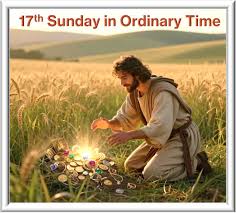
“…every scribe who has been trained for the kingdom of heaven is like a master of a house, who brings out of his treasure what is new and what is old.”
And that is what we need do. Just as the mooring ropes of a boat need to be constantly checked and adjusted to allow the boat to remain both firmly attached to the dock and afloat on the river, we need to be constantly looking at what we do and the way we do it, at our traditions. We need to look at how and why these things became our traditions, to look at where we were. We need to look at why we still continue with our traditions, to look at where we are now. And we need to look at whether our traditions need to be adapted or changed, to look at where we want to be in the future.
People often look at traditions or cling to traditions as a way of keeping a changing world at arm’s length, but we can’t do that and fulfil our mission to proclaim the Gospel in and to the world. People are often afraid of change, Church people perhaps most of all, but we can’t be if we are going to fulfil that mission. Adaptability and change are the essence of mission and evangelism. So we shouldn’t look at innovation and change as the enemy of tradition but rather as the very necessary precursor to new and perhaps better traditions.
Amen.
Propers for the 17th Sunday in Ordinary Time, 26th July 2026
Entrance Antiphon
God is in his holy place,
God who unites those who dwell in his house;
he himself gives might and strength to his people.
The Collect
O God, protector of those who hope in you,
without whom nothing has firm foundation, nothing is holy,
bestow in abundance your mercy upon us and grant that,
with you as our ruler and guide,
we may use the good things that pass in such a way,
as to hold fast even now to those that ever endure.
Through our Lord Jesus Christ, your Son,
who lives and reigns with you in the unity of the Holy Spirit,
God, for ever and ever.
Amen.
The Readings
1 Kings 3:5-6, 7-12
Psalm 119:57, 72, 76-77, 127-130
Romans 8:28-30
Matthew 13:44-52
Prayer after Communion
We have consumed, O Lord, this divine Sacrament,
the perpetual memorial of the Passion of your Son;
grant, we pray, that this gift,
which he himself gave us with love beyond all telling,
may profit us for salvation.
Through Christ our Lord.
Amen.
 Parish Church of St Mark Chadderton