I’m sure that during the run up to Christmas, some of you at least will have come across the controversy and argument about the revised lyrics to the Christmas carol, God Rest Ye Merry, Gentlemen. For those who didn’t come across this story, a new version of the carol has been written by an American minister which retains only the first two lines of the original and replaces the rest of the words with what have been described as ‘woke’ lyrics. And this has caused controversy and argument in this country because an Anglican parish church in Leicestershire, used the new version of God Rest Ye Merry, Gentlemen at a Christmas Carol service this year.
The new version of the carol omits any reference to Christ as Saviour, it contains no direct reference to his birth at Christmas but instead speaks about Christ bringing ‘love’s light’ at Christmas. It contains no reference to Christ saving us from Satan’s power and replaces the traditional words about the angels and shepherds, Bethlehem, Mary and the manger with lyrics about the oppression of women by men, and lyrics about LBGT people. The controversy and argument has been caused because many people in the Church are angry that a Christmas Carol has been used to push the woke agenda of a few people in the Church, at the expense of and to the exclusion of the Christmas story.
But can anyone really be so surprised that something like this has happened? We don’t have to look too hard to see that the story of our Lord, as revealed in Scripture, has been and is always being distorted and changed by those with their own agenda to push.
For example, I remember very well once hearing a world-famous American Evangelist preaching that Jesus believed in the ‘American Way’. He said that Jesus was a Capitalist, that he believed in free enterprise and private property. I don’t recall ever reading any such thing in Scripture, but I have read that we should love others as much as we love ourselves. I’ve read that we should give freely to those in need, without hope, expectation or even desire to be repaid. I’ve also read that Jesus’ own disciples, those who were with him during his ministry and who knew him best interpreted Jesus’ teaching very differently than this modern day American. In the Acts of the Apostles we read that they, and their early coverts to the new Christian faith,
‘…were together and had everything in common. They sold property and possessions to give to anyone who had need.’
But then, an American ordinand whom I studied with at Mirfield did once say that we should be very wary of what American theologians say because, on the whole, they don’t preach Christianity. They preach American values and pass them off as Christianity.
And speaking of Mirfield reminds me of another instance of people corrupting the Christian faith in order to push their own agenda. On one occasion, another student there asked my opinion on a subject he’d been asked to write an essay on, which was, whether Jesus, a male Messiah, could be a Saviour for women. Because apparently, some feminist theologians were arguing that he couldn’t, and that only a female Messiah, could be a Saviour for women.
It would perhaps be very easy to respond to things like this by asking where these people are coming from but unfortunately, I think I know exactly where these people are coming from. I think people who do and say things like this are people who do have an understanding of the Christian faith and of Jesus’ teachings, probably a good understanding of these things, and because of that they know that Jesus didn’t say what they wished he had said. That might be because they want to live in a way that Jesus said they shouldn’t, or simply that Jesus said nothing at all about a particular subject that’s close to their hearts. And so they try to change Jesus’ teaching. They put words into Jesus’ mouth by distorting the things he said so that they can be interpreted in the way they want them to be interpreted. Or, and what’s even worse, they simply disregard Jesus completely and invent their own teachings because they can’t make Jesus say what they want him to say or make Jesus himself what they want him to be.
But when people do things like this what is it they’re really doing? They claim to be Christians, but they distort the teachings of the Christian faith. They claim to be Christians, but they invent teachings which Christ himself never taught. They claim to be Christians, but they say that Christ doesn’t speak for them. But to be a Christian means to be a follower of Christ. To be a Christian means to amend your life so that it conforms to Christ’s teaching and example. So, when people distort Christ’s teaching, when they put their own teaching into Christ’s mouth, and when they say that Christ doesn’t speak for them, far from being the Christians they claim to be, what they really are, are followers of their own religion. They’re followers of a religion they’ve invented themselves who then try to claim that their own, personal religion is a valid expression of the Christian faith.
And so, even though they don’t agree with all Christ’s teachings and won’t follow those of his teachings they disagree with, and perhaps don’t even believe that Christ is their Saviour, they still claim to be Christians.
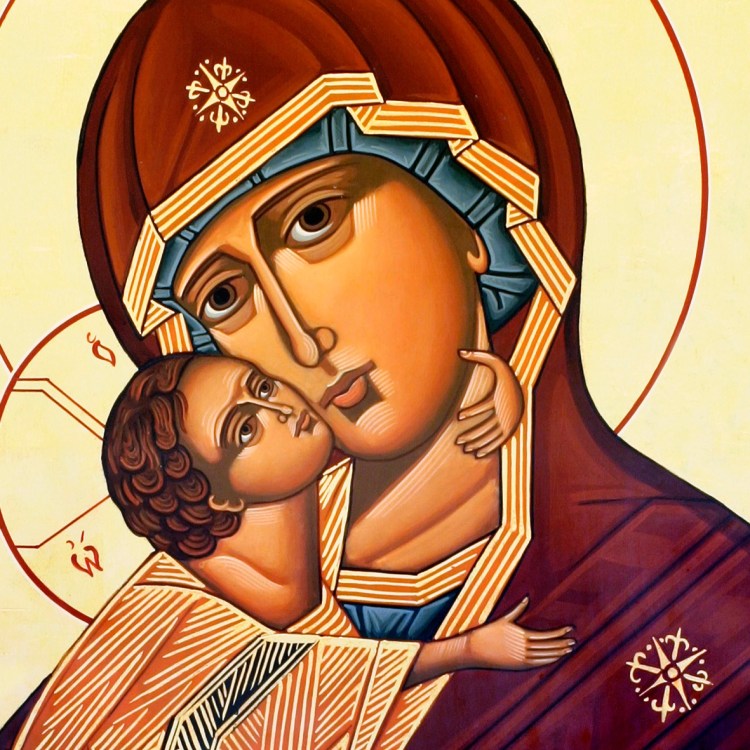
Today, although the readings are the same in both lectionaries, we celebrate two different aspects of the story of our salvation. According to the Roman Catholic calendar, today is the Feast Day of Mary, Mother of God whilst according to the Church of England, today is the Feast of the Most Holy Name of Jesus. And as we think about these two aspects of the story, they should remind us that no one is excluded from God’s plan for our salvation. God’s plan for our salvation includes women, just like Mary. Mary was chosen by God to play her part in the story, and so is every other woman chosen to play their own part in the ongoing story of salvation. All sort of women were chosen, poor women, wealthy women, sick women, widows, prostitutes, Jewish women, Gentile women. Read the Gospel, you’ll find them all there. All sorts of men were chosen to play their part in the story of salvation, and still are being chosen. Ordinary working men like Joseph, rough characters like the shepherds, tax-collectors too, the kind of men who wouldn’t be welcomed in polite society. Rich men and poor men were chosen, wise men and fools, rulers and slaves were chosen, the crippled, the blind, the mentally ill, drunkards, Jewish men and Gentile men. Again, read the Gospel, you’ll find them all there. And children too. The evidence of Scripture is that no one is excluded from God’s plan, so how can people say that they are excluded? The world may exclude people from many things, but God doesn’t. How can he? He loves us so much he sent his Son to us to save us and grant us eternal life.
God’s plan is to bring salvation to the world, to all people through the Incarnation, ministry, teaching and example, and death and Resurrection of his Son. So how can people say that they’re not included in this plan? To say that is to say that God’s plan is flawed and incomplete. To change God’s plan by distorting Christ’s teaching or adding our own amendments to his teaching is to say that we know better than God. It must be because if we change or add to Christ’s words to suit our own agenda what are we saying other than God’s plan would be better if he’d have done things this way, our way?
And God’s plan has a name, the most Holy Name of Jesus. But God’s plan requires that we put the name of Jesus above all other names. It requires that we live, not as we might want to live or as we think or wish that Jesus should have taught us to live, but as he did teach us to live and as he himself did live.
In his Letter to the Philippians, St Paul puts it this way;
Do nothing out of selfish ambition or vain conceit. Rather, in humility value others above yourselves, not looking to your own interests but each of you to the interests of the others.
In your relationships with one another, have the same mindset as Christ Jesus:
Who, being in very nature God,
did not consider equality with God something to be used to his own advantage;
rather, he made himself nothing by taking the very nature of a servant,
being made in human likeness.
And being found in appearance as a man,
he humbled himself by becoming obedient to death—even death on a cross!
Therefore God exalted him to the highest place,
and gave him the name that is above every name,
that at the name of Jesus every knee should bow,
in heaven and on earth and under the earth,
and every tongue acknowledge that Jesus Christ is Lord,
to the glory of God the Father.
St Paul speaks against selfish ambition and vain conceit, but how much selfish ambition and vain conceit is there in those who distort the Gospel for their own ends, who put their own words in Christ’s mouth to push their own agenda? St Paul urges Christians to follow Christ’s own example and show humility, but what lack of humility is shown by those who would, to all intents and purposes, usurp Christ’s Lordship over the Church by claiming to speak in his name whilst, in reality, speaking for themselves? St Paul exhorts us to kneel before Christ and acknowledge him as our Lord, but what dishonesty and disloyalty is shown by those who call Jesus, Lord, whilst they refuse to bend their knee to him in obedience to his words? And St Pauls says we should do all this to the glory of God the Father. But what glory do people really think they’re giving to the Father when they act in ways which show that they think they know better than him?
Amen.
Propers for Sunday in the Octave of Christmas, Mary Mother of God/The Holy Name of Jesus can be viewed here.

