One of the things that I’m sometimes very surprised at are the things that people, committed Christians, say about their faith which betrays either a lack of understanding of the Christian faith, or at least a very strange understanding of the faith. As a priest, I’d like to say that these comments come from the laity, but I must admit that over the years I’ve heard some rather curious things being said by the clergy too.
For example, in one diocese in which I served, a Lenten leaflet was produced, by the diocese, for distribution to the parish congregations during Lent. The subject of the leaflet was the difficulty of finding God in a graceless world. When I read that, straight away, my hackles were raised. We may say that God’s grace often goes unseen and unrecognised in the world, but we simply can’t say that the world is graceless because to say that is to imply that God is not present and active in the world and that the Holy Spirit is not present and active in the world. To be blunt, to say that the world is graceless is heresy. But what made that statement even worse was that it was endorsed by a bishop.
On another occasion, I heard a priest, in his Midnight Mass sermon, say that God sent his Son into the world so that we could love him, love God that is, because God needs our love. There’s nothing wrong with the first part of that statement but to say that God needs our love, or anything else for that matter, is to imply that there is a deficiency in God. It’s to imply that God is not whole or complete in himself but needs something from outside himself to be whole and complete. We may say that God wants our love because he wants us to be saved, that’s why he sent his Son into the world. But to say that God needs our love is to imply that God is in some way diminished if we don’t love him. Again, this is heresy and heresy made all the worse because it was preached by a priest of the Church.
So it’s not only lay people who say strange things about their faith but, as you might expect, I have heard some pretty strange things from lay people too. Such as the person in one parish in which I served who told me they wanted to ‘Come back as a horse.’ This person had been going to Church all their life, but it seems they thought Christians believe in reincarnation. I pointed out that we don’t, to which they responded, ‘Oh. What do we believe in then?’ ‘Resurrection’, I said. To which they replied, with a very puzzled look on their face, ‘Isn’t that the same thing?’
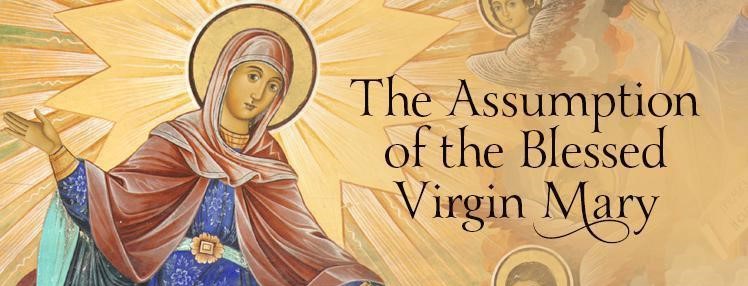
But when it comes to misunderstanding the Christian faith, perhaps one of the most revealing things I’ve ever heard anyone in the Church say was about the person whose life and example we remember today, the Blessed Virgin Mary, and her son, our Lord Jesus Christ. What this person, again someone who’d gone to Church all their life, said is that the reason Jesus was so much better than us is because Mary was so different to us. And what that statement reveals is a complete lack of understanding, or complete misunderstanding, about the essentials of our faith, including the two great pillars of our faith; the Incarnation, the birth of God’s Son as a human being, and the foundational event of our faith, Jesus’ Resurrection.
To be fair to the person who said these things, they did go to a very high, extremely Anglo-Catholic church. If I were to tell you that, as you walked through the front door of that Anglican parish church, on the wall in front of you was a very big portrait photograph of the then Pope, John Paul II, I’m sure you’ll get the idea. And given what the Roman Catholic Church teaches about Mary, and especially what some elements within that Church would like the Church to teach about Mary, a misunderstanding like the one this person had is perhaps not so surprising.
As I’m sure you all know, the Roman Catholic Church teaches as dogma, that is, as irrefutably true and something that we must believe in order to be saved, the Immaculate Conception of Mary; that Mary, unlike the rest of the human race was born without original sin. The Roman Catholic Church teaches as dogma, the Assumption of Mary, that at the end of her life, Mary was taken, body and soul, directly to heaven and entered into glory. And there are those who would like the Church to teach other things about Mary as dogma too. Mary as Mediatrix, the mediator of all divine graces. Mary as Co-Redemptrix, which refers to Mary’s essential role in the salvation of all people through her acceptance of God’s call to be the mother of his Son. And Mary as Advocate, the one who pleads our cause to Jesus, her son, who then mediates between God and humanity.
As most, if not all of you will know, I’m a regular pilgrim to Mary’s shrine in Walsingham. That’s something I’ve been for the best part of 30 years now, and it’s something I’m keen to encourage others to do too. So I have a great personal devotion to Mary. But if we’re not careful, we can, I think, go a little overboard in what we say about Mary. Whilst the Church does teach Mary’s importance in the story of our salvation, the Church is also very keen to emphasise that she is subordinate to Jesus, her son. But popular piety, what people think and believe, doesn’t always follow what the Church actually teaches. A very good example of that is the number of people who think and believe that the Church of England is a Protestant Church when, in fact, the Church of England does not and never has claimed to be a Protestant Church. The Church of England claims to be, and has only ever claimed to be, a reformed Catholic Church. And if we take what the Church teaches about Mary simply at face value, don’t some of these teachings suggest that Mary has roles that are the same as those of Jesus? Mediator of divine grace, Redeemer, heavenly Advocate? So is it any wonder that people can start to think that Mary is very different to the rest of us?
But whatever we say about Mary, one thing we must always remember is that Mary was not different to us, except perhaps in her devotion to God. Mary was just as human as you, or I, or anyone else. She had to be because Jesus‘ humanity came from Mary and if her humanity was not the same as ours then neither was his.
In the Letter to the Hebrews we read that Jesus,
‘… had to be made like his brothers and sisters in every respect, so that he might become a merciful and faithful high priest in the service of God, to make propitiation for the sins of the people. For because he himself has suffered when tempted, he is able to help those who are being tempted.’
So if Jesus’ humanity was not the same as ours then our faith comes tumbling down in ruins. If Jesus’ humanity was not like ours, the Incarnation is meaningless to us because God’s Son was not made man. If Jesus’ humanity was not like ours his sacrifice on the Cross is meaningless to us because he didn’t die as one of us. If Jesus humanity was not like ours his Resurrection becomes meaningless to us because he wasn’t raised as one of us. If Jesus’ humanity was not like ours his Ascension is meaningless to us because he wasn’t raised to heaven as one of us. And if Jesus’ humanity was not like ours his role as our heavenly Advocate is at least severely limited because how can one who doesn’t know what it is to be human in the same way that we’re human possibly be a ‘merciful and faithful high priest’ for us, one who is able plead our cause to God the Father?
So Jesus’ humanity had to be like ours, and for his humanity to be like ours, Mary’s humanity had to be like ours too. That doesn’t mean we can’t venerate Mary for her very great role in the story of our salvation. It doesn’t mean we can’t venerate Mary as the mother of our Lord Jesus Christ and, by extension, the Mother of God. It doesn’t mean we can’t ask Mary’s prayers to aid and assist us in our prayers. It doesn’t mean that we can’t honour Mary in the way the Church has done throughout its history. But it does mean that we can’t say that Mary was any different to us as a human being.
Whatever titles we want to give Mary and whatever roles, attributes or greatness we want to ascribe to Mary, we always have to remember that she was every bit as human as the rest of us. But that doesn’t diminish Mary in any way. We know how hard it can be to be a Christian and to follow God’s will. But if Mary, who was just like us, could do that in such a great and exemplary way, so can we. Mary’s example to us then becomes all the more shining and relevant in and to our lives. And in that sense, remembering Mary’s humanity can actually her give even more honour.
Amen.
The Propers for The Blessed Virgin Mary (The Assumption) can be viewed here.
 Parish Church of St Mark Chadderton