I don’t know if anyone watched it, but during the past week the 1971 film Mary Queen of Scots was shown on TV. I only managed to catch a few minutes of it here and there myself, but I have seen it before and it is a film I quite enjoy, as did many other people as is shown by the fact that it was nominated for several Academy Awards and Golden Globe Awards at the time of its release. So it’s a critically acclaimed film too in many respects. In fact one of the few negative opinions of the film are in regard to its historical inaccuracies. Because, like many other historical dramas, Mary Queen of Scots does play fast and loose with history at times for dramatic effect. One aspect of the film which does have a good grounding in history though, is the hatred and animosity it portrays between Catholics and Protestants of the time. Although some critics have said that even this is downplayed to some extent in the film, its shadow hangs over the whole film and it’s central to many of the subplots within the film.
Thankfully, we don’t have to deal with that level of hatred and animosity between the different denominations of the Church today. But sadly, in many ways and at many times, it is only a matter of degree to which things have improved since the 16th Century. I’ve told the story before of the time when the Baptist leader of Churches Together in a certain area, an organisation with the sole purpose of fostering closer links and greater cooperation between the different churches in an area, excluded the local Roman Catholics from the organisation on the grounds that the were “not proper Christians”. At the time we Anglicans had very good links with the local Roman Catholics and in fact, our two churches went on joint pilgrimages to Walsingham together. So we were excluded from Churches Together too on the grounds that we were “too close” to the Catholics.
On the other hand, I’ve lost count of the number of times Catholics have told me that I’m not a proper priest, and not even a proper Christian because I’m a Protestant. Just recently, an ex-Anglican who’s been received into the Roman Catholic Church told me that the priest at the church he now attends has told him that all the years he’d been an Anglican had been a “waste of time.” Why? Do we proclaim a different Gospel than the Roman Catholic Church? Do we not, like them, also acclaim Jesus Christ as our Lord and Saviour?
That said, I wouldn’t even know where to start when it comes to talking about the trouble within the Church of England between people can who see themselves as Protestants or Catholics and all things in between but belong to the same Church!
I will never forget one particular incident though that happened on the day of my marriage to my late wife Diane. The wedding was wonderful, a Nuptial Mass during which, at one point apparently, Diane, I and the parish priest disappeared from view in a cloud of incense. But when we got to the reception and I went to speak to an elderly aunt of mine, she walloped me with her walking stick for getting “married in a Catholic Church!” And when I explained that the church was Anglican, she rather furiously pointed her stick, jabbing it backwards and forwards in the direction of Diane and said, with real venom in her voice,
“She’s not one, is she?”
“One what?” I said.
To which she, with no diminishment of the venom replied,
“A Catholic!”
To be honest, I really don’t know what goes on in the heads of people who call themselves Christians and yet harbour such appallingly un-Christian thoughts, and act in such appallingly un-Christian ways towards people of the same faith, simply because they belong to a different Church, or simply because they worship the Lord in ways that are different to their ways. Do we not all proclaim the same Gospel? Do we not all acclaim the same Jesus Christ as our Lord and Saviour? We must do, surely, or we’re not Christians at all. So why are we so horrible towards one another? How can we be so horrible towards one another? If we are Christians at all, then we all agree that Christ is the way, the truth, and the life. So how can we then, call ourselves Christians and at the same time, act in ways that are so contrary to the way, the truth and the life that Christ taught and lived?
I think, in part at least, the problem is that people forget at times who it is they’re called to follow. People tend to follow, to a greater or lesser extent perhaps depending on which Church we’re talking about, where the head of their Church on earth leads. So, for example, I once heard a priest say,
“If the Pope says black’s white, as far as I’m concerned, black is white.”
On the other hand, I’ve heard many people say that they don’t care what the Pope says because they are not Catholics. So they would take their lead from somewhere and someone else. It might be from the 39 Articles of Religion, in which case, their lead comes, ultimately from Canterbury. They might be from what we sometimes call a non-conformist Church, so their lead might come from the teachings Luther or Calvin or another of the great Reformers. And sometimes, it must be said, that if we can’t make our minds up who’s right and who’s wrong, we simply make our own minds up and do what we think is right.
But we’re not called to follow any of these people, and neither are we called to follow our own way, we’re called to follow Christ. And if we look at the state of the Church, how divided it is and how divisive it’s language can be,
‘We’re right, they’re wrong’
We’re the true Church, they’re not’
and so on, we can only conclude that none of the churches are following Christ as they are called to and should do. If the Churches, all of the Churches, followed Christ more closely, the Church wouldn’t be so divided as it is. The language and behaviour of the Churches and the Church’s people, such as I’ve spoken about already, is very sectarian in nature, and perpetuates sectarianism and division. And there should be no place for sectarianism in a Church that was and is called to one Church made up of people who love one another.
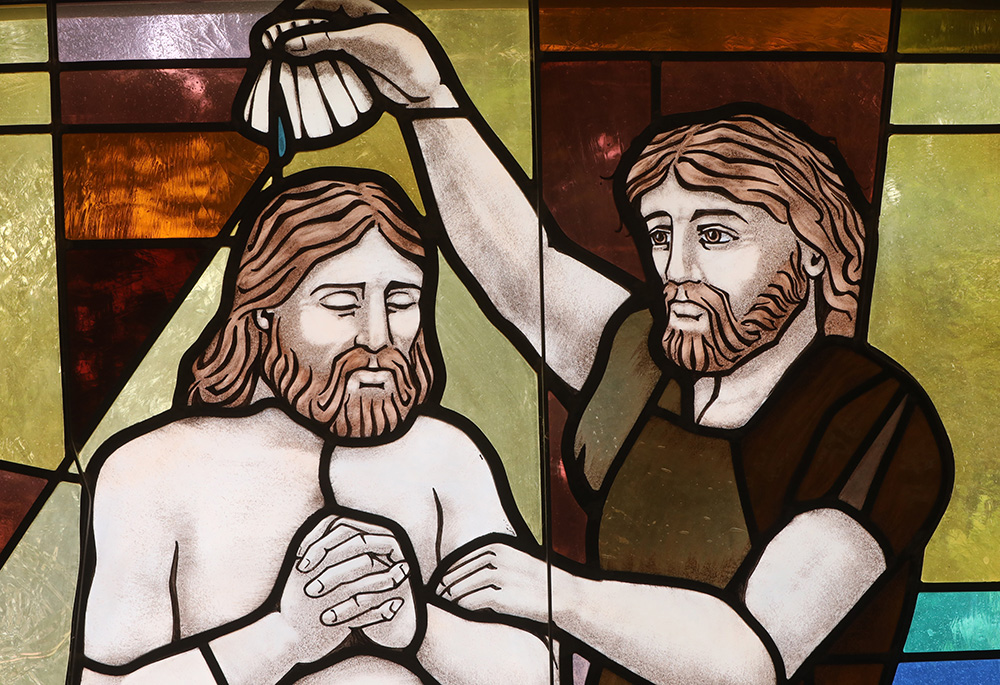
Today marks the beginning of the Week of Prayer for Christian Unity, and our readings this morning are very appropriate to that topic. In our Gospel reading we find John the Baptist, someone who had a great following of his own, someone who many people believed was the Messiah, nevertheless directing people away from himself and his way, and pointing them towards Jesus because John knew that his way, as great as it was, was not the way, the truth and the life that only Christ himself could teach us and lead us in to. And this is what the Churches should be doing. Not saying to people, our way is the way because our way, and only our way, is Christ’s way but being honest enough to accept that none of us are following Christ as we should do and pointing people towards him.
And we should never forget that, as Christians, this is what we’re called to do, to follow Christ and try our utmost to be like him. We’re not called to be like a Pope or an Archbishop or a Patriarch or any other earthly Church leader, we’re called to be like Christ. As St Paul says in this morning’s reading from his First Letter to the Corinthians, we’re called to be saints, holy people, dedicated to our Lord Jesus Christ. Because it’s in Christ that we’re sanctified; it’s in Christ and through our allegiance and obedience to him that we’re made holy and become saints. We’re not sanctified in Pope, Archbishop, Patriarch or any other earthly leader of the Church. We’re not sanctified through obedience and allegiance to Rome, Canterbury, Constantinople, Wittenberg, Geneva or any other place. We’re sanctified in Christ.
One of the great problems we have in establishing greater unity between the Church’s of course, is pride; when we have differences with someone else, we like to think that we’re right and they’re wrong. So when it comes to Church unity the Churches seem to work on the basis that all the other Churches should fall into line with them. But that is never going to happen for the very simple reason that, to some extent, we’re all right in some things and we’re all wrong in other things, and why should we change something that’s right, for something that’s wrong? The problem again is pride. Our pride won’t often let us accept that someone else might have got something right, and that we might have got something wrong . But if the Church is going to be more united, as it’s called to be and should be, we will all have to accept that.
To me, this is what must happen if we’re ever going to make any progress towards Church unity. And I don’t think this idea has ever been better expressed than it was by the Catholic theologian Hans Kung in his 1968 book The Church. He wrote,
Church unity is not a matter of one Church returning to another or joining another; it’s not a matter of the subjugation of one Church by another, but of the submission of all Christians to Christ. The road to Church unity is one which takes us on a common journey in which we must all move towards Christ. And the closer we come to him, we’ll find that we will necessarily, move closer to each other.
To which I can only add, Amen
Propers for the 2nd Sunday in Ordinary Time, 18th January 2026
Entrance Antiphon
All the earth shall bow down before you, O God,
and shall sing to you,
shall sing to your name, O Most High!
The Collect
Almighty ever-living God,
who govern all things,
both in heaven and on earth,
mercifully hear the pleading of your people
and bestow your peace on our times.
Through our Lord Jesus Christ, your Son,
who lives and reigns with you in the unity of the Holy Spirit,
God, for ever and ever.
Amen.
The Readings
Isaiah 49:3, 5-6
Psalm 40:2, 4, 7-10
1 Corinthians 1:1-3
John 1:29-34
Prayer after Communion
Pour on us, O Lord, the Spirit of your love,
and in your kindness
make those you have nourished
by this one heavenly Bread
one in mind and heart.
Through Christ our Lord.
Amen.
 Parish Church of St Mark Chadderton