We hear a lot in the news these days, do we not, about the divisions in our society and about the problems and trouble that these divisions are causing. But then we in the Church should know all about this kind of thing because we’ve been dealing with the problems of division for a long time. And if anyone here thinks that there was a time when the Church was not divided in some way, and those divisions did not cause problems within the Church, I’m sorry to disillusion you, but we need only read Acts of the Apostles and St Paul’s Letters to see that division within the Church has been present since the very early days.
And division and all the problems associated with division are still with us. For example, almost immediately after the announcement of the Reverend Sarah Mullally as the new Archbishop of Canterbury, GAFCON, the Global Fellowship of Confessing Anglicans, the grouping of conservative Anglicans, largely from Africa and Asia, expressed its sorrow and dismay at the appointment, and its concern that the appointment of a female, liberal to the See of Canterbury will only deepen the divisions that already exist within the global Anglican Communion.
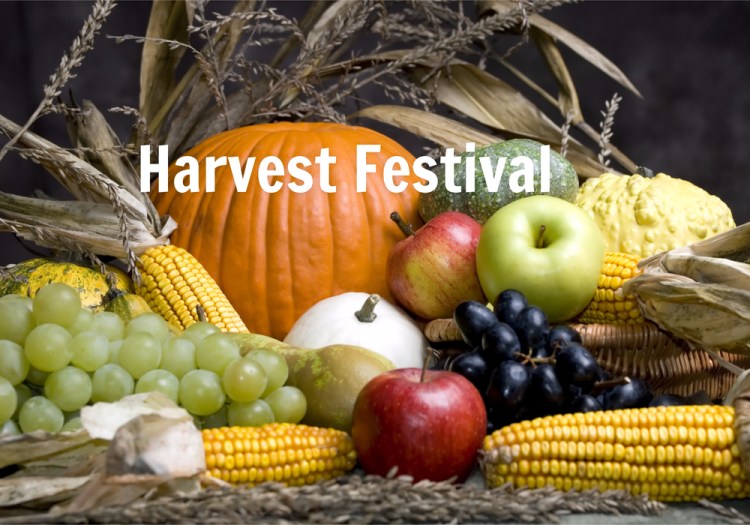
But then we don’t have to look to the wider world, either secular or sacred to see division. People here in our churches today will, I know, be divided in their opinion about what we’re celebrating in church this morning because our annual Harvest Thanksgiving services are a source of division. Some people love them, while others loathe them.
I must admit, I’m not a big fan of Harvest Thanksgiving services. Not though, because of any great objection to these services in themselves, but because of the inordinate fuss that people can make over them, and the trouble they can cause between even those who absolutely love them. I’ve been in parishes where, if you were to judge by the time and effort that goes into decorating the church and organising who’s going to do what at the service, you’d think that Harvest Thanksgiving was more important than Easter and Christmas combined. I’ve known churches where they form Harvest Thanksgiving Sub-Committees to discuss and organise their Harvest Thanksgiving service which is something they most definitely didn’t do even for Easter and Christmas. And such a completely OTT carry-on is utterly ridiculous, for what is, when all is said and done, simply an optional local celebration in the Church’s calendar.
And then there’s the trouble these services can cause between those who want to get involved in them. How many times have I heard people arguing and falling out about who’s doing what and who’s decorating which window sill for a Harvest Thanksgiving service. And when it comes to who’s going to do that piece de resistance, the central display in front of the altar, well, at times you’d think people were vying for seats at the right and left hand of the Lord himself! And the arguments and upset and fall-outs these things cause is again, utterly ridiculous. I’ve even known people leave a church because somebody has done something for or at a Harvest Thanksgiving service that they thought they should have been allowed to do!
So that’s my problem with Harvest Thanksgiving services. But for other people there’s a more fundamental problem with them For some people, Harvest Thanksgiving services smack of ancient fertility rites They’re uncomfortable with symbols taken from nature taking pride of place in a church and these things fly a little too close to paganism for their liking. And again, I know someone who did leave a church because, in his opinion, things went a little too far in this direction at a Harvest Thanksgiving service one year. As I recall, putting a Green Man image at the centre of the display in front of the High Altar was the straw that broke this particular camel’s back!
For other people though, Harvest Thanksgiving services are simply anachronistic. For some, they have no real place in today’s world, or at least in our part of the world where the vast majority of people no longer work in agriculture and we no longer rely on the annual harvest for our food.
Having said all that, you might be forgiven for thinking that I think we’d be better off without Harvest Thanksgiving services but actually, I do think that these services can serve a good and useful purpose, if we can do away with the OTT fuss that some people make of them, and all the pagan imagery and associations that can go with agricultural celebrations, and get back to what should always have been at the heart of our Harvest Thanksgiving services. Originally, Harvest Thanksgiving in church was intended to replace the pagan, or at least semi-pagan festivities that went on in agricultural communities at harvest time with a Christian service of thanksgiving to God. And that’s what we need to get back to; making Harvest Thanksgiving services a reminder of our need, our obligation even, to give thanks to God. And not just for our food, but for all that God gives us.
To be honest, I think that thanksgiving is sadly lacking in what we do in church, and perhaps in what we do as individual Christians too. Like me, many people here today will be of a generation that was taught to give thanks to God on a daily basis for the food we eat. How many of us, when we were at school had to stand up in class just before the dinner break and say something along the lines of,
“For what we are about to receive, may the Lord make us truly thankful. Amen.”
It’s something we all did, every day from Monday to Friday during school term times. The fact that so many of us remember it from so many years ago tells us how much a part of our lives it was. But how many of us still say grace, a payer of thanksgiving before we eat, today? I do, but not always, I must admit.
And how many of us include thanksgiving in our prayers? I’ve spoken before about ACTS of prayer where ACTS is an acronym for Adoration, Confession, Thanksgiving and Supplication, the idea being that our prayers should be made up of these four elements and in that order. But how much of our prayer is simply a list of requests of what we want God to do for others or for us? And if our prayers are answered, do we even then give thanks to God? Just think about our intercessions in church. One common way to introduce the intercessions is with the words,
“Let us pray for the Church and for the world and let us thank God for his goodness.”
But where is the thanksgiving in what follows? We often pray for peace in the world don’t we? But when peace comes, do we ever thank God for it? We pray for the Church but when do we ever thank God for the Church, even though it is his gift to us? We pray for ourselves, and we often lay our problems at the Lord’s feet; but how often do we thank God for the good things in our lives or how often do we thank him when our problems are resolved? We pray for the sick, but do we ever thank God when they recover and are restored to health? And we pray for the dead, asking God to gather them into his heavenly kingdom. But when do we ever thank God for the promise of that gift, the gift of eternal life?
There is a lot of thanksgiving in our Eucharistic liturgies but, as we say or hear these words of thanksgiving, are we really giving thanks to God? Are we really thinking about the words and feeling thankfulness in our hearts, or are we simply going through the motions? And at the end of the service, for example, when the Dismissal used requires a response of,
“Thanks be to God.”
Are we really thanking God for all we’ve just head and experienced? Are we thanking God for that most wonderful gift we’ve received, the very body and blood of his Son our Lord Jesus Christ in the Most Holy Sacrament of The Altar, in our reception of Holy Communion? Or are we simply expressing our thanks that the service is over, in effect saying, “Thanks be to God” but actually meaning something more like ‘Thank God that’s over!’?
Giving thanks to God should be part of all we do both in the Church and as individual Christians, and Harvest Thanksgiving services should be a reminder of our need and obligation to do that. So whatever we think about Harvest Thanksgiving services personally, let’s at least use them in this way, as a reminder to give thanks to God not just for out food but for all that he’s given us and gives us to sustain us on our earthly pilgrimage.
Amen.
Propers for Harvest Festival, Sunday 5th October 2025
Entrance Antiphon
The earth has yielded its fruit, may God, our God, bless us.
The Collect
O Lord, good Father,
who in your providence have entrusted the earth to the human race,
grant, we pray, that with the fruits harvested from it,
we may be able to sustain life and, with your help,
always use them to promote your praise and the well-being of all.
Through our Lord Jesus Christ, your Son,
who lives and reigns with you in the unity of the Holy Spirit,
one God, for ever and ever.
Amen.
The Readings
Joel 2:21-24, 26-27
Psalm 67:2-3, 5, 7-8
1 Corinthians 1:6-11, 17-19
Luke 12:15-21
Prayer after Communion
Grant, we pray, O Lord,
that, as we give you thanks in this saving mystery
for the crops harvested from the earth,
we may, through the same mystery working within us,
be worthy to receive still greater blessings.
Through Christ our Lord.
Amen.
 Parish Church of St Mark Chadderton