A few days ago I was on Facebook looking for the result of a speedway meeting that took place on Boxing Day in Australia and in the process came across a few speedway videos. But as I was scrolling through them, I came across another video of a priest giving an interview and speaking about prayer, so I decided to watch that too.
I don’t know if it was a genuine interview with a real priest or a clip from a film, but what the priest said about prayer was very good indeed. He said,
“I asked the Lord for strength, and he gave me burdens to carry. I asked for wisdom, and he gave me problems to solve. I asked for courage, and he gave me difficulties to overcome. I asked for love, and he gave me needy people to care for. So yes, I would say my prayers were answered.”
And I thought that was a wonderful way to look at prayer and a wonderful insight into the way God very often does seem to answer prayer.
I think that when people pray for something, very often, what they really want is for God to do something about the particular problem they’re praying about, and by that I mean that they want God to solve the problem for them. That does happen. As Christians we believe that God can and will do miraculous things in answer to prayer, but that doesn’t happen very often does it? And when it doesn’t, people can be very tempted to think that their prayers haven’t been answered. But, as the priest in that video said, our prayers can be answered through God giving us the gifts and abilities to sort our problems out for ourselves. I touched on this in my sermon last Sunday morning when I spoke about our belief that God doesn’t give us problems that suit our talents, but rather he gives us the talents we need to deal with the problems we’re faced with. God does this in answer to prayer, and this is the way prayer is most often answered. I think the reason we don’t see this, is that we very often don’t think things through as we should. Or to put that another way, and in a way it’s often put in scripture, we don’t ponder things in our heart.
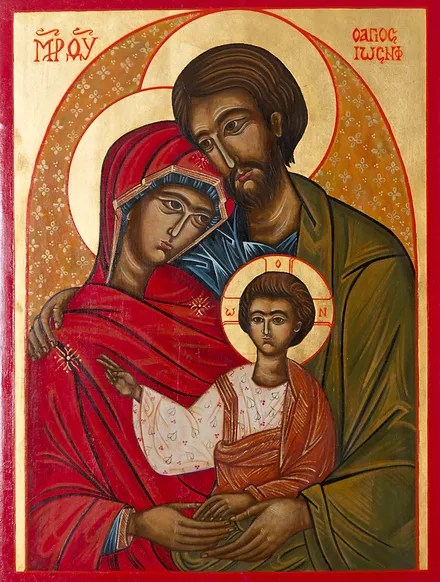
This is something we read a number of times about Mary isn’t it? Mary only appears as a central character in the first two chapters of St Luke’s Gospel, but in half of the scenes in which she appears, St Luke tells us that Mary treasured or pondered things in her heart. She pondered what Gabriel’s message might mean. She treasured and pondered in her heart the words of the shepherds.
And later, when she and Joseph found the 12-year-old Jesus debating with the teachers in the temple, and notwithstanding Jesus’ strange and even abrupt response to their worries, she treasured all these things in her heart.
From these things, we get an image of Mary as someone who thought very deeply about things and perhaps it’s because she was this kind of person that she was able to stay close to Jesus throughout his ministry. She must have found him, and what he was doing, difficult to understand at times because St Mark tells us that his family tried to take him away from the crowds because people thought he was out of his mind. She must have been worried about him as his ministry brought him into conflict with the authorities, because she must have known what had happened to her kinswoman Elizabeth’s son, John, when he came into conflict with Herod. What did she think, I wonder, as Jesus made his final journey to Jerusalem? Had she heard him speak, as he often did, about the betrayal, scourging and death that awaited him there? Whatever Mary knew or had heard she must have known that what her son was doing was very dangerous. We often think of the sword that pierced Mary’s soul, that we heard Simeon prophesy in this morning’s Gospel, as watching Jesus die on the Cross. But there were many swords that must have pierced Mary’s soul before that final one.
Nevertheless, Mary wasn’t someone to make knee-jerk reactions to things. She was someone who treasured things in her heart and pondered them there, looking for meaning and understanding.
The angel had told Mary that she had found God’s favour. Elizabeth had told her that she was blessed among women. She herself had confessed her belief in these things and said that God had done great things for her. I wonder, how many of us would consider ourselves favoured by God, blessed, and that God had done great things for us if we had to endure even a few of the things that Mary went through? How many of us would give up because we thought that God wasn’t listening, or didn’t care, or perhaps wasn’t even there? Because many people do lose their faith in the face of difficulties don’t they? They pray but, when their prayers aren’t answered in the way they’d like, nor in the timescale they’d like, they decide that prayer and faith are a waste of time and simply give up.
I think one of the problems many people have with prayer is that they expect, or at least want, their prayers to be answered in a way that makes things better or easier for them in some way. In effect, they’re saying to God,
“Do this for me because it will make my life better, or easier”.
And if their lives aren’t made better or easier, they think that their prayer has gone unanswered. But just because our prayers aren’t answered in the way we’d like them to be, nor in the timescale we want them to be, that doesn’t mean they won’t be answered or even haven’t been answered already. So far from being times to lose hope and faith and give up, these are the times when we have to treasure and ponder things in our hearts. These are the times when we have to look for meaning and understanding through what’s happening to us and in our lives, even if what’s happening is hard and even unpleasant. It might well be that a sword, or several swords might have to pierce our souls before we can understand that we’ve found God’s favour, that God has blessed us and has done, or is doing, great things for us, or through us.
We know from scripture that this was Mary’s experience, and it’s her example. But it’s an experience and example that we can share if we can treasure and ponder things in our hearts as she did because it’s also the experience and example of the priest in that video I watched a few days ago. And if we’re ever tempted to lose hope in prayer, faith in God and give up because it seems as though God isn’t listening and our prayers aren’t being answered, we could do much worse than try to remember some words from St John Henry Newman’s
Meditations and Devotions.
In his meditation Hope in God – Creator, he writes,
God knows what is my greatest happiness, but I do not. There is no rule about what is happy and good; what suits one would not suit another. And the ways by which perfection is reached vary very much; the medicines necessary for our souls are very different from each other. Thus God leads us by strange ways; we know He wills our happiness, but we neither know what our happiness is, nor the way. We are blind; left to ourselves we should take the wrong way; we must leave it to Him.
Therefore I will trust Him. Whatever, wherever I am, I can never be thrown away. If I am in sickness, my sickness may serve Him; in perplexity, my perplexity may serve Him; if I am in sorrow, my sorrow may serve Him. My sickness, or perplexity, or sorrow may be necessary causes of some great end, which is quite beyond us. He does nothing in vain; He may prolong my life, He may shorten it; He knows what He is about. He may take away my friends, He may throw me among strangers, He may make me feel desolate, make my spirits sink, hide the future from me—still He knows what He is about.
God knows what he is about far better than we do. So if God chooses to answer our prayers in ways that we don’t expect, we shouldn’t think they haven’t been answered. We should rather treasure what’s happening and ponder it in our hearts in the hope that, in the end we will understand and see how favoured and blessed we are and what great things God is trying to do for us and through us.
Amen.
Propers for The Holy Family (Christmas 1) 31st December 2023
Entrance Antiphon
The shepherds hastened to Bethlehem, where they found Mary and Joseph,
and the baby lying in a manger.
The Collect
Almighty God,
who wonderfully created us in your own image,
and yet more wonderfully restored us through your Son Jesus Christ:
grant that, as he came to share in our humanity,
so we may share the life of his divinity;
who is alive and reigns with you,
in the unity of the Holy Spirit,
one God, now and for ever.
Amen.
The Readings
Missal (St Mark’s)
Genesis 15:1-6, 21:1-3
Psalm 105:1-6, 8-9
Hebrews 11:8, 11-12, 17-19
Luke 2:22-40
RCL (St Gabriel’s)
Isaiah 61:10-62:3
Psalm 148
Galatians 4:4-7
Luke 2:22-40
 Parish Church of St Mark Chadderton