On Thursday of last week, September 14th, the Church celebrated Holy Cross Day. That’s a day in the Church’s calendar that’s also known as the Exaltation of the Holy Cross and, as that title suggests, it’s a day when we remember and celebrate the Cross of Christ, its meaning for us, and its importance to us. And the Cross is of vital importance to us. The Cross is the instrument of our salvation because it was on the Cross that Jesus bore our sins and died to take those sins away so that we might be raised with him to eternal life. But, whilst it’s right and proper that we do exalt the Cross in this way, it’s also of vital importance that we remember too that, as important as the Cross is to us and for us, we still have work to do, in spite of the Cross.
I think it’s very easy for Christians to think that, because Christ bore and paid the penalty for our sins on the Cross, we’re home free; we’re in a nice, comfortable position because we’re assured of eternal life, whatever happens. But that is not what we read in Scripture and it’s not what Jesus himself said during his earthly ministry. The Gospels tell us that, at the very beginning of his ministry,
Jesus began to preach, saying, “Repent, for the kingdom of heaven is at hand.”
During his ministry he told people on numerous occasions about the need for repentance, and indeed his teaching and parables are full of warnings about the terrible fate that lay in store for the unrepentant. And those warnings weren’t nullified by the Cross because even after his Resurrection, Jesus said,
“Thus it is written, that the Christ should suffer and on the third day rise from the dead, and that repentance and forgiveness of sins should be proclaimed in his name to all nations, beginning from Jerusalem.”
And, in fact, this is just what St Peter preached to people on the Day of Pentecost;
“Repent and be baptized every one of you in the name of Jesus Christ for the forgiveness of your sins…”
So I don’t think that we can be, nor should we be, under any illusions about our need to acknowledge our sins and to be repentant, to make a real, determined effort to stamp out sin in our lives, if we want to receive the benefits Christ won for us on the Cross. We can’t take the Cross for granted. We can’t simply live our lives as we please and take it for granted that we’ll be forgiven our sins and raised to eternal life.
I’m assuming that no one who takes their faith seriously can be in any doubt whatsoever that they are sinners who need to repent, and who are in need of forgiveness. But to what extent do we believe those things? I think the answer to that can often be gauged by our attitude towards forgiveness, both the extent to which we think we need to be forgiven and our willingness to be forgiving ourselves.
Our Gospel reading this morning leaves us in no doubt that, unless we ourselves are ready and able to forgive others when they’ve wronged us, we can’t expect God to forgive us for the wrongs we’ve done either. In reply to Peter’s question, Jesus says that we must forgive others not,
“seven times, but seventy times seven.”
and in the Parable of the Unforgiving Servant, he warns us that unless we do forgive others, God will not forgive us either. And this is something that should remind us of another of Jesus’ teachings; that the measure we use to judge others, will be the measure used by God to judge us.
But this is something we shouldn’t need to be reminded of because it’s something we probably acknowledge every day. It’s certainly something we acknowledge every time we come to a church service because it’s in the Lord’s Prayer. When we pray that ‘Our Father’ will
“…forgive us our trespasses as we forgive those who trespass against us”,
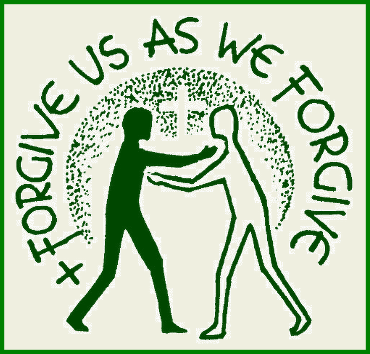
we’re not only acknowledging that God will forgive us only to the extent that we forgive others, but we’re actually asking God to do this. So how willing are we to forgive others?
I think one of the great problems we have with forgiveness is honesty. By that I mean, how honest are we when we call to mind something that’s happened that we think requires forgiveness? How honest are we willing to be with ourselves, and with others about what really happened?
It’s true isn’t it, that when something has happened that shouldn’t have, when some wrong has been done, we like to play the innocent? We like to downplay our part in what’s gone on and portray ourselves as the wounded party rather than acknowledging any part we might have played in what’s happened. So we highlight the faults of others and ignore whatever we might have done to cause a problem or make a situation worse. A problem that might really have been a case of ‘six of one and half a dozen of another’ becomes, in our telling of it, all the fault of the other, a completely unprovoked and unjustified sin committed against us. And, if we’re forced to admit some part of the blame, usually because other people know the truth and we can’t play the innocent entirely, we try to claim that we were provoked into doing what we did. We say that it wouldn’t have happened if the other person, or people, hadn’t done what they did first (and it always is the other who acted first in our telling of these situations isn’t it?). This isn’t always true, but it’s invariably what people do and I’m sure we’ve all been on the receiving end of it and been the one who’s done it to others too. In fact, some people do this so often that, in the end, they really do start to believe their own distorted version of events and can become very angry with anyone who tries to correct them with the truth. I’m sure we’ve all dealt with people who’ve done that too.
But as Christians, doing this kind of thing is something we should try to avoid like the plague. As Christians, we’re called to be repentant, and we can’t be repentant if we don’t acknowledge our own sins. So we can’t blame other people for the wrong that we’ve done As Christians we want God to forgive us our trespasses, so we have to forgive those who trespass against us. But that doesn’t mean blaming other people for what we’ve done so that we can get on our moral high horse in order to forgive them for wrongs that we’ve committed. We can’t show ourselves as forgiving by trying to deny our own need of forgiveness.
As Christians we can’t be in any doubt that the standards we use for other people will be the standards God uses to judge us, so we can’t be in any way dishonest or duplicitous in our accusations of other people, nor in our thoughts and claims about ourselves. If we do these things, if we are dishonest and duplicitous in these ways, the Gospel, and Jesus himself tells us that we’re going to find ourselves in serious difficulties with God, regardless of the salvation Christ offered us on and through the Cross. It won’t be a case of double whammy when we stand before the Lord on the Day of Judgement, more like quadruple whammy, at least!
If we try to play the innocent and deny our own sins – wham! We’re unrepentant sinners and, as St John reminds us, liars in whom there is no truth. If we try to downplay our sins by highlighting the sins of others and criticising them for what we’ve done wrong – wham! We’re hypocrites looking for specks in other people’s eyes but ignoring the planks in our own. And the only mercy and forgiveness we can expect from God is the same lack of mercy and forgiveness we’ve shown to others. If we try to shift the blame for what we’ve done wrong onto others by accusing them of sins that we’ve committed – wham! We’re blackening the name and character of another person and we have Jesus’ assurance that we’ll leave ourselves,
“…liable to the hell of fire.”
And if we try to take the moral high ground, sententiously forgiving others rather than humbly accepting that we ourselves are at least equally in need of forgiveness – wham! We’re just like the Pharisees, people full of spiritual pride and self-righteousness, and how then will we ever be able to claim a place in the kingdom of heaven?
The Cross of Christ is the instrument of our salvation. Christ bore our sins on the Cross and through the Cross we have the assurance that our sins can be forgiven and that we can be raised with Christ to eternal life. But that doesn’t mean that we’re there already. We can’t take things for granted. We still have to live as Christ taught and commanded and, in part, that means that we have to see ourselves as sinners who are still in need of repentance and forgiveness. It means loving our neighbour as we love ourselves, treating them in the way we would like to be treated by them. It means applying the same standards to ourselves that we apply to others and vice versa. If we’re lenient with ourselves, we must be equally lenient with others is we want God to be lenient, and merciful and forgiving to us. If we’re harsh with our neighbour, then we’d best make sure that we’re equally harsh with ourselves because if we’re not, God will be.
Amen.
Propers for the 24th Sunday in Ordinary Time (Trinity 15) 17th September 2023
Entrance Antiphon
Give peace, Lord, to those who wait for you and your prophets will proclaim you as you deserve.
Hear the prayers of your servant and of your people Israel.
The Collect
God, who in generous mercy sent the Holy Spirit
upon your Church in the burning fire of your love:
grant that your people may be fervent in the fellowship of the gospel
that, always abiding in you,
they may be found steadfast in faith and active in service;
through Jesus Christ your Son our Lord,
who is alive and reigns with you,
in the unity of the Holy Spirit,
one God, now and for ever.
Amen.
The Readings
Missal (St Mark’s)
Ecclesiasticus 27:30 – 28:7
Psalm 103:1-4, 9-12
Romans 14:7-9
Matthew 18:21-35
RCL (St Gabriel’s)
Genesis 50:15-21
Psalm 103:1-13
Romans 14:1-12
Matthew 18:21-35
 Parish Church of St Mark Chadderton