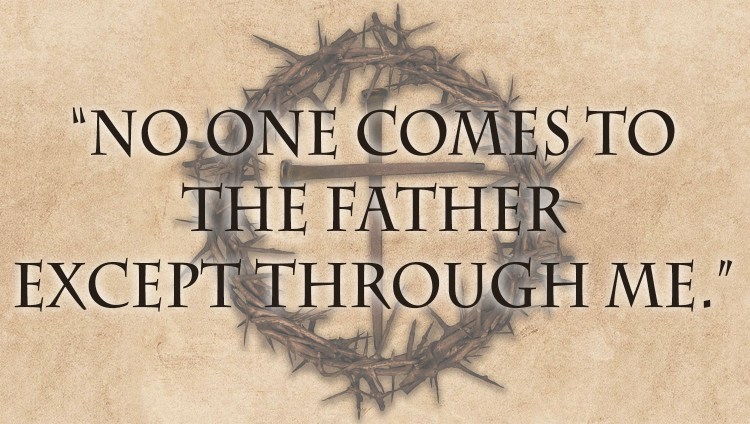
Christians are often called an ‘Easter People,’ or a ‘Resurrection People’ and I don’t think it’s too hard to understand why that should be. Easter, and the Resurrection of our Lord Jesus Christ that we celebrate at Easter are the very foundation of our faith. If there was no Resurrection, why would we have any faith in Jesus? If there was no Resurrection, why should we believe in anything he said or did? In this morning’s Gospel, Jesus says,
“I am the Way, the Truth, and the Life.”
But, if there was no Resurrection, why should we believe that his way is better than another way, that there is any more truth in his words than in any other words, or that the way of life he advocated is better than any other way of life? If there was no Resurrection, who and what was Jesus other than a good man who had the guts to call out those in power for their hypocrisy, and was done away with by those people to shut him up, a good man who called for change and was done away with by those with a vested interest in things staying as they were? In fact, if there was no Resurrection, apart from a few people who study first Century Jewish history, it’s doubtful if anyone would have even heard of Jesus, let alone acclaimed him as their Lord and Saviour.
So we are an Easter People, a Resurrection People, a people who believe that through the death and Resurrection of our Lord Jesus Christ, the greatest dread of human beings, the knowledge of their own mortality and the fear of death, has been put to flight because, through his death and Resurrection, Jesus has conquered death. Our faith in Jesus assures us that, even though we will all die, that is not the end of life for us but rather the beginning of a new and eternal life with Jesus in God’s heavenly home. So, as well as making us an Easter People, our faith should make us the most joyful of all people. And on the whole, perhaps it does. But I think our faith also gives us a bit of a problem. The problem is, how do we deal with death when we’re faced with it? As Christians, should we think of death as ‘nothing at all’ as a very well-known, though often mis-quoted and mis-understood poem tells us we should, or should we grieve in the same way perhaps as those who have no faith might? If we don’t grieve, are we being callous or, if we do grieve, are we showing a lack of faith? And I have met Christians who have thought in these ways and really struggled with trying to understand how they should feel and act when they’ve been faced with death.
Obviously, as a priest I’m called upon to conduct funerals and to meet and speak to bereaved people on a fairly regular basis. In fact, in the past week, I’ve conducted three funerals and also spoken to two other bereaved families about the funerals of one of their departed loved ones. And so I know that this morning’s Gospel, or at least the first half of it, is a reading that’s very often used at funerals. So what can this morning’s Gospel tell us about how we should deal with death?
This morning’s Gospel is the start of what we call the ‘Farewell Discourse’ in St John’s Gospel. The Farewell Discourse is the last teaching and instruction Jesus gave to his disciples before his death and, in part, they’re words of comfort and reassurance for the disciples that Jesus spoke because he knew that what they’d soon have to go through would be a very difficult and traumatic time for them. So let’s look at this from the disciples point of view.
Jesus’ disciples had been with him, almost every day it seems, for three years. They’d built their whole world on and around Jesus and his teaching. They thought he was the Messiah, as the disciples said on the road to Emmaus shortly after Jesus’ Resurrection, that he was,
“… a man who was a prophet mighty in deed and word before God and all the people, … we had hoped that he was the one to redeem Israel.”
But Jesus was very shortly going to go to his death, he would be leaving them and this time, they wouldn’t be able to follow him. The disciples’ were going to be devastated, heartbroken. I’ve spoken before about the ancient understanding of the heart, that it was the very core of a human being so, it was in their hearts that the disciples would have built this world based on and around Jesus and his teaching. So, when Jesus died, they would have, quite literally, been heartbroken because their world view would have been smashed to pieces.
Even though we don’t think of the heart in the same way that the disciples would have done, we do know what it means to be heartbroken don’t we? When someone we know and love dies, our world changes, it can’t help but change because someone who’s been part of our lives, and often a very big and important part of our lives, isn’t there anymore and we have to get used to life without them. So, to some extent at least, we can understand what the disciples were going to be faced with and what they were going to have to go through, and why Jesus wanted to comfort and reassure them.
But what are we to make of what Jesus’ words when he began to speak?
“Let not your hearts be troubled. You believe in God; believe also in me.”
Does that mean we shouldn’t be troubled by death? Does it mean that because of our faith and our hope of the Resurrection to eternal life, we shouldn’t grieve or be upset when someone we know and love dies? No, that’s not what Jesus means here at all, and if he did then we could, quite honestly, accuse Jesus of being a hypocrite because didn’t he weep at the grave when his friend, Lazarus, died?
The word in this morning’s Gospel that we translate as ‘troubled’ is the same word used to describe Jesus’ own feeling when Lazarus died and also when he was betrayed by Judas. We translate it here as ‘troubled,’ but it really means to be stirred up or agitated. Later in the Farewell Discourse Jesus tells the disciples that their hearts will be full of sorrow, but it’s for their own good that he’s leaving them because if he doesn’t, he can’t send the ‘Helper’ the Holy Spirit to them. And he tells them that, while they will be sorrowful, they will see him again and know a heartfelt joy that will never be taken away from them. Given the ancient understanding of the heart, what Jesus seems to be saying to his disciples then, isn’t that they won’t or shouldn’t grieve when he dies, but that his death shouldn’t trouble, stir up, agitate or destroy their deeper, heartfelt understanding of things. He will die and they will be hurt and upset, they will be full of sorrow and grieve, but that shouldn’t trouble or break their faith. What Jesus is saying is that, whilst in an emotional sense they can be, and will be heartbroken, in that deeper sense of feeling and knowing in their hearts, don’t be. His death can and will upset them on one level but at a deeper level, don’t let that shake or break your faith in what you believe to be the way the truth and life because his death doesn’t change that and, in fact, his Resurrection will confirm their faith in those things and in him.
And we can apply these words to ourselves when we have to face up to and deal with death. One of the things I always say during a funeral sermon is that faith isn’t an anaesthetic to the pain of loss and bereavement. Faith doesn’t take that pain away. So we can be upset when someone we know and love dies. We can grieve their, and our, loss, regardless of our faith. And if anyone still isn’t convinced about that, think of it in this way.
The Scriptures tell us that Jesus wept at Lazarus’ grave, so why should we think that our faith means that we can’t or shouldn’t be upset and grieve when someone we know and love dies; do we think that we have more or greater faith than Jesus?
I have met many good and faithful Christians who don’t deal with death very well. I have met some who’ve actually said, death means nothing at all. I’ve met some who have been heartbroken by death and questioned their faith, either because of the death itself or because it has upset them so much it’s caused them to question the depth or even reality of their own faith; as death has troubled them so much, they’ve questioned whether they really do believe in the resurrection to eternal life. But Jesus’ words in the Farewell Discourse, and his own example, tell us that we can be upset and grieve when a loved one dies, regardless of our faith or the depth of our faith. But what Jesus’ words and example also tell us is that death shouldn’t trouble us at heart in that deeper understanding of the heart that ancient people had. Death shouldn’t cause us to doubt or to lose faith because Jesus’ Resurrection, which is the foundation of our faith, is also the confirmation and vindication of our faith.
Jesus said,
“Let not your hearts be troubled. You believe in God; believe also in me.”
Death does trouble us, though. But Jesus doesn’t mean that it shouldn’t trouble us in an emotional sense. He doesn’t mean that we shouldn’t be upset and sad when someone we know and love dies. He doesn’t mean that we shouldn’t grieve. He doesn’t mean that death shouldn’t break our hearts in that sense. What he does mean is that we shouldn’t let death break our faith. We are an Easter People, a Resurrection People, a people who’ve been given a cause for joy that can never be taken away and we shouldn’t let anything take it away from us. Not even death.
Amen.
Propers for the 5th Sunday of Easter, 7th May 2023
Entrance Antiphon
Sing to the Lord a new song, for he has done marvellous deeds;
he has revealed to the nations his saving power, alleluia!
The Collect
Almighty God,
who through your only-begotten Son Jesus Christ,
have overcome death and opened to us the gate of everlasting life:
grant that, as by your grace going before us,
you put into our minds good desires,
so by your continual help we may bring them to good effect;
through Jesus Christ our risen Lord,
who is alive and reigns with you,
in the unity of the Holy Spirit,
one God, now and for ever.
Amen.
The Readings
Missal (St Mark’s)
Acts 6:1-7
Psalm 33:1-2, 4-5, 18-19
1 Peter 2:4-9
John 14:1-12
RCL (St Gabriel’s)
Acts 7:55-60
Psalm 31:1-5, 15-16
1 Peter 2:2-10
John 14:1-14
 Parish Church of St Mark Chadderton