During her coronation 70 years ago, Queen Elizabeth II was anointed with oil by the Archbishop of Canterbury. Because this part of the coronation service was regarded as so sacred, it was hidden from the TV cameras and the public’s view behind a golden canopy. And so too the archbishop’s words at the anointing were said in secret. What actually happened is that the archbishop poured the holy oil on the Queen’s head with a spoon and, as he did, he whispered these words:
“Be thy head anointed with holy oil: as kings, priests, and prophets were anointed. And as Solomon was anointed king by Zadok the priest and Nathan the prophet, so be you anointed, blessed and consecrated Queen over the Peoples, whom the Lord thy God hath given thee to rule and govern.”
The symbolism of this was that at the anointing and through the anointing, the Queen was set apart to carry out the role and duties of Queen, she was blessed by God with the grace of the Holy Spirit, the gifts of the Spirit, to do these things. And I think we have to say that, over the 70 years that have passed since that moment, Elizabeth II has been very good at carrying her role and duties as our Queen. Whatever people may think about the monarchy itself, or individual members of the Royal Family, the Queen is widely admired and respected for her hard-working devotion to her duties. In that, the Queen is an example to us all, and not only in hard work and devotion to duty, but also in what it means to be given and use the grace of God and the gifts of the Holy Spirit.
One of the things we often hear said in the Church is that God doesn’t give us tasks to suit out gifts, rather, he gives us gifts to carry out the tasks that we’re faced with. And yet how many things that need to be done in the Church, perhaps in a parish church in particular, are left undone, or added to the list of duties and responsibilities of those who already have more than enough to do, because people are so unwilling to take on any role, duty or responsibility? How often, when people are asked to take on a role in a parish do they refuse and say it’s because they don’t know how to do it, or aren’t very good at things like that, or have never done anything like that before? So, as with so many things, while Christians may profess a belief that God gives us gifts to carry out whatever tasks we’re faced with, very often it’s a belief that isn’t backed up by action.
Something we all know, and that I’ve often said in sermons, is that the Christian life isn’t an easy life. And this is one of the ways in which it isn’t easy. As Christians, we believe that at our baptism, and confirmation too if we’ve been confirmed, we were blessed with the gift of the Holy Spirit.
We were consecrated to God, set apart as one of his people, and we were anointed with oil to symbolise these things. We believe too that the Spirit gives us gifts enable us to live as Christians, to live the life we’re called to live as one of God’s chosen people, and to build up the Church. But all this doesn’t really amount to very much unless we’re prepared to do our bit too. The gift of the Holy Spirit doesn’t make much difference to the way we live our lives if we don’t or won’t listen to what the Spirit says to us. We waste the grace of God, the gifts that the Spirit gives us, if we aren’t prepared to use them. And, if we aren’t even prepared to try anything new or difficult, we can’t even know what gifts the Spirit’s blessed us with.
As the words the archbishop of Canterbury spoke when he anointed the Queen at her coronation service tell us, anointing with oil is something we find frequently in the Scriptures. In the Old Testament, prophets and kings were anointed to symbolise their holiness, their call to be dedicated to God’s service, and their reception of the Holy Spirit and the gifts to enable them to carry out the role and duties they’d be chosen for. But we also know from the Scriptures that anointing was simply the beginning of what God had called them to and that carrying out the task that God had chosen them for involved a lot of hard work, and often great danger.
One of the best examples of this is the story of Saul and David. Saul was chosen to be the first king of Israel and was anointed by the prophet Samuel. But his reign wasn’t an easy one, he had to fight frequent wars against the neighbouring nations. Later, because he didn’t do what was asked of him, Saul was rejected by God, at which point David entered the story. David was the most unlikely of people to replace Saul as king, and yet he was the one who was chosen, and he was anointed by Samuel. But David’s rise to the throne wasn’t easy and his life was often in danger because Saul recognised that David was a threat to him and plotted against him. And even when David did become king, after Saul died, his life was far from easy. He didn’t always behave as one of God’s anointed ones should and so, through Nathan the prophet, God told David that the sword would never depart from his house.
So, as both Saul, David, and many others we read about in the Scriptures found, being anointed in God’s name is only the beginning. To be and do what God calls his anointed to be and do involves a lot of hard work and it often means making hard choices and doing difficult, even dangerous things. And as we read through the Scriptures, we find that it’s the same for anyone who’s anointed with the Holy Spirit, regardless of the means of the anointing.
In all the Gospels, we read about the Holy Spirit descending from heaven in the form of a dove and coming to rest on Jesus after his baptism. We see this as an anointing because as the Prayer over the Water that we use in our baptism services today says,
In water your Son Jesus received the baptism of John
and was anointed by the Holy Spirit as the Messiah, the Christ,
to lead us from the death of sin to newness of life.
But immediately after his baptism and anointing with the Spirit, the Gospels of Matthew, Mark and Luke tell us that the Spirit led Jesus into the wilderness where he was tempted for 40 days. And we know that Jesus’ life wasn’t an easy life. On the contrary, it was a hard life, a life of hard work, a life in which he was in frequent danger from those who plotted against him. It was a life full of difficult decisions about whether to do what God had called him and anointed him to do, or to do what was easier and safer. And ultimately, because Jesus chose to make those difficult decisions and do what he knew he’d been called and anointed to do, it was a life that led to his betrayal and arrest in Gethsemane and his death on the Cross.
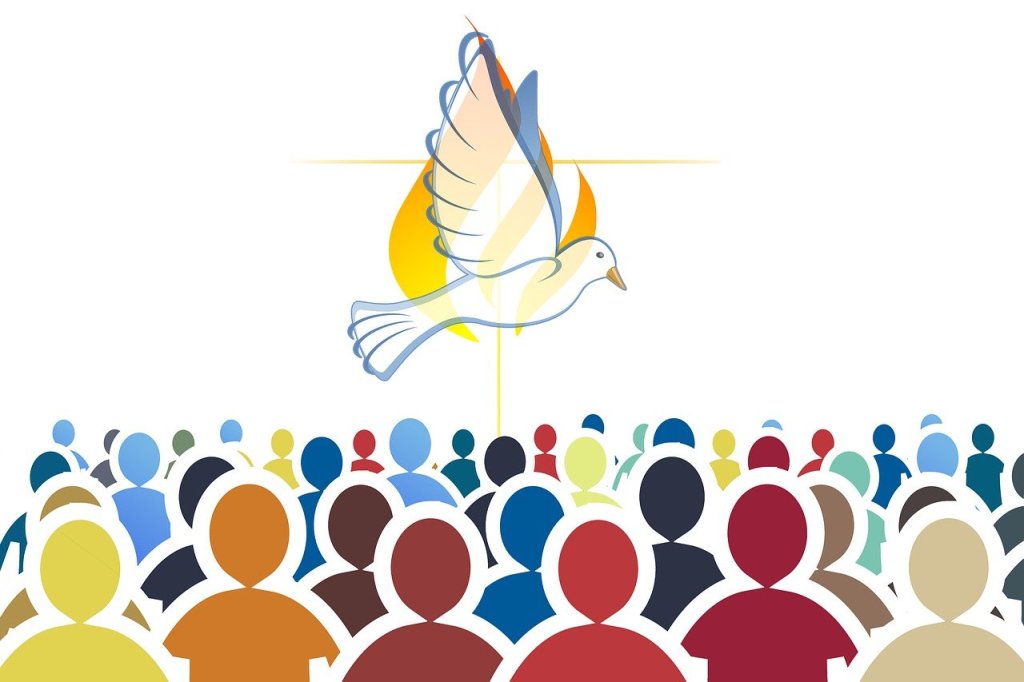
And it was a very similar story for those who were anointed with the Holy Spirit in the form of wind and fire on the Day of Pentecost. Despite the fact that at least some of those who were there that day had seen the risen Lord, and had witnessed his Ascension, they must have still been frightened. And why wouldn’t they be? They’d also seen Jesus crucified and that would have been something that none of them would have wanted to go through themselves. But nevertheless, as the Spirit gave them the gift to speak in different languages, they were willing to go out and publicly proclaim Jesus as not only their Lord and Saviour, but the Lord and Saviour of anyone who was willing to come to him in faith. And we know that was a difficult and dangerous thing to do. We know that as the Apostles and others who came to faith went out and used the gifts the Spirit had given them, they had a very hard time. We read in the Scriptures that they were arrested, imprisoned and beaten. We know that they had to flee for their lives, that they were exiled and that some of them were executed for their faith. But despite all these things, we also know that they were willing to use the grace of God, the gifts God had given them through the Holy Spirit to make Jesus’ name and teaching known, and to build up the Church everywhere they went.
For them, as for all of us, anointing with the Holy Spirit was only the beginning. It was the beginning of a new life in which they’d use the gifts the Spirit gave them in the service of God and his Christ, of his anointed one, and of his Church. It wasn’t an easy life but a hard and often dangerous one, but it was a life that they knew would lead to eternal life and so it was a life they were willing to lead despite the hardships and dangers.
I think, when people in the Church today are so unwilling to take on roles and responsibilities, they’d do well to think about these things. I think when people are asked to take on roles and responsibilities in the Church, before they say, “I can’t”, “ I don’t know how”, “I’m not very good at things like that”, “I haven’t got time” or any of the other reasons people often give for not doing things in the Church, they might take time to think about their own anointing with the Holy Spirit at their baptism and confirmation. They might take time to think about the lives of the people we read about in the Scriptures who were similarly anointed in God’s name, and what they did with the grace God gave them through the Holy Spirit. Perhaps in particular, they might take time to think about what those who were present in that house on the Day of Pentecost did after they were anointed with the Holy Spirit. To think about that and to remember that, if those people hadn’t been prepared to use the gifts of the Spirit to do what was hard and even dangerous then, we wouldn’t even have a Church to belong to now.
Anointing in God’s name which symbolises our reception of God’s grace through the gift of the Holy Spirit is always, only, ever a beginning. The Queen is respected and admired because, for her, it was the start of 70 years of devoted service to the role she was called to carry out. For Jesus, it was the start of a public ministry that led through hardship, danger and death to the glory of the Resurrection. For those disciples who were present on the Day of Pentecost it was the start of a hard life of devoted service of God, Christ and the Church, and for generations of Christians since, their anointing with the Holy Spirit at their baptism and confirmation has been the start of lives of similarly devoted service to God, Christ and the Church. It’s only because these people were willing to live these lives of hard working, devoted service that have a Church to belong to today. So, when people are asked to take on a role or responsibility in and for the Church, before they say ‘No’ perhaps they should take time to ask themselves, what use then are they going to put the grace of God and the gifts of the Spirit they’ve received? And perhaps they should also try to answer these questions; if they aren’t going to do these things, who will? If they aren’t willing to do these things, who do they expect to do them? If they aren’t willing to use the Holy Spirit they’ve been anointed with for the building up of the Church today, whose fault will it be if there is no Church to build up tomorrow?
Amen.
The Propers for Pentecost can be viewed here.
 Parish Church of St Mark Chadderton