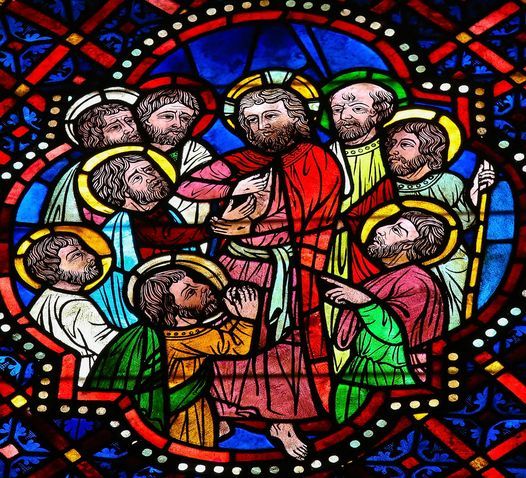
Over the last couple of Sundays, among the things we’ve heard about in our Gospel readings have been the disciple’s lack of understanding and their disbelief as they heard the news of Jesus’ Resurrection. Today we read about how Jesus ‘opened their minds’ so that they would understand and believe. And it was essential that they should understand and believe because, as Jesus told them,
“You are witnesses of these things.”
Those few words had great implications for the disciples who first heard them, and they have done for every disciple of Christ since because in their time, they were witnesses to these things. And those words still have great implications for too because today, we are witnesses of these things.
For Jesus’ first disciples, those who heard him say those words, his words had a double meaning. Those who heard Jesus speak were witnesses both of the events themselves, that is, they were eyewitnesses, and they were witnesses to the events in the sense that they were called to testify to these things, to tell others what they’d seen and knew and believed about them. And theirs is an unrepeatable witness, at least in the first sense. No disciple since them has witnessed the events of Jesus’ life and ministry in the way that they did. Jesus’ disciples since then have met Jesus in word and sacrament and in other people, and we can meet him in those ways today, but we haven’t seen Jesus ‘in the flesh’ in the way that his first disciples did. But despite that, we can still be witnesses to the events of his life and ministry in the sense that we can testify to them by telling others what we know and believe about them, and that’s the witness we’re called to give today.
One way we can be Jesus’ witnesses today is simply through our words, by telling other people about Jesus and what we know and believe about him. But the best way we can be witnesses to Jesus is through our actions, by living out the things we say we believe. And to do that means that we need to do all we can to make sure that we live in obedience to Jesus’ teaching and that the example of our lives follows as closely as possible, the example of Jesus’ life. And it is very important that we do that, not only so that we can be effective witnesses for Jesus, but also for our own sake too.
As we read through the First Letter of John, some of which we have read this morning, we’re left in no doubt that Jesus takes away our sins. But we’re also left in no doubt that we’re still sinners, nonetheless. Jesus doesn’t take away our sins in the sense that faith in him makes us perfect and sinless, rather Jesus takes away the guilt for our sins so that we don’t have to be punished for them as we really ought to be. That’s made clear in our readings this morning through the words of both St Peter and Jesus himself.
St Peter tells his audience,
“Repent therefore, and turn to God, that your sins may be wiped out…”
And Jesus tells his disciples that one of the things they are witnesses to is that,
“…repentance and forgiveness of sins should be proclaimed in his name to all nations…”
It’s obvious that if there was no sin, there would be no need for repentance, and there would be no need for sins to be wiped out and forgiven. So these words make the on-going reality of sin very clear to us. They make it clear that sin still has to be taken seriously even in the light of Jesus’ sacrifice on the Cross: we can’t believe and act as though Jesus’ sacrifice makes sin unimportant or means that it doesn’t matter if we sin, and so these words are very important to us. And it’s essential too that we do take note of the order in which they come: that repentance comes before forgiveness.
In everyday language, repentance means to feel and express sincere sorrow and regret for something we’ve done wrong. But, in a biblical sense, repentance is about a complete change in the direction of our lives. It’s still about sorrow and regret for wrongdoing, sorrow and regret for sin in a biblical sense, but it’s about that sorrow and regret leading us to make a real, determined effort to change and follow God’s path of life, the way of life Jesus taught us to live and the way he lived himself. But to do that obviously means that we first have to acknowledge that we are sinners who do need to change. And that’s why it’s so important to us and for us to understand that repentance comes before forgiveness. We have to acknowledge our sinfulness and turn to God in faith if we want to receive God’s forgiveness and reap the benefits of the forgiveness Jesus won for us. We can’t think that we are forgiven without the need for repentance. We see this played out in the story of the so-called ‘Repentant Thief’ who was crucified alongside Jesus.
‘One of the criminals who were hanged railed at him, saying, “Are you not the Christ? Save yourself and us!” But the other rebuked him, saying, “Do you not fear God, since you are under the same sentence of condemnation? And we indeed justly, for we are receiving the due reward of our deeds; but this man has done nothing wrong.” And he said, “Jesus, remember me when you come into your kingdom.” And he said to him, “Truly, I say to you, today you will be with me in Paradise.”’
In this very short Gospel story we see first, the acknowledgment of sin and the acceptance of the punishment for sin. Then we see a turning to God, in faith, which leads to the promise of a place with Jesus in Paradise, something which wouldn’t be possible without the forgiveness of sin. And we note that the order in which these things happen, mirrors the order in which they come in the words we’ve read this morning.
If we think about it, being a witness for Jesus is simply a matter of common sense. If we’re going to be his witnesses, as we’re called to be, we need to act as though we actually believe what we say about him. If we say that we believe Jesus is the way the truth and the life, then we need to live the kind of life he said we should live. And, as a very big part of being his witnesses is proclaiming repentance for the forgiveness of sins, then we need to acknowledge our own sins and show repentance for them. If we act and live in ways that are contrary to Jesus’ teaching and example, how can we expect to be taken seriously when we say we believe in him? And if the way we live causes others to think that we don’t believe in Jesus, how can we possibly be his witnesses?
So, to be Jesus’ witnesses, we need to tell people what we know and believe about him by openly professing our faith in him. And we need to let our deeds match our words by trying to conform our lives to his teaching and example so that people can see that we believe what we say about Jesus.
It’s not easy, but Jesus knows that, after all, he was just as human as us so he knows how hard it can be for human beings to live in the way God wants them to live. And, when we fail to live up to Jesus’ teaching and example, when we fail to be the witnesses for Jesus we should be, because he knows how hard it can be for us, we have the assurance that Jesus is a witness on our behalf and in our defence. As the First Letter of John tells us,
‘…if anyone does sin, we have an advocate with the Father, Jesus Christ the righteous. He is the propitiation for our sins, and not for ours only but also for the sins of the whole world.’
And, when we have such a witness testifying for us, pleading to God for our forgiveness, how can we not try to be the very best witness we can be for him?
Amen.
The Propers for the Third Sunday of Easter can be viewed here.
 Parish Church of St Mark Chadderton