One of the great misconceptions that many people have about the Church and the Christian faith is that the sacrament of Holy Baptism is the same thing as a Christening. But, if you’re one of those people, I’m sorry to disappoint you, it isn’t. When people either bring their children to church or come to church themselves to have water poured on their heads and to be anointed with holy oils, they come to receive the sacrament of Holy Baptism, and they are being baptised. A Christening, on the other hand, is simply a naming ceremony. If the person being baptised is an infant, or an older child or adult who’s being baptised decides to take a new, or additional name at their baptism, which is usually the name of a saint or ‘Christian name’, that part of the baptismal service is the christening. The service itself, the rite, is a sacrament of the Church called Baptism.
Perhaps some of you are now thinking, ‘So what?’ ‘What difference does it make what people call it?’ ‘What’s in a name?’ Well, actually, in this case, I think there’s an awful lot in a name.
When people contact me to enquire about having their children baptised, they almost invariably ask for a ‘Christening’ and when I start speaking about baptism, quite a lot of them get confused, because they think I’m talking about something they haven’t asked for. Well, I suppose I am in a way, but that’s because they haven’t asked for what they actually want; they’ve asked for a Christening when what they really mean is a Baptism. In fact, this misunderstanding is so widespread that the Church of England now refers to infant baptism, which as you know is what we usually do in the Church, as ‘Christening’ and ‘Baptism’ as something for adults, as though they were two different things (and if you go on the C of E’s website, you can see that for yourself). I think that is a great mistake because it encourages this misunderstanding people have of what Baptism is, and what it’s all about.
The problem is, that because people think in terms of Christening rather than Baptism, they think that once they’ve ‘been done’, as many of them say, they’re Christians. It’s as though they come to church on a specific day, once in their life, usually as a baby, to have water poured on their heads and ‘Hey Presto’ they’re a Christian for life and that’s all there is to it. So, because they think that, they never have to do anything else about it. They never have to come to church again, at least until they perhaps bring their own children to be Christened. Once they’ve been done, they’re a Christian and always will be. But that is not what being baptised is all about.
Being baptised does not make anyone a Christian. Being baptised makes that person a member of the Church. Being a Christian is something that takes a lifetime of hard work because it involves a lifelong commitment to living as Jesus Christ lived and taught us that we should live. And it’s as a member of the Church where people learn about what that means and how to do that, because it’s in the Church where those things are taught.
So, to be a Christian, rather than someone who’s simply been ‘Christened’, or even just baptised, we need to do what Jesus did and taught us to do, and that obviously means that we have to know what Jesus did and said. And so what we need to do, before we can start becoming Christians, is to listen to Jesus.
In the Gospel this morning, we read about Jesus’ own baptism. Today, we read the story as recorded in St Mark’s Gospel, but it’s a story that we find in the Gospel’s of St Matthew and St Luke too. As we come to expect of them, each of the evangelists that the story in a slightly different way but, if we read them as a whole, and in the context of the Gospels as a whole, these stories of Jesus’ Baptism tell us so much about what the Church is doing when we baptise people today.
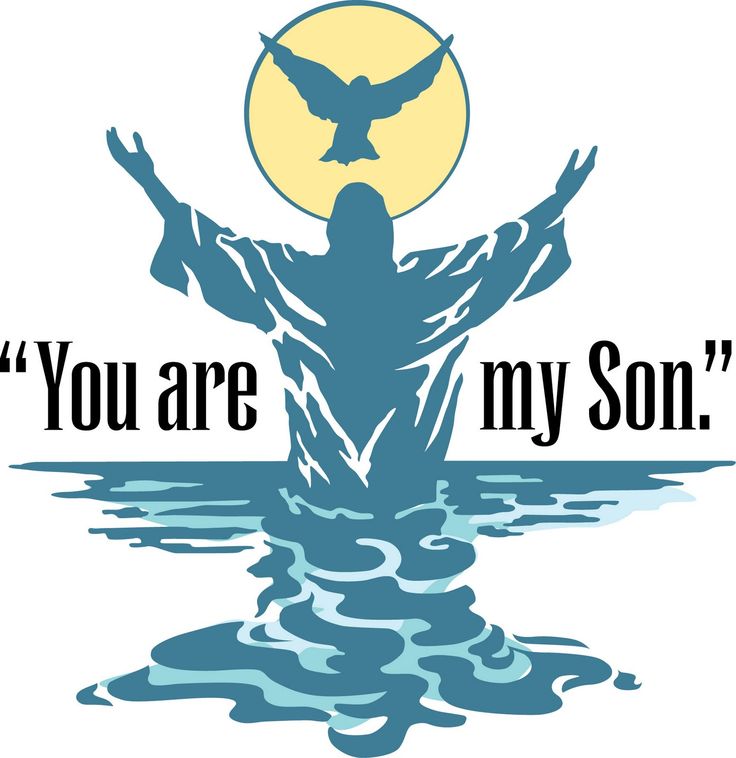
We know that John’s baptism was for repentance: it was for the forgiveness of sins and a change of heart and life in the baptised, and today the Church baptises for the forgiveness of sins, and the promises that are made at baptism are all about a change in the way the baptised, or their parents and godparents, will live. John baptised in water, and so does the Church. We believe that, through the waters of baptism, the Holy Spirit is given to the baptised to guide and strengthen them as they begin this new way of life. And in the stories of Jesus’ baptism, the Holy Spirit descends on him in the form of a dove. And immediately after this, Jesus goes into the wilderness to prepare for the beginning of his earthly ministry. Of course, we don’t have doves flying around in church when we baptise people, but we symbolise the Spirit’s presence in, and with, the newly baptised through anointing with oil which is another sign of God’s favour we read about frequently in the Scriptures. In obedience to Jesus’ command, we baptise in the name of the Father, and of the Son, and of the Holy Spirit. And all three are all present in the stories of Jesus’ Baptism. Jesus, the Son, is there; the Spirit, in the form of a dove, is there; and the Father, who speaks from heaven, is there.
So what we do in the Church in the sacrament of Holy Baptism is very much in accord with what we read about Jesus’ own baptism by John in the River Jordan. But, as we think about what Baptism signifies and the kind of life it calls us to, perhaps the most important thing we learn from the story of Jesus’ Baptism is found in thinking about the Father’s words. Perhaps not directly, but certainly in the context of the Gospels as a whole because the words of the Father at Jesus’ Baptism remind us very much of the Father’s words in another story about Jesus we read later in the Gospels.
As well as the story of Jesus’ Baptism, another story that the Gospels of Saints Matthew, Mark and Luke share, is the story of Jesus’ Transfiguration. In both stories, Jesus is revealed as the Son of God by a sign and by a voice from heaven, and in both stories the Father’s words are very similar. At Jesus’ Baptism, the Father says to Jesus,
“You are my beloved Son; with you I am well pleased.”
And at Jesus’ Transfiguration, the Father says to Jesus’ disciples,
“This is my beloved Son; listen to him.”
So in these Gospel stories, God the Father, proclaims Jesus as his ‘beloved Son’, with whom he is ‘well pleased’, and he tells his disciples to ‘listen to him’. And the message for us is unmistakable. Jesus is the beloved Son of God. The Father approves of what Jesus says and does. And if we’re going to be disciples of Jesus, if we’re going to be Christians, we’re called to listen to Jesus. And, if we think about it, isn’t that what the baptismal promises are all about? Aren’t promises to turn to Christ as Saviour, to submit to Christ as Lord and to come to Christ, the way, the truth and the life, all promises to listen to Jesus and do as he says? And aren’t promises to reject the devil and all rebellion against God, to renounce the deceit and corruption of evil and to repent of the sins that separate us from God and neighbour, all promises to do what Jesus taught us to do and live as he lived? And when we think about it in that way, isn’t it obvious that being baptised and being a Christian is about far more than simply coming to church on one day, usually very early in life, to be ‘done’?
An awful lot of people do think that they come to church on the day of their baptism to be Christened, to be somehow miraculously transformed into Christians. An awful lot of people speak about being Christened as being done, and the very word itself suggests that people think once they’re Christened, they’re then finished in some way; that being Christened is some kind of completion. In fact, the day of a person’s baptism is simply the beginning of a lifelong journey towards becoming a Christian and if people ever do want to complete that journey, they’ll have to spend a lifetime thinking about the promises they made, or that were made on their behalf; thinking about how to fulfil those promises and listening to Jesus to find the answers.
So, if you’re thinking of bringing a child to church to have water poured on their heads or know someone who’s thinking of bringing a child to church, or coming themselves, for that reason, please remember, and explain to others, that you, or they, are not coming to church to be Christened or to be done, but to receive the sacrament of Holy Baptism. Please understand and explain to others what that means and involves. And for those of us who aren’t in either of those situations but who are already on the journey towards becoming Christians, let’s remember that it’s up to us, all of us, to encourage the newly baptised, and their parents and godparents to take Baptism seriously by coming to church where they can listen to Jesus and learn what he has to teach us about how to be his disciples. And let’s make sure that, if they do come to listen and learn, we do teach them, not only in words, but by our own example.
Amen.
You will find the Propers for The Baptism of the Lord here.
 Parish Church of St Mark Chadderton