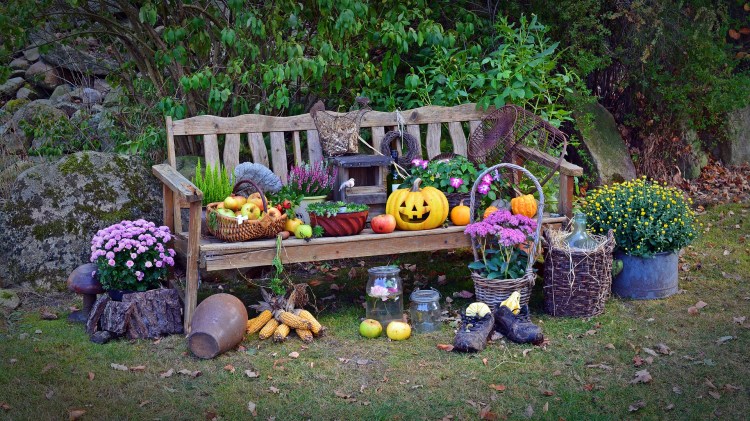
Something that’s very important to us in the Church, and in life generally, is tradition. Tradition is a set of customs and practices, or beliefs, that are passed on from generation to generation. And so traditions are a way that we can maintain our link with the past, whether that’s our own ancestors through family traditions, our history and heritage through cultural traditions, or indeed with the faith of those who’ve gone before us in the Church, through our Christian traditions. And as a way of maintaining our links with the past, traditions are very important to us in the Church because, as the former Archbishop of Canterbury, Rowan Williams, once said, if we don’t remain linked to the past through our traditions, we run the risk of the Church disintegrating into a ‘pluralist mess’ in which anything goes and nothing is sacred.
Having said that though, traditions aren’t always so set in stone as we might think. When I was an ordinand at the College of the Resurrection at Mirfield, for example, something that was of great importance both to the monastic community there, and the college, was tradition. In fact, if anyone asked why things were done there in the way they were, the only answer anyone ever got was, because it’s ‘the Mirfield Way’. But, as an assistant sacristan and then senior sacristan at the college, I worked very closely with the community in preparing for worship, setting up the church, rehearsing altar servers and so on. And through doing that, what I discovered was that much of the ‘Mirfield Way’ was simply, as near as anyone could remember, the way it was done last time. So tradition, whilst it is linked to the past and does help us to maintain our connection to and continuity with the past, isn’t set in stone; traditions can, and do, change. And another good example of that is Harvest Thanksgiving.
Giving thanks for the harvest goes back to pre-Christian, pagan times but, like many pagan festivals, it was ‘Christianised’ and taken over by the Church. As a Christian festival, certainly in this country, it goes back at least to the Anglo-Saxon Lammas (lit. loaf- mass) Day celebrations of the early English Church. But, even though harvest thanksgiving celebrations in the Church do go back so far, Harvest Thanksgiving, as we know it, only dates back to the 1850’s. So Harvest Thanksgiving, as we know it, is a fairly recent tradition of the Church in England, and even so, it’s still changed from what it once was.
One thing that’s changed is the name – we used to call it the Harvest Festival, and I can remember, and I’m sure many of you can too, when the Harvest Festival was one of the biggest and most important celebrations in a church’s year. People used to spend weeks preparing for it. They used to bake loaves especially for it, that would go on display at the Harvest Festival. People would spend days decorating the church for it (and then very often much longer arguing and falling out about whose display went where and whose display was best). And the church would be full of fresh produce, fruit, vegetables as well as the harvest loaves. And then, after the Harvest Festival, all the food from the displays and the food that had been brought as gifts on the day would be sorted into parcels and taken out to people in the parish who were thought to be in need of it. And very often there’d be arguments about that too, not least from those who didn’t get anything, but who thought they were just as deserving, if not more deserving than some who did. (And if you ever wondered why some clergy really don’t like Harvest Thanksgiving, it’s because of these arguments and the trouble it caused in the church and the parish that they’d then have to sort out.)
These days, that doesn’t happen so much because, in most places, Harvest Thanksgiving is a much smaller affair than it used to be. Churches aren’t decorated in the way they once were so there’s no reason for people to argue about that. Most of the gifts that people bring to the Harvest Thanksgiving service now are in cans or packets; people don’t bring so much fresh produce these days and so we don’t get the comments about people’s gifts we once did. I’m sure you’ve heard them; I hope you haven’t used them:
“Look at the state of those apples (or bananas or whatever it might have been) that such and such has brought. You can’t give those to anyone. The only thing they’re fit for is the bin!”
We don’t get that because, rather than going to individuals, the harvest gifts now tend to go to food banks, who don’t want fresh produce these days, so there’s no reason to argue about who gets what either.
So, whilst giving thanks for the harvest is a tradition of the Church that dates back a long time, the way it’s celebrated has changed over the years. The Harvest Thanksgiving services we have today maintain a tradition and a link with those who’ve worshipped God in this way in the past, but the fact that we can do that whilst at the same time make changes to the way we celebrate Harvest Thanksgiving, shows that being faithful to our traditions, doesn’t mean that we have to do things the same way for ever.
We can make changes and, at the same time, still be traditional. Some changes, in fact, can be good, and can actually improve on the tradition. The way we celebrate Harvest Thanksgiving now causes far fewer arguments than having a Harvest Festival used to. And the simple fact that instead of calling it a Harvest Festival, as we used to, we now call it Harvest Thanksgiving is a good change too because that reminds us of what our harvest celebration is really all about; it’s about giving thanks to God, not just for the food we eat, but for all his grace and goodness towards us.
As we celebrate this Harvest Thanksgiving though, some of the changes we’ve made remind us of the situation we’re all in at the moment. We’d struggle to take harvest gifts to individuals, even if we wanted to, because we’re not allowed to visit many of the people we’d take the gifts to. And so we’ve had to ask that no fresh produce at all is given today. The way the gifts have been given and received, being brought forward one at a time and left at the altar rail, rather than being given to myself and the servers as is the tradition. These things remind us that we’re in the midst of a pandemic. They remind us that we’ve all been forced to make many, great changes to our lives in the past year. And, as we think about those things, it reminds us too, that many people at this time despair of things ever going back to normal. For many people it seems as though the past, the life they used to know, has gone, forever. Many people think, and have said, that the world will never be the same again, that in a sense, this pandemic marks a break with the past, a break along the lines of what was before Covid-19 and what will be after Covid-19. And so, for many people, the idea of finding anything to be thankful for at this time, is strange and difficult.
There’s no doubt this is a difficult time, for all of us, but this is not the first pandemic to afflict the world.
The Black Death killed perhaps as many as 200 million people between 1346 and 1353, including, it’s thought, about half the entire population of Europe. But, although the world changed because of it, life went on, and there was no complete break with the past. The harvest thanksgiving celebrations of Lammas Day pre-date the Black Death, and although our Harvest Thanksgiving today is not the same as the Lammas Day celebrations of the early English Church, it has it’s roots in those celebrations and links us to the world before the Black Death and to the people who lived in that world.
The Spanish Flu, the influenza pandemic of 1918-20 is thought to have infected 500 million people and led to between 50 and 100 million deaths. But life went on and the pandemic didn’t cause a complete break with the past. In some parishes the Harvest Thanksgiving celebrations now are hardly changed from the Harvest Festivals of the 1850s. If we were able to sing hymns in church today, we’d be singing the same hymns people sang then, We Plough the Fields and Scatter; Come, Ye Thankful People, Come; To Thee, O Lord, Our Hearts We Raise; harvest hymns written or translated into English between 1844 and 1864. They all pre-date the Spanish Flu pandemic but the fact that we still sing them today shows that the flu pandemic of 1918-20 didn’t bring about a complete break with the past.
As terrible as the Covid-19 pandemic is, the two pandemics I’ve just mentioned were far, far worse. Of course, we don’t know how long the current pandemic will last or how many people will suffer or die in it, but these great pandemics in the past didn’t cause a complete break with what had gone before. They didn’t separate the world after from the world before. The two times and the two worlds were linked, at first through living memory, as all times are at first, and then through traditions as all times also are through history, and our Harvest Thanksgiving today is part of the proof of that. So whilst the current pandemic has caused changes and will no doubt cause more, it will not separate us from what has gone before and the life we knew before. The only way it can do that, is if we let it. And we won’t do that by changing what we do, we’ll only do that if we draw a line under what’s gone before and let our traditions die.
And even in the midst of this pandemic, we can still find reason to give thanks. We can still give thanks to God for the necessities of life, the air we breathe and for our food and drink. We can still give thanks to God for life itself and for the promise that, come what may, he will never abandon us, in life and in death, he will be with us. And whilst death and suffering do cause us great sorrow and pain, we can give thanks that, through our Lord Jesus Christ, God will be with us beyond death because we have his promise that life goes on beyond death. And perhaps, through the suffering and difficulties this pandemic has brought, people might learn to be a little more thankful generally. Thankful for the good things we had, and more appreciative of them when those good things return. More thankful for one another, for our families and friends and a bit more loving for it. More thankful for simple things like being able to walk into a shop and buy what we need when we need it. More thankful for all those who work to bring us those things and who spend their lives working to care and look after us, perhaps especially for all those who work in the health service. And perhaps too, people might take a moment to stop and think about life a little more, and when they do to remember that we, human beings, are not so clever, self-sufficient and all-powerful as we perhaps like to think we are. And, if we can do that, who knows, we might find that few more people become a little more thankful towards God, the giver of life and of all good things, too.
Amen.
You will find the Propers for Harvest Thanksgiving here.
 Parish Church of St Mark Chadderton